Roses are supposed to be the absolute pride and joy of the garden, but anyone who’s tried growing them knows they can be absolute divas.
One minute you’ve got a bush covered in stunning, fragrant blooms, and the next you’re staring at a sad bunch of yellowing leaves, weird black spots, or a sudden invasion of pesky greenfly. It’s incredibly frustrating when you’ve put in the hard work only for your plants to end up looking half-dead before the season even gets going.
Most of these issues aren’t down to bad luck, though; they usually stem from a few classic mistakes in how they’re fed, watered, or pruned. If you want to keep your displays looking thick and healthy rather than bare and diseased, you just need to know how to spot the early warning signs and fix them before the damage is done.
Why roses sometimes struggle
Roses have a reputation for being a bit fussy, but most of the issues that crop up are easy to spot once you know what to look for. The trouble is that small problems can quickly turn into big ones if they’re left alone. A few leggy stems, a handful of yellow leaves or a sneaky aphid invasion can all spiral if you don’t catch them early.
The good news is that none of this is rocket science. Once you can spot the warning signs and know what to do about them, you can keep your roses looking properly gorgeous from late spring all the way through to autumn. Here are the ten most common rose problems UK gardeners come across, and how to deal with each one.
1. Black spot
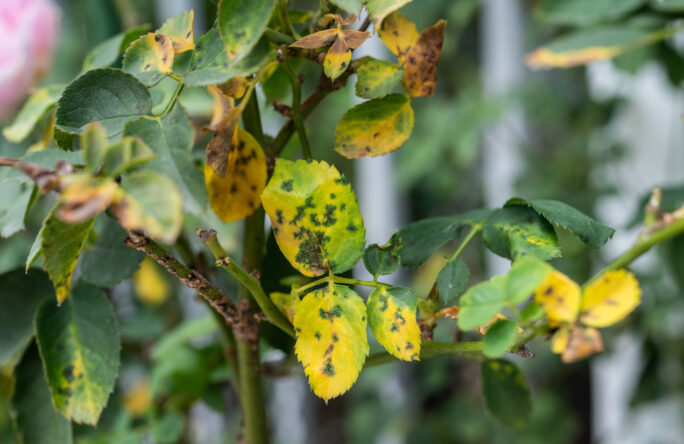
Black spot is probably the most common rose disease in British gardens. It shows up as dark, round patches on the leaves, often with a yellow halo around the edges. Eventually, the affected leaves drop off, which weakens the whole plant if it spreads.
The disease loves damp, humid weather, which means UK summers can be a perfect breeding ground. The fix is to remove any infected leaves as soon as you spot them and bin them rather than composting them, since the spores can spread. Watering at the base of the plant rather than over the leaves helps too, since dry foliage is much less likely to get infected.
2. Aphids
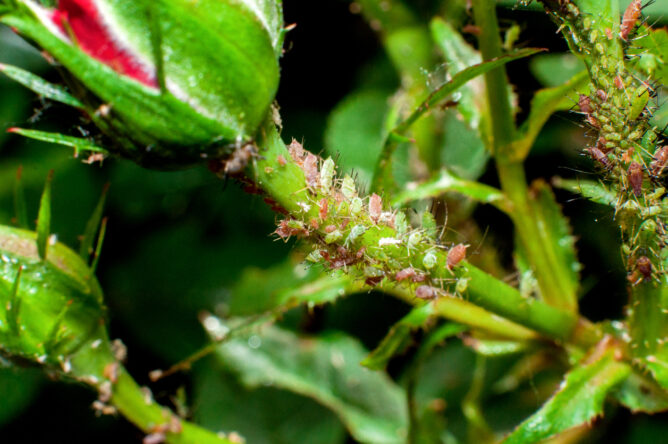
Aphids, also known as greenfly or blackfly, are the most common pests on roses. They cluster on the tips of new shoots and on flower buds, sucking the sap out of the plant and leaving sticky residue behind. Too many aphids can stunt growth and stop your roses flowering properly.
The easiest fix is to blast them off with a strong jet of water from the hose every few days. If they keep coming back, give the affected stems a quick wipe with a damp cloth. Ladybirds love eating aphids too, so attracting them to your garden by planting things like marigolds, dill, and yarrow is a brilliant long-term solution.
3. Powdery mildew
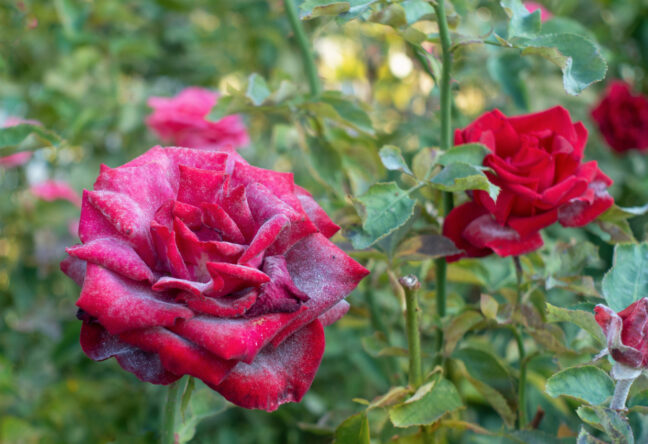
If your rose leaves look like someone has dusted them with flour, you’ve got powdery mildew. This fungal disease loves dry, warm days followed by humid nights, which is annoyingly common in British summers. It usually starts on the leaves and can spread to buds, stopping them opening properly.
Good air circulation is the best prevention. Make sure your roses aren’t squashed too close together, and prune out any crowded stems in spring. If mildew appears, snip off affected leaves and dispose of them. A spray made from a teaspoon of bicarbonate of soda mixed with a litre of water and a drop of washing-up liquid can also help if you catch it early.
4. Rust
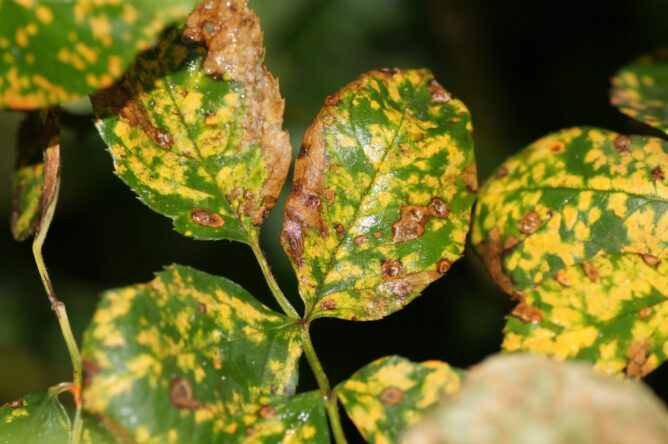
Rose rust looks exactly like its name. Small orange or rusty-brown spots appear on the underside of the leaves, eventually turning the whole leaf yellow and causing it to drop. Like black spot and mildew, it’s a fungal problem that thrives in damp conditions.
Picking off affected leaves and clearing up any fallen ones from around the base of the plant is the first line of defence. Avoid wetting the leaves when watering, and try to plant your roses in a spot with good airflow. Once rust takes hold properly, the only real fix is repeated removal of affected leaves throughout the season.
5. Yellow leaves
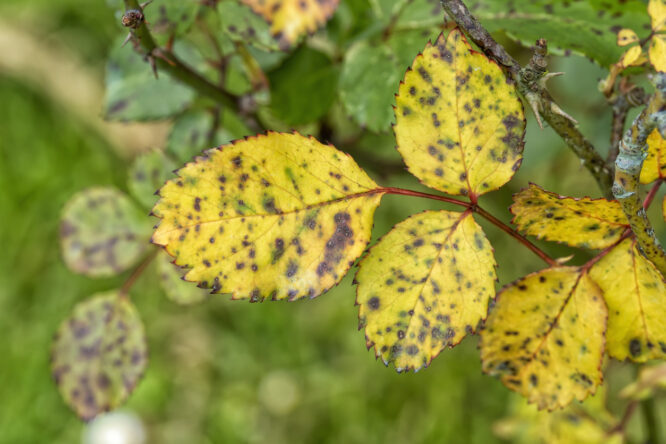
Yellowing leaves on roses don’t always mean disease. The most common cause is actually a lack of nutrients, particularly iron or magnesium. Roses are hungry plants and need regular feeding to look their best, especially if they’ve been in the same spot for years.
Give your roses a feed in spring with a proper rose fertiliser, then again after the first flush of flowers. Mulching around the base with well-rotted manure or compost in late winter also helps lock in moisture and slowly releases nutrients throughout the year. If yellowing keeps happening despite feeding, the soil might be too alkaline, and a sprinkle of sulphur or sequestered iron can help.
6. Leggy growth
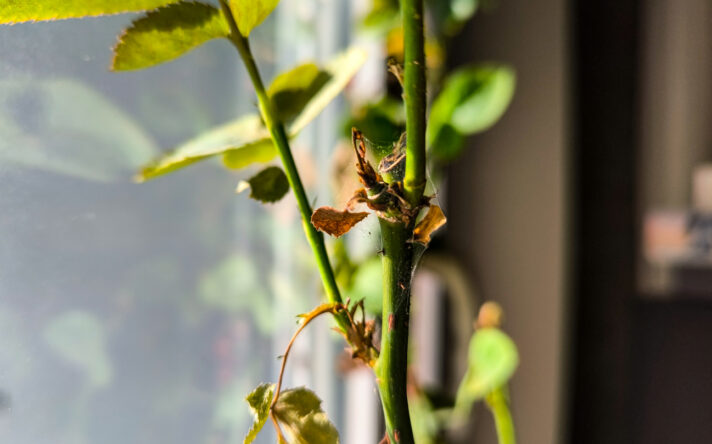
If your rose looks like it’s stretching out in all directions with long, weak stems and not much flowering, it’s gone leggy. This usually means it’s not getting enough sunlight or hasn’t been pruned properly. Roses need at least six hours of direct sun a day to flower well.
The fix is to prune properly in late winter or early spring. Cut back the main stems by about a third, removing any thin, weak or crossing branches. A good prune encourages strong new growth from lower down the plant, which leads to a bushier, more compact rose with way more flowers.
7. Few flowers
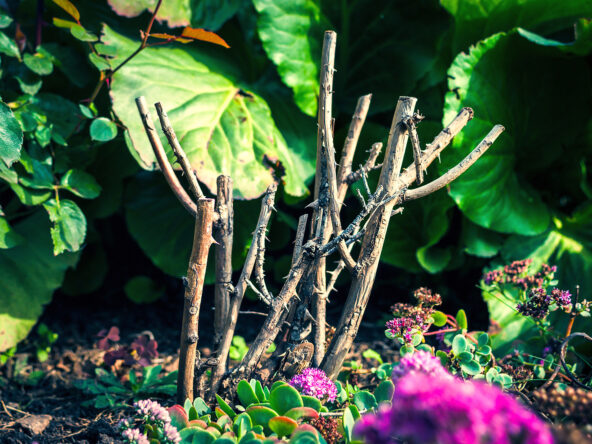
One of the most frustrating rose problems is a plant that grows loads of leaves but barely any flowers. This usually comes down to one of three things. Not enough sunlight, not enough food, or not enough pruning. Roses are real divas when it comes to their basic needs, and they sulk if any of them are missing.
Make sure your rose is in a sunny spot, feed it regularly through spring and summer with a high-potash fertiliser like tomato food, and prune it properly each year. Deadheading spent flowers throughout the summer also encourages the plant to keep producing new ones, rather than putting all its energy into seeds.
8. Buds that won’t open

Sometimes you’ll spot a rose bud forming nicely, only for it to dry up and never open. This problem is called bud blast, and it’s usually caused by a sudden change in the weather, often a cold snap after warm days, or by dry spells where the plant hasn’t had enough water.
Keep your roses well watered, particularly during dry weeks. A good soak once or twice a week is much better than a daily splash, since deep watering encourages the roots to grow stronger and reach further. Mulching around the base of the plant also helps trap moisture in the soil so it’s available when the roses need it most.
9. Holes in the leaves

If you spot little semicircular bites taken out of the edges of your rose leaves, you’ve probably got leaf-cutter bees. These are actually really helpful pollinators, and the damage they cause is purely cosmetic, so it’s worth tolerating them.
If the holes look more ragged, and you can spot caterpillars on the plant, that’s a different story. Pick them off by hand and pop them somewhere far from your roses, like a wildflower patch or the bottom of the garden. Avoid spraying chemical pesticides if you can, since they kill helpful insects like bees and ladybirds along with the pests.
10. Suckers
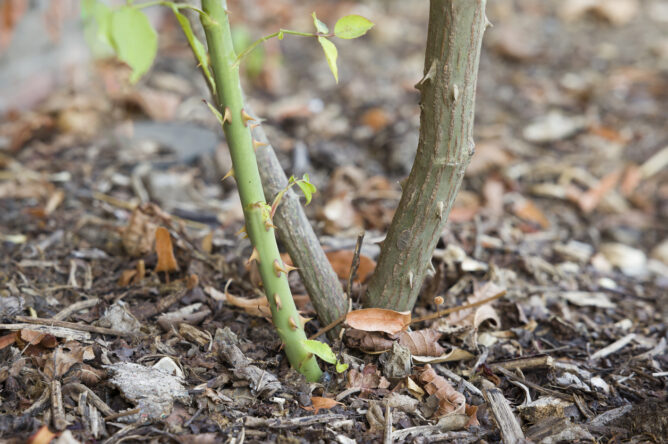
Suckers are long, thin stems that sprout up from the base of your rose, often with lighter green leaves and seven leaflets instead of the usual five. They come from the rootstock that your rose was grafted onto, and if you let them grow, they’ll take over the plant and stop the proper rose from flowering.
The fix is to remove them as soon as you spot them. Don’t just snip them off at ground level, since this can encourage even more to grow. Instead, follow the sucker down to where it joins the root and pull it off with a firm yank or a quick twist. This rips out the bud at the base and stops it coming back in the same spot.
The simple habits that keep roses happy
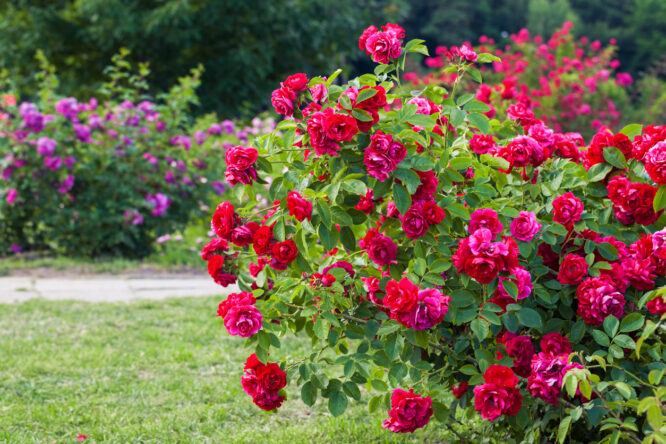
Most rose problems can be avoided with a few good habits. Plant roses in sunny spots with plenty of space around them for airflow. Water at the base rather than over the leaves. Feed them in spring and again after the first flush of flowers. Mulch around the base in late winter. Prune properly each year. Deadhead through the summer to keep them flowering.
If you do spot a problem, act quickly. A few minutes spent picking off diseased leaves or blasting off aphids can save you weeks of trouble later in the season. Roses really are worth the effort, and once you get into a rhythm of looking after them, they’ll reward you with months of beautiful flowers year after year.