If only cats and dogs explored the world with anything other than their mouths first, houseplant shopping would be a lot simpler.
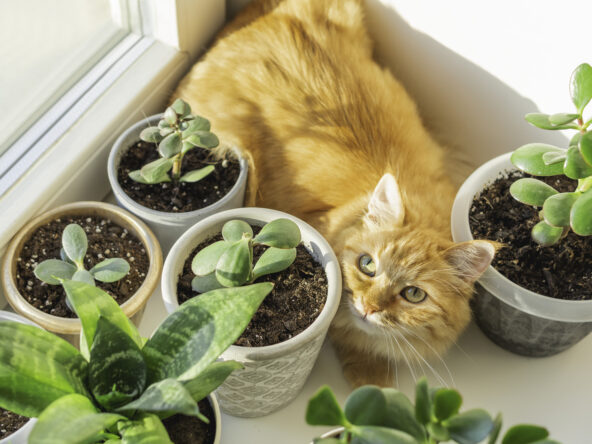
Sadly, plenty of popular, colourful houseplants turn out to be toxic to pets, including a fair few cacti and succulents, which makes it important to know exactly which varieties are actually safe before bringing one home.
Some pet-safe succulents also look remarkably similar to toxic ones, or share similar names, so unless you’re already fairly plant-savvy, it’s easy to grab the wrong one by mistake. These are some of the safer options you should be seeking out, along with a bit of context on what “pet-safe” actually means in practice.
Pet-safe doesn’t mean pet-food.
There’s an important distinction between a succulent being non-toxic and it being something your pet should actually be eating. Even safe succulents can cause mild stomach upset if a pet eats a large amount.
Most issues that turn up in practice are gastrointestinal rather than true poisoning, and prevention tends to come down to sensible plant placement rather than panic. A small nibble usually won’t cause anything serious, though a proper chomping session could bring on some nausea or vomiting.
Since none of the succulents on this list contain particularly dangerous toxins, it’s unlikely to escalate into an emergency, but keeping plants out of easy reach is still the smartest approach. Choosing verified pet-safe plants, positioning them away from direct chewing range, and never assuming “natural” automatically means “safe” covers the basics well.
Zebra Haworthia
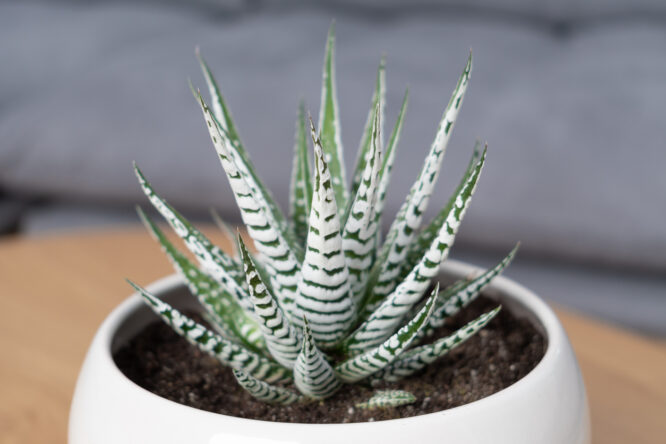
Aloe Vera remains one of the most popular succulents for houseplants, but its cytotoxic saponins make it a definite no-go in pet households. The Zebra Haworthia offers a similar spiky, architectural look without that risk, and it’s widely considered pet-friendly with no irritating sap to worry about. Its bright white zebra-style stripes even give it a bit more visual flair than Aloe.
This succulent is compact and slow-growing, making it ideal for smaller spaces, and it typically doesn’t grow taller than about half a foot. Bright indirect light or partial sun suits it best, and it only needs watering once the soil has fully dried out, roughly every two to four weeks depending on the season.
Gasteria
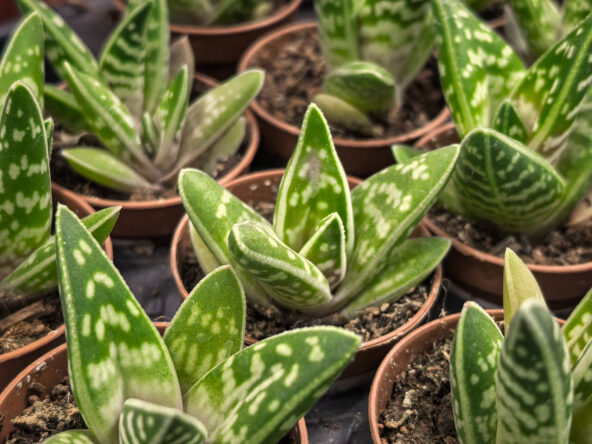
Closely related to both Haworthia and Aloe, Gasteria succulents skip the toxicity risk that comes with true Aloe plants entirely. They’re also strikingly varied in appearance, showing up as variegated, wart-speckled or striped varieties, with the larger Gasteria Acinacifolia occasionally producing bright tubular orange and pink flowers given enough room to grow.
All Gasteria varieties are non-toxic to both cats and dogs. The one thing worth watching for is Gasteraloes, hybrid crosses between Gasteria and Aloe, which can carry some of the same saponins found in regular Aloe and should be avoided.
Hens and Chicks (Sempervivum)
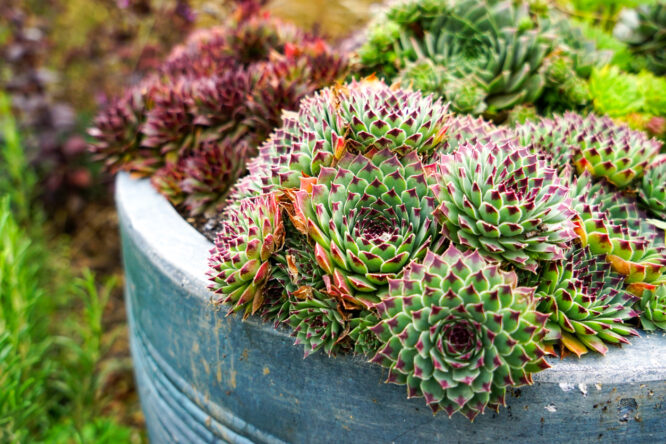
Hardy, easy to care for, and non-toxic, Hen and Chicks succulents thrive in full sunlight and can shrug off the occasional knock or tumble, a handy trait for households with a curious cat. If you don’t have much of a green thumb, this is a solid, low-maintenance option for a sunny windowsill.
The plant earns its name from how it grows, with a larger “mother” plant, the hen, sending out smaller offshoot plants, the chicks, via underground runners. These can be left to fill out a spacious pot together, or separated out to propagate entirely new plants elsewhere.
Echeveria
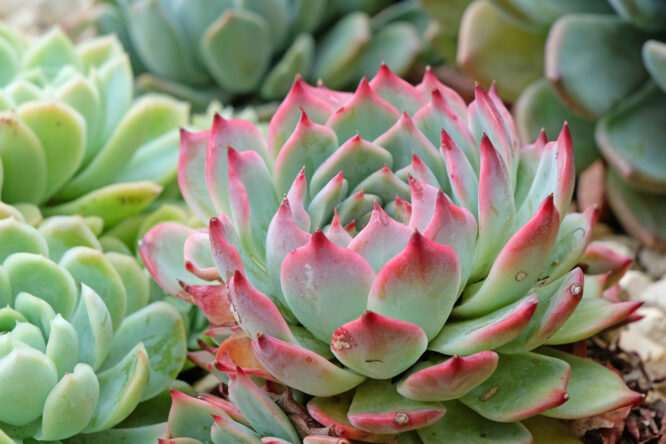
When most people picture a succulent, they’re probably picturing an Echeveria, since these are the ones that typically dominate nursery shelves and garden centre displays. They grow in large, colourful rosettes made up of thick leaves, and they’re particularly mild even by pet-safe succulent standards. Even if a leaf gets nibbled, it’s unlikely to cause any real harm.
Like Hen and Chicks, Echeveria is fairly hardy and can even be grown outdoors in sandy soil if you live somewhere warm. A hard frost will kill it though, so anywhere with a risk of freezing winter temperatures calls for keeping it potted and bringing it indoors when the cold sets in.
Burro’s Tail (Sedum morganianum)
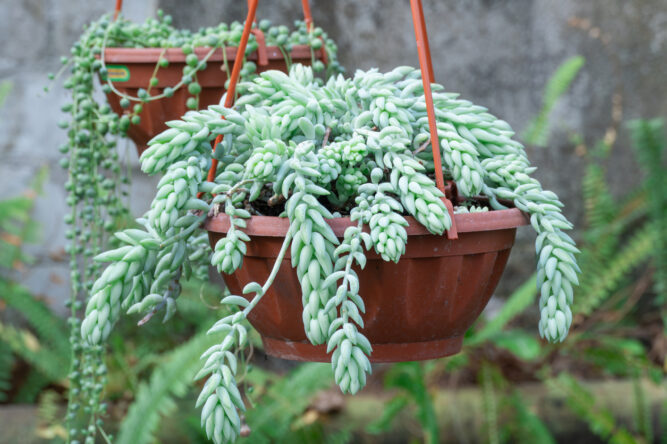
For anyone wanting some hanging greenery, the Burro’s Tail is an elegant option, growing long trailing stems covered in thick blue-green leaves that spill over the pot’s edge and hang down like, well, a burro’s tail. It’s a particularly popular choice for hanging planters, which naturally keeps it out of reach of curious pets, adding an extra layer of safety on top of its non-toxic status.
Originally from sunny southern Mexico, this succulent prefers bright full sun, well-draining soil, and a deep watering roughly every two weeks or whenever the top of the soil dries out. With good care, it may even reward you with reddish-pink flowers blooming at the ends of its stems come late summer.
Christmas Cactus (Schlumbergera)
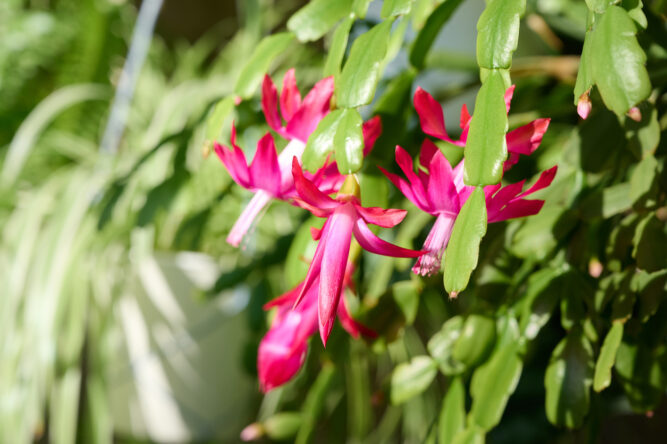
Cacti can be tricky to keep around pets, partly because some varieties are toxic and partly because most are covered in sharp, poke-prone spines. The Christmas Cactus sidesteps both problems entirely. Unlike desert cacti, it has soft, segmented growth rather than sharp spines, making it a much lower-risk choice for busy, pet-filled households.
True Christmas Cacti are completely non-toxic to both dogs and cats, covering both their scalloped green leaves and the bright pink flowers they produce. Unlike most other plants on this list, it’s a tropical species rather than a desert one, so partial sun works better than direct sun, which can discolour its leaves over time. Water it once the top inch of well-draining soil has dried out.
Spine-free prickly pear cacti (Opuntia)
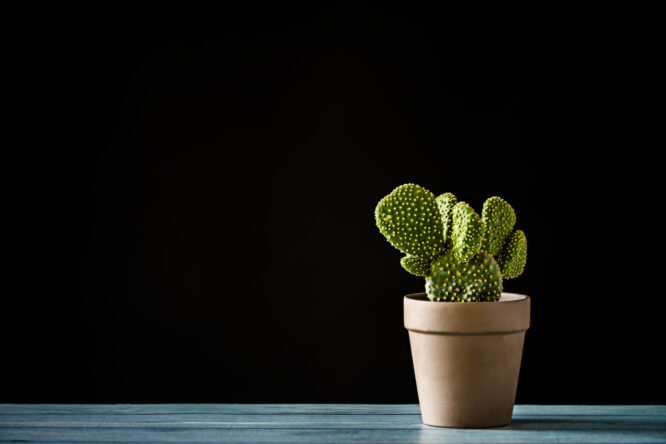
Despite the name, certain varieties of Opuntia cactus have few to no spines at all, and choosing one of these low-spine options significantly reduces the risk of physical injury for curious pets, since all Opuntia varieties, spiny or not, are non-toxic. One particularly well-suited variety is specifically bred to be virtually spineless.
This cactus needs full sun and can grow surprisingly tall, up to around two metres, which can make it tricky to manage indoors long term. It’s moderately cold tolerant too, meaning it can be grown outdoors in sandy soil in milder UK climates, provided it’s protected from any severe frost.
Fishbone Cactus (Epiphyllum anguliger)
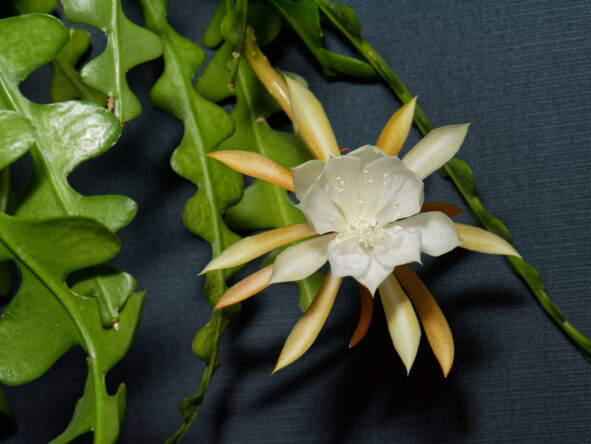
Another spine-free option, the Fishbone Cactus grows long, trailing leaves with a distinctive zig-zag shape, almost as if they’d been cut with pinking shears, which has earned it the nickname Zig Zag Cactus. It’s non-toxic to pets and visually striking, with a growth habit that’s considerably less spiny and far more pet-compatible than most cacti.
Those long hanging leaves can prove tempting for a cat looking to bat something around though, so keeping it somewhere slightly out of reach is important to consider to protect both the plant and your floor.
Blue Chalksticks (Senecio serpens)
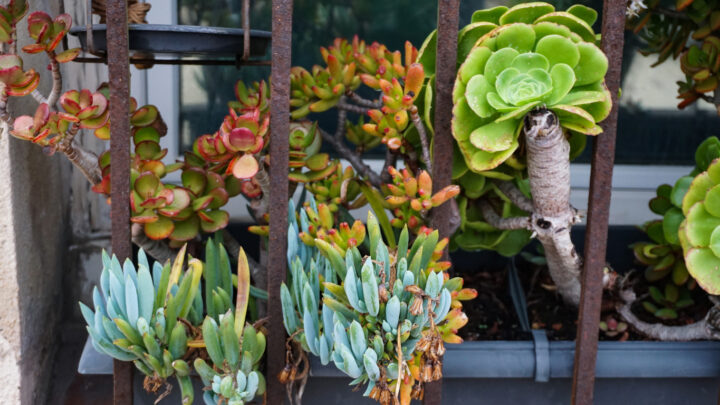
For a windowsill that looks a bit like a coral reef, Blue Chalksticks fits the bill perfectly. This succulent grows fleshy, finger-like blue-green leaves that poke up a few inches from the soil, resembling tiny sea anemone tentacles. Come summer and autumn, these finger-leaves can occasionally blossom into small white flowers, since Senecio plants actually belong to the daisy family.
One important caveat here: Blue Chalksticks are often confused with other, toxic Senecio species, so this specific variety is only considered pet-safe when correctly identified. If you’re not entirely certain what you’re buying matches this exact type, it’s safer to skip it altogether.
Living Stones (Lithops)
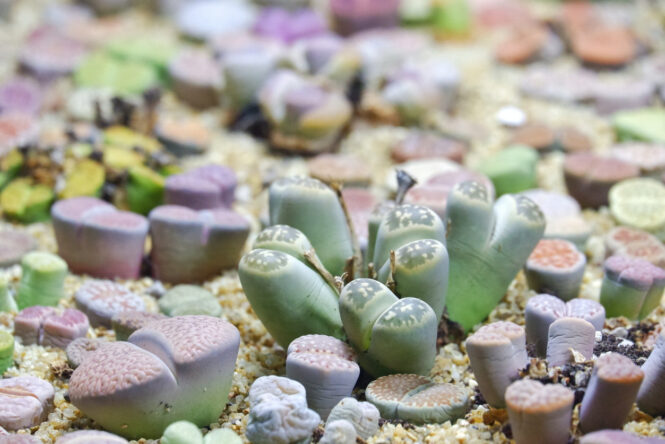
Rounding out the list with something unusual, Lithops, also known as pebble plants or living stones, don’t look anything like typical succulents. Instead, they resemble small, mottled, bisected stones, or if you don’t mind a slightly odd comparison, tiny brains. Much like hand-painted rocks, they come in practically every colour imaginable, making them a fun way to add a serious pop of colour to an indoor plant collection.
Originally from the desert landscapes of southern Africa, living stones thrive in full sun with fairly limited watering, though some varieties can be sensitive to extreme heat. In autumn and winter, the bisected plant body splits open to reveal a bright yellow blossom.
Why pet-safe succulents make great houseplants generally

Beyond the sheer number of safe varieties available, succulents offer plenty of practical advantages as houseplants. Most pet-safe varieties originate from desert or arid environments, meaning they’ve adapted to thrive in full sun, high heat and long stretches without water. While you can’t skip watering entirely, and well-draining soil remains essential for healthy roots, these plants require very little day-to-day upkeep.
They’re also remarkably hardy thanks to that same harsh-environment adaptation, generally bouncing back from over or under watering as long as habits get corrected. That resilience means a knock to the floor or a curious nibble from a pet is unlikely to spell disaster for the plant itself. On top of that, most pet-safe succulents are incredibly easy to propagate, often from just a single leaf, making it simple to grow an entire pet-friendly succulent collection from just a few starter plants. And with shades spanning soft greens and blues through to vibrant pinks, purples and reds, they bring colour and visual interest to a home, all while remaining completely safe for curious cats and dogs.