At first glance, the “Pilates princess” trend looks pretty innocuous.
It’s all about wellness, routines, toned bodies, and a calm, put-together lifestyle that’s taken over social media—at least on the surface. However, there’s a growing conversation around how this image is being picked up and reshaped in parts of the internet that don’t always have positive intentions.
What starts as a personal lifestyle choice is now being turned into something much more rigid, and for many people, that change hasn’t gone unnoticed—especially since it’s being co-opted by the more toxic corners of the web.
The “Pilates princess” image is being turned into a narrow ideal.
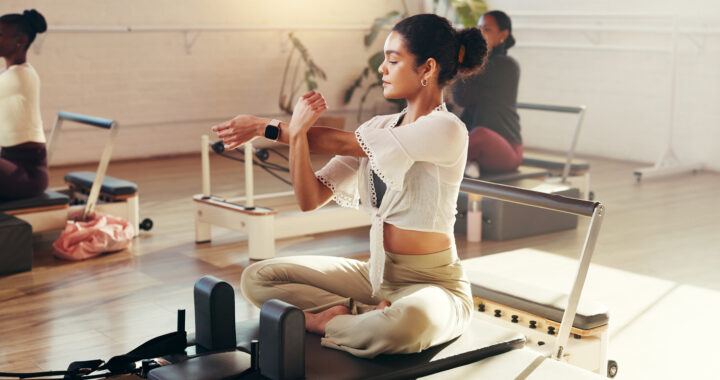
Online, the “Pilates princess” has become more than just someone who enjoys a certain type of exercise. She’s often presented as slim, calm, disciplined, and effortlessly polished, fitting a very specific look that doesn’t leave much room for variation. While that might seem aspirational on the surface, it also creates an intense pressure by setting a standard that feels difficult for most people to reach.
What’s changed is how that image is being used. In some online spaces, especially those linked to the manosphere, it’s being framed as the “ideal” type of woman. It stops being about fitness or wellbeing and becomes a way of defining how women should look and behave. That change turns something personal into something people feel judged against, rather than something they choose for themselves.
The manosphere tends to reduce women to simple categories.
In many of these spaces, women are often grouped and labelled based on appearance or behaviour. The language can sound casual, but the thinking behind it is quite rigid. Instead of seeing individuals, there’s a tendency to sort people into types that are easier to judge or rank.
This is where the “Pilates princess” fits in. She becomes a shorthand for a certain kind of woman who is seen as more desirable or more acceptable. It narrows things down in a way that leaves little space for personality, difference, or individuality. In the long run, that kind of thinking can influence how people view others, even outside those online spaces.
Social media helps this kind of messaging spread quickly.
A big reason this trend has taken hold is how easily it travels on platforms like TikTok and Instagram. Content built around routines, aesthetics, and lifestyle tends to perform well, especially when it looks clean and calming. The issue is that these platforms often show the same type of content over and over, which makes one version of reality feel far more common than it really is.
As that content spreads, it creates a feedback loop. The more people see it, the more it feels like a standard. When that gets picked up by groups already focused on defining what women should be, it reinforces those ideas even further. It stops being just a trend and starts shaping expectations in a way that’s harder to notice in the moment.
Appearance is being linked more closely to relationship value.
One of the more concerning parts of this trend is how appearance is being tied to worth, especially in dating. In some discussions, the “Pilates princess” is described as more desirable or more suitable as a partner. It might sound subtle, but it carries a much bigger message underneath.
It suggests that certain types of women deserve more respect or commitment based purely on how they look or present themselves. That idea isn’t new, but social media has made it more visible and more normalised. It also places pressure on women to fit into that mould, not because they want to, but because it feels expected.
Even positive trends can be reshaped in unhealthy ways.
Pilates itself isn’t the issue. It’s a widely respected form of exercise that supports strength, flexibility, and recovery. Many people take it up for health reasons or simply because they enjoy it. The problem starts when something that’s meant to be personal gets turned into a fixed identity.
When that happens, the focus moves away from how it feels and towards how it looks. Instead of being about wellbeing, it becomes about matching a certain image. That’s where the pressure builds, and something that should feel positive starts to feel like something people have to keep up with.
This doesn’t just affect women—it shapes expectations more broadly.
This kind of messaging influences how people see each other, not just how they see themselves. When narrow ideals are repeated often enough, they start to shape expectations in ways that aren’t always obvious at first. People begin to compare real life to something that was never realistic to begin with.
That can make relationships feel more complicated. When expectations are based on curated images rather than real experiences, it creates a gap that’s hard to close. Eventually, that disconnect can affect how people connect, communicate, and understand each other.
There’s a difference between choice and pressure.
There’s nothing wrong with enjoying Pilates, taking care of your body, or liking a certain aesthetic. The issue comes when it stops feeling like a choice and starts feeling like a standard. When one version of a lifestyle is constantly pushed, everything else starts to fade into the background.
Recognising that difference is important. It allows people to step back and decide what actually works for them, rather than following something because it feels expected. Trends come and go, but the ability to choose what fits your own life is what keeps them from turning into pressure.
The bigger issue is how quickly trends can be reshaped.
This situation shows how quickly something simple can take on a completely different meaning once it spreads online. What begins as a personal routine can be turned into a symbol, and that symbol can then be used to judge or define people in ways that weren’t intended.
That’s why these conversations matter. It’s not about criticising the trend itself, but about noticing how it’s being used. Once you see that change clearly, it becomes easier to separate what’s genuinely useful from what’s quietly putting pressure on people to fit into something that was never meant to be a rule.