Most of us have grown so used to getting our shopping delivered that we hardly think about the person carrying it up to our door anymore.

However, a recent Reddit post from an Asda delivery driver has gone viral and started a heated debate about what’s fair to ask of someone hauling your weekly shop. The story is one of those everyday situations that ends up dividing people right down the middle, and it raises some genuine questions about delivery etiquette in 2026. Here’s what happened, and why it’s struck such a nerve.
The delivery that started the row
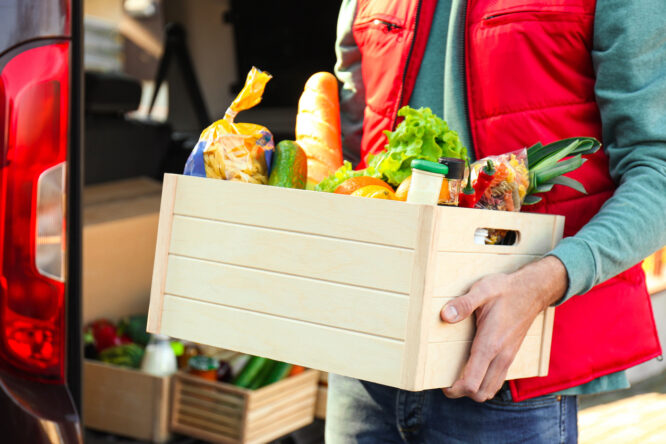
The driver shared online that he’d refused to deliver a customer’s shopping after pulling up at the address. The reason wasn’t bad behaviour from the customer, dodgy paperwork or any kind of safety issue. It was the fact that the customer lived on the top floor of a block of flats, with three flights of stairs and no lift to help him get up there. To make matters worse, the order included three six-packs of two-litre water bottles, weighing in at around 36 kilos of dead weight on top of the rest of the basket.
The driver asked online whether he’d been in the wrong to refuse. The reaction was instant and split. Some people said the customer should have made things easier, while others felt the driver had failed to do the job he was being paid for. What started as a simple grumble has turned into one of those debates that gets to the heart of how we view delivery workers, customer convenience, and the unwritten rules of online shopping.
What the supermarket’s policy actually says
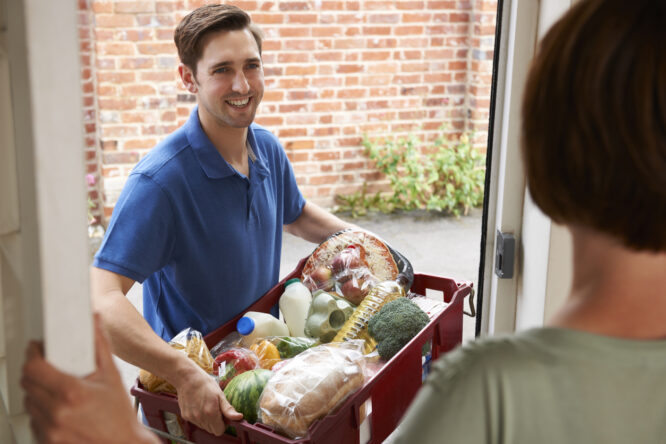
Most major supermarkets have clear terms and conditions about deliveries, including the company in question here. The general commitment is to deliver right to your front door, but there are several situations where drivers are allowed to refuse. These include any time the driver believes they’re at risk of injury, where stairs look structurally unsafe, where it doesn’t feel safe to enter the property, or where the driver hasn’t been given clear permission to do so.
The policy also says that if a driver can’t complete the delivery, they should try to meet the customer at another spot as close to the front door as possible. If the delivery genuinely can’t go ahead, the customer isn’t charged. So in this particular case, the driver was within his rights to refuse, especially given the weight of the order. Whether refusing was the right call in spirit is another question entirely.
Why this debate divides people
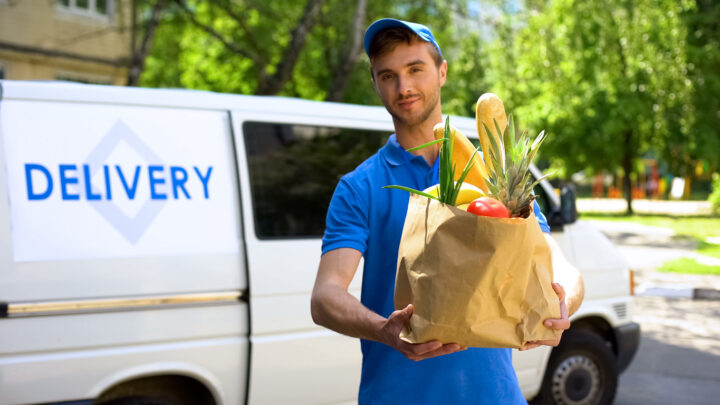
The story has clearly tapped into something bigger than just one driver and one customer. For some, it sounds completely reasonable that a supermarket delivery driver should refuse to haul 36 kilos of water up three flights of stairs, especially when they’ve got dozens of other drops to get through that day. For others, it feels like a refusal of the basic job description, since the whole point of paying for a delivery is that someone else brings the shopping to your door.
The split tends to track with how often people order in for delivery, what kind of home they live in, and how much sympathy they have for retail workers. Younger renters in flats tend to side with the driver, while older customers in houses are more likely to side with the recipient. There isn’t really a clean answer, and the conversation says as much about modern life as it does about any one delivery.
What top-floor customers say they do

Plenty of online flat-dwellers chimed in to share their own approach, and a surprising number do exactly what the driver in this case probably wished his customer had done. Many top-floor renters, particularly those without a lift, said they make a point of waiting at the bottom with their own bags, so the driver can hand the shopping over at street level. It saves the driver the stairs, gets the order delivered faster, and avoids the whole problem.
Some even shared that they keep an eye out the window and head down the moment they see the van pull up. Others suggested giving the driver clear instructions in the order notes, like “buzz me and I’ll meet you at the door.” The general sense from those who actually live in flats is that being a thoughtful customer takes about thirty seconds and makes everyone’s day a bit easier.
Why heavy water orders raise eyebrows

A particular part of this story that wound people up was the sheer weight of the order. Six-packs of two-litre water bottles aren’t unusual to see in trolleys, but ordering three of them is a hefty load even on flat ground, let alone up several flights. Plenty of commenters questioned whether anyone really needs to be ordering that much water in plastic bottles, especially given how easy it is to fit a filter to your kitchen tap, buy a cheap filter jug, or just drink straight from the mains.
For drivers, water orders are a particular point of grumbling. They’re awkward to carry, deceptively heavy, and they take up a lot of space in the totes used for deliveries. A few drivers admitted online that they’ll often suggest customers consider switching to a filter setup, both as a kindness to their backs and as a small nudge towards using less single-use plastic. It’s not a polite request a supermarket would ever put in writing, but it’s a perfectly fair point.
What it’s actually like to do the job
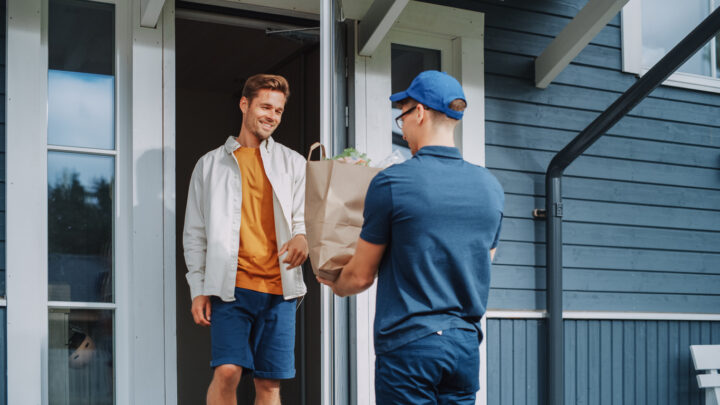
For anyone who’s never delivered shopping for a living, it’s worth understanding what a typical shift actually involves. Drivers are usually expected to complete dozens of drops in a single round, often within tight time windows. Each delivery includes lifting heavy totes, carrying them to the door, sometimes navigating dodgy paths or steep driveways, and getting everything back to the van afterwards. Over an eight-hour shift, that adds up to a very physical day.
A few delivery drivers chimed in to point out that lifting heavy totes is simply part of the job, and that a top-floor delivery isn’t really an unreasonable request if you’ve signed up to do this kind of work. Others argued that there’s a difference between regular lifting and being expected to haul nearly 40 kilos of water up three flights of stairs. Both points have merit, and the truth probably sits somewhere in the middle.
The unwritten rules of online shopping

Online shopping has quietly developed its own set of unwritten etiquette rules over the years, and most decent customers already know them. Tipping isn’t expected in the UK the way it is elsewhere, but a friendly hello goes a long way. Make sure your front door is accessible, with no big dogs blocking the path. Move your car if it’s blocking the driveway. If you live somewhere tricky to find, like a flat above a takeaway with an unmarked side door, drop instructions into the order notes.
Going a step further and meeting the driver at the door, or even at the bottom of the stairs if you’re in a flat, is a small kindness that drivers really appreciate. Offering a glass of water on a hot summer day is the kind of gesture that gets you remembered as a favourite stop on the route. None of it is a hard rule, but the people who do these things tend to get a cheerful service every time.
Where supermarkets could do better too
The bigger question hiding in this story isn’t really about the customer or the driver, it’s about whether the supermarkets themselves are setting their drivers up to succeed. Delivery slots are tightly scheduled, and drivers often face penalties for being late. That makes a 36-kilo top-floor drop a stressful event, since spending fifteen minutes on the stairs means putting the rest of the schedule at risk.
Some supermarkets have started flagging certain orders for two-person delivery if they’re particularly heavy, which is a more sensible approach than asking a single driver to manage alone. Others let drivers add notes for difficult addresses, so future deliveries can be planned better. None of this gets discussed in the public chats about who’s right and who’s wrong, but it’s the layer where real changes could be made.
How to be the kind of customer drivers love

If you’re the sort of person who’d quite like to make life easier for the people doing your shopping, there are a few small habits worth picking up. Make sure your front door is easy to find and clearly marked. Add instructions in your order notes if your place is tricky to reach. Be ready when the driver arrives, ideally already by the door. If you live in a flat without a lift, consider meeting them downstairs, particularly if you’ve ordered something heavy.
A friendly word and a smile genuinely do brighten a long day. It costs nothing to acknowledge that someone has just hauled a few bags up your stairs in the rain. The drivers won’t forget you, and neither will the rest of your neighbours when they realise their building is on a route someone actually enjoys delivering to. Small thoughtful gestures don’t change the world, but they make modern life feel a bit less transactional, which is a worthwhile thing all on its own.