Trying to find the perfect temperature for your house often feels like a constant battle, especially when you’re trying to stay cosy without racking up a frightening energy bill.
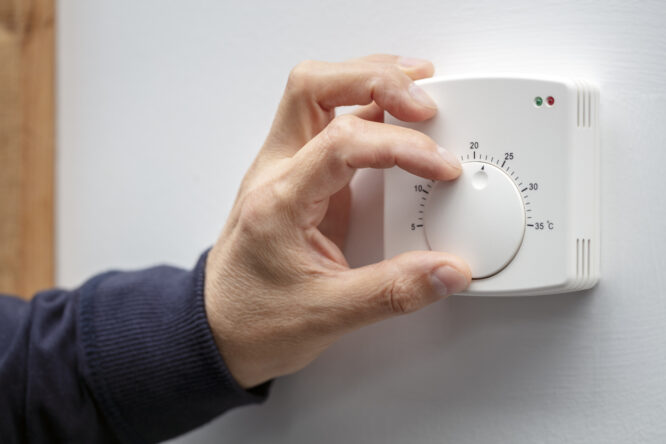
Turn the dial up too high, and you’re essentially burning money, but drop it too low, and you’re shivering on the sofa while dealing with damp patches on the walls. It’s a tricky tightrope to walk, but energy specialists and health professionals have crunched the numbers to find a specific golden figure. Striking the exact balance keeps your living space perfectly comfortable and healthy, while ensuring your boiler isn’t working overtime.
Where the standard 19 °C rule actually came from
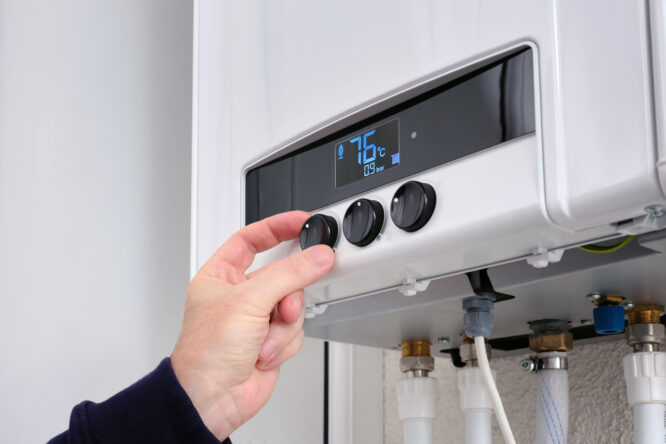
The longstanding 19 °C guideline didn’t come from any modern building science or carefully researched health study. It traces back to the 1970s energy crisis, when fuel shortages pushed governments around the world to issue blanket guidance to households about how to conserve heat. It was a political number designed for a very different era, when homes were draughtier, insulation was patchy at best, and heating systems offered nowhere near the precision we have today.
Fifty years on, those conditions simply don’t apply to most modern homes. Insulation standards have moved on, double glazing is the norm, and smart heating controls are widespread. The Energy Saving Trust now recommends finding “the lowest comfortable temperature for your needs,” which for most people falls somewhere between 18 °C and 21 °C. Dropping your thermostat from 22 °C down to 21 °C saves around £90 a year in Britain, but going much further can start to backfire in ways the old rule never accounted for.
Cold rooms are doing more damage than you might think.

The World Health Organization has long warned that indoor temperatures shouldn’t drop below 18 °C, and that threshold is now backed by national health agencies and housing authorities across the UK. Anything colder than that poses genuine risks, particularly for older adults, infants, and people with long-term health conditions. Cold homes have been linked to a higher risk of respiratory illness, cardiovascular strain and worsening symptoms for anyone with arthritis or breathing problems.
There’s also a serious issue with what cold homes do to the building itself. When warm, moist air hits a cold wall or window, it creates condensation. Given time, that moisture feeds mould growth that can hide behind furniture or inside wall cavities until timber rot or breathing problems force you to deal with it. By that point, you’re often looking at expensive repairs that wipe out any savings you made by keeping the heating low. The advice now is to keep your home at a minimum of 18 °C throughout the colder months to avoid damp, mould, and condensation issues taking hold.
The room-by-room approach the Welsh Government recommends

Rather than picking one number for the whole house, modern guidance leans towards setting different temperatures for different rooms based on how you use them. The Welsh Government has issued specific recommendations that have been quoted widely by housing and energy experts. The advice is to aim for 21 °C in living rooms during the day and 18 °C in other rooms, maintained for at least nine hours on weekdays and 16 hours on weekends.
Steady temperatures matter more than rock-bottom ones, particularly when it comes to preventing mould. Letting a home swing between hot and cold creates exactly the conditions that condensation thrives on. A bedroom that stays at a consistent 18 °C overnight is far better for the structure of your home than one that’s allowed to drop close to freezing and then blasted with heat in the morning. Bathrooms, kitchens and any rooms with poor ventilation are particularly vulnerable to the swing-and-spike pattern.
A low thermostat doesn’t always mean lower bills.

One of the more counterintuitive findings from recent research is that turning your thermostat too low can actually use more energy, not less. When a home cools too far, the boiler or heat pump has to work much harder to bring everything back up to a comfortable temperature. The result is often short, sharp spikes in consumption rather than the steady, efficient operation modern heating systems are designed for.
This is particularly true in older properties or homes with patchy insulation, where heat escapes faster than it can be replaced. Keeping a home at a consistent moderate temperature throughout the day may actually use less energy over time than letting it plunge and then reheat aggressively. The old assumption that efficiency always means turning the dial down is being challenged by real-world data from modern heating systems, and it’s making a lot of energy professionals rethink the advice they used to give.
TRVs have become the unsung hero of efficient heating.

Thermostatic radiator valves, or TRVs, are slowly but surely becoming central to cost-effective home heating. A TRV sits on each radiator and senses the air around it, adjusting hot water flow automatically without you having to lift a finger. The result is rooms that are rarely used stay cooler, living spaces stay warm, and you avoid the cold spots where condensation likes to gather.
The Energy Saving Trust calculates that adding TRVs to a system that already has a programmer and thermostat saves an additional £35 to £40 a year. Joanna O’Loan, knowledge manager at the Energy Saving Trust, points out that TRVs let you control how much hot water flows through individual radiators, which is a brilliant way of making sure you’re only properly heating the rooms you’re actually using. Hallways, spare rooms and storage spaces can sit at a lower temperature without affecting the comfort of the rooms you spend most of your time in.
Smart heating is rewriting the whole approach.

Smart thermostats and zoned heating systems are giving households a level of control the old rules never really anticipated. Devices like the Tado smart thermostat, alongside electronically controlled TRVs, let you set completely different temperatures for hallways, bedrooms, kitchens and living rooms without having to think about it. Heat goes only where it’s needed, and only when it’s needed.
Many of these systems connect to smartphone apps and learn your routines, adjusting automatically based on whether anyone’s at home, the weather outside, and even how quickly your house tends to lose heat. The idea of a single fixed temperature for the entire house feels increasingly old-fashioned when the technology available makes room-by-room control so straightforward. For anyone planning to upgrade their heating system over the next few years, investing in proper zoning controls is one of the best moves you can make.
The simple things matter beyond the thermostat.

Temperature on its own doesn’t decide whether your home stays healthy. Ventilation matters just as much, particularly in well-insulated modern homes, where moisture has nowhere to go. The trick is short bursts of fresh air rather than leaving windows open for hours. Opening windows and doors for just five to ten minutes a day, sometimes called house burping, lets the air circulate properly without chilling the actual structure of the building.
Extractor fans in kitchens and bathrooms pull moisture out at the source, which makes a real difference if you cook a lot or have someone in the household who takes long showers. A cheap hygrometer is also worth picking up, since it lets you keep an eye on indoor humidity. Keeping it below 60% is the key threshold, as anything above that and mould starts becoming a serious risk. Most decent hygrometers cost under a tenner and pay for themselves quickly in saved repairs alone.
Draught-proofing is the cheap fix most people forget.

One of the most overlooked ways to make steady indoor temperatures easier to maintain is good old-fashioned draught-proofing. The experts pointed out that poorly sealed floors are one of the most commonly missed sources of heat loss. Even a small draught can counteract the effect of ambient heating, making your home feel colder than it actually should during the winter months.
Filling gaps in floorboards, sealing around doors and windows, and adding brush strips to letterboxes are all low-cost fixes that can make a genuine difference. None of these need professional help, and most can be sorted in a single weekend with bits picked up from any DIY shop. Once you’ve sealed the obvious gaps, your heating doesn’t have to work nearly as hard to maintain a comfortable temperature, which means lower bills without having to sit in a cold house.
So, what’s the new approach?
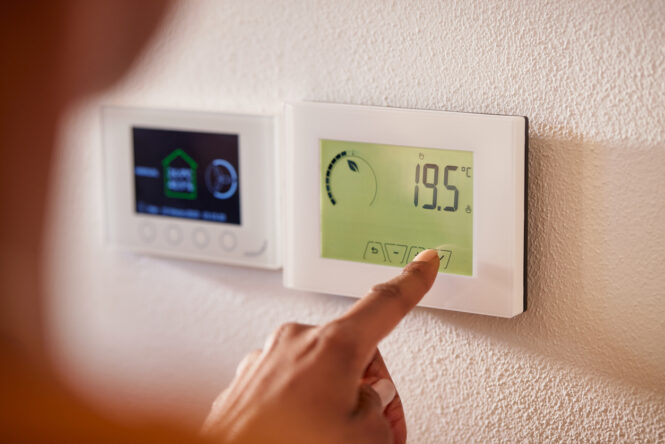
The move away from the 19 °C rule isn’t about one new magic number to replace the old one. It’s about treating your home as a slightly more nuanced system, with different rooms set to different temperatures based on how you actually live. Most British households will land somewhere between 18 °C and 21 °C, with living rooms at the higher end during the day and bedrooms slightly cooler at night.
Combine that with TRVs on every radiator, decent draught-proofing, sensible ventilation and a hygrometer to track humidity, and you’ve got a setup that’s both more comfortable and more efficient than rigidly sticking to one outdated figure. The number that makes sense has quietly gone upwards over the years, and most modern homes are better off for it. Comfort and efficiency don’t have to sit on opposite sides of the thermostat anymore, and that’s a genuinely good thing for our wallets, our health, and our homes.