Most of us measure how we’re growing older by the number of candles on our birthday cake, but that chronological figure only tells half the story.

The real marker of a long and healthy life is your biological age—how well your internal systems, muscles, and brain are actually holding up against the clock. While complex medical scans can give you a definitive answer, you don’t need a lab coat or an expensive clinic to check if your body is on the right track.
By putting your balance, strength, and quick-thinking skills to the challenge using everyday objects, you can get an incredibly accurate reading of your physical resilience. Checking where you stand with these quick challenges is the best way to spot any hidden weaknesses before they start catching up with you.
These tests are worth doing, even if they seem a bit silly.

The trouble with getting older is that it doesn’t usually announce itself. One day everything feels fine, the next you notice you’re a bit less steady on your feet, slightly slower to recover from things, or that you’ve lost a bit of sharpness you didn’t realise you had. Most of these changes are subtle enough to dismiss, which is exactly why they sneak up on people.
The handful of simple tests below have all been studied by health experts and linked to longevity in proper research, so they’re more than just a bit of fun. They give you a useful baseline to track over time, and the bonus is that all of them can be improved with a bit of consistent effort.
The chair stand test

This one measures lower body strength, which is one of the strongest predictors of healthy ageing. The test only takes 30 seconds. Sit on a sturdy chair with your arms crossed over your chest, then see how many times you can stand up fully and sit back down again without using your hands. Adults over 60 should be aiming for at least 12 in 30 seconds. Younger adults should be hitting around 20.
Lower numbers suggest reduced functional strength, which can lead to falls and reduced mobility further down the line. To improve it, regular lower body work helps a lot, including squats, lunges, and step-ups, plus general strength training. Small, consistent progress over time is what makes the real difference.
The single-leg stand test
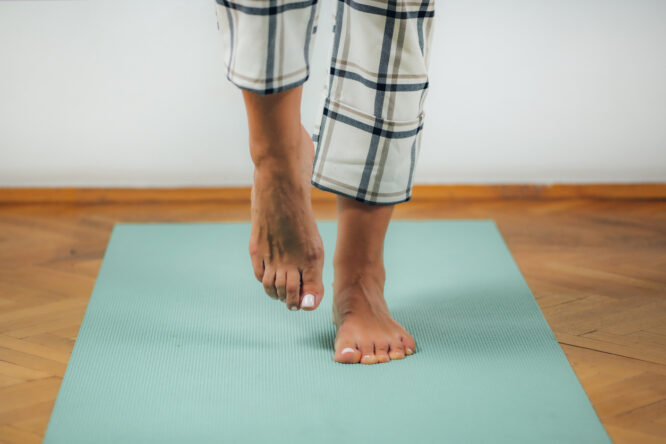
Balance is one of the more telling markers of how well you’re ageing, partly because it pulls together so many systems at once, including muscle strength, joint health, vision, and your inner-ear stability. To do the test, stand barefoot on a flat surface with your hands on your hips, lift one foot off the ground, and time how long you can hold the position with your eyes open.
People aged 18 to 49 should aim for 40 seconds or more. People in their 60s should hit around 26 to 32 seconds, and those in their 70s around 14 to 18 seconds. If you can’t manage five seconds, that’s a flag for a higher injury risk. Improving balance is mostly about practising it. Standing on one leg while you brush your teeth, taking up yoga, or doing tai chi all help.
The memory recall test

Memory is often one of the first things people start to worry about as they age, but small dips are usually down to lifestyle rather than disease. To test it, ask someone to read you five unrelated words, like apple, chair, river, blue, and candle. Wait five minutes without writing them down, then see how many you can remember. In midlife, most people should manage four or five. In older adults, three or more is generally considered reassuring, especially if you can get the others back with a small prompt.
Consistently struggling to recall even one or two words isn’t necessarily a sign of dementia. It’s more often linked to poor sleep, chronic stress, low mood, or nutritional gaps. If you’re worried about a real decline, though, it’s worth getting checked properly. To support memory, prioritise sleep, exercise regularly, stay socially active, and eat well. Brain training apps are far less useful than people think.
The six-minute walk test

This one measures cardiovascular fitness, endurance, and how well your heart, lungs, and muscles are working together. The test is simple. Walk at a steady pace for six minutes and measure the distance you cover. A healthy adult should manage between 400 and 700 metres, depending on age and fitness level.
Slower walking speeds and shorter distances are linked to a higher risk of heart disease, disability, and earlier mortality. To improve it, build up your aerobic fitness through regular brisk walking, aiming for around 150 minutes a week. Gradually increase your pace, distance, and the amount of incline you tackle. Cycling, swimming, and strength training all help too.
The social health test

Social health is one of the most underestimated parts of ageing well, and the research on it is properly striking. Strong relationships are linked to lower rates of heart disease, less cognitive decline, and even longer life. Chronic loneliness, on the other hand, has been compared to the health risks of smoking. The test is straightforward. Think about the past week and count how many meaningful conversations you’ve had—not a quick chat at the till or a brief text exchange, but proper interactions where you felt genuinely engaged and connected.
In midlife, you’d ideally want at least a few of these a week. In older age, regular contact matters even more, even if the number of people you see is smaller. If the answer is “very few,” that’s worth paying attention to. To improve it, focus on quality over quantity. Regular check-ins with close friends, joining a class, walking group, or community event, and combining social time with movement all help.
The grip strength test
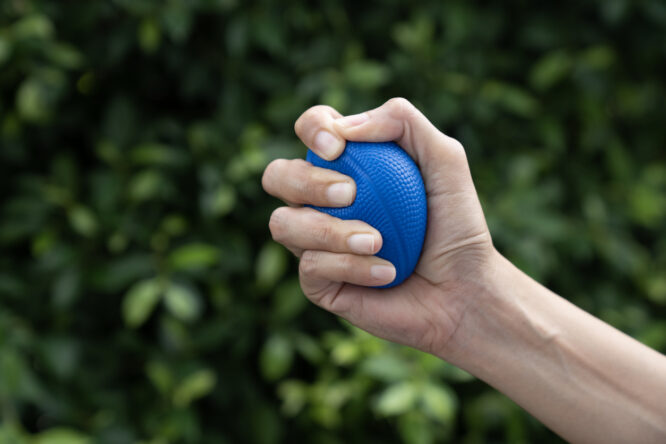
Grip strength is a surprisingly reliable marker of overall health, and it’s been linked to mobility, balance, frailty risk, and even mortality. You can test it at home with a tennis ball or stress ball. Squeeze it as hard as you can and see how long you can hold the squeeze before your grip fatigues. Being able to maintain a hard squeeze for 15 to 30 seconds is a decent benchmark.
Lower grip strength tends to point to lower whole-body strength, which becomes a bigger issue with age. To improve it, regular strength training is key, particularly anything that targets the forearms and hands. Single-arm wrist curls are a good starting point, with two or three sets of 10 to 20 reps a few times a week.
The mood test
Mental wellbeing is one of the most powerful but most overlooked parts of ageing well. Chronic stress, low mood, and anxiety all contribute to inflammation, hormonal imbalance, and faster biological ageing. To do a quick check, score yourself on the past two weeks. How often have you felt low? How often have you felt anxious or on edge? How often have you felt irritable? How often have you felt genuinely calm or content?
Score each one from zero, meaning not at all, to three, meaning most days. Occasional stress is normal in midlife. Persistent low mood or anxiety on most days isn’t something to brush off. In older adults, low mood can show up more subtly, like fatigue, withdrawal, or losing interest in things you used to enjoy.
To support your mood, focus on the basics first. Prioritise sleep, move regularly, build in proper rest rather than just productivity, and limit alcohol, which often makes things worse over time. Talking therapies and medical support are worth considering if things aren’t changing.
The reaction time test
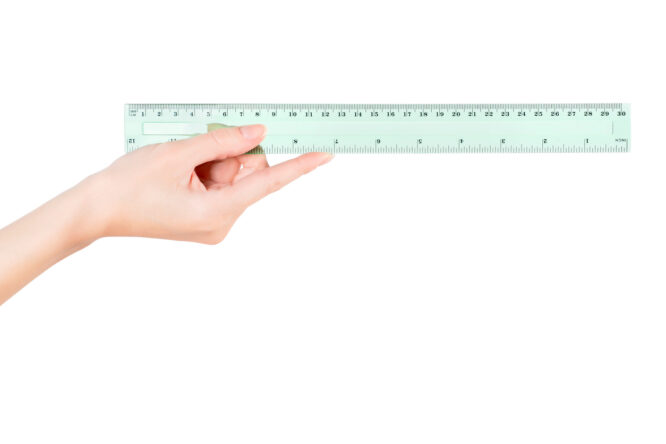
Reaction time is one of those things people rarely think about, but it’s a really good measure of how well your brain and body are still working together. As we age, those connections can slow down, and quicker reactions help with everything from driving to catching yourself when you stumble. The simplest at-home test is the ruler drop. Ask someone to hold a ruler vertically while you place your thumb and forefinger near the bottom without touching it. When they let go, catch it as quickly as you can.
The shorter the distance it falls before you grab it, the quicker your reaction time. In midlife, reactions are usually fairly sharp. In older adults, there might be a small delay, which is normal. The point isn’t a perfect score, it’s noticing changes over time. To improve it, anything involving coordination and timing helps. Ball games, racquet sports, simple hand-eye drills, or even tossing something from one hand to the other while you’re sitting on the sofa.
The beetroot test

This one’s a bit more unusual but quite revealing. Gut health plays a bigger role in ageing well than most people realise, and the beetroot test gives you a rough sense of how quickly things are moving through your digestive system. Eat a portion of beetroot, fresh, cooked, or as juice, then note how long it takes for you to notice a reddish or pinkish colour in your stool.
Seeing the colour change within 24 to 48 hours is considered typical. A much longer delay can suggest slower transit, which is linked to lower fibre intake, reduced gut motility, and changes in the gut microbiome. Over time, these things can affect inflammation, metabolic health, and immune function, all of which matter for how well you age. The colour change won’t be obvious for everyone, so this isn’t a precise medical test, but it’s a useful little snapshot.
To improve gut transit, increase your fibre intake. Most people in the UK don’t get anywhere near enough. Vegetables, legumes, nuts, wholegrains, and fruit are all helpful, and pistachios in particular have been linked to a healthier gut microbiome thanks to their fibre and polyphenol content.
None of these tests are diagnostic on their own, and a single bad result isn’t a reason to panic. The point is to get a rough sense of where you are, then track how things change over the next few months and years. Most of the things that go wrong with ageing are slow, quiet, and gradual, which is exactly why a few simple home checks every six months or so can be so useful.
Spot a slip early, do something about it, and you’ve genuinely changed how the next decade goes. None of this needs to be expensive, dramatic, or grim. Five minutes a few times a year is enough to keep you on top of the things that matter most.