Birdwatching has quietly become one of the fastest-growing hobbies in the UK, and the generation leading the charge isn’t who you’d expect.
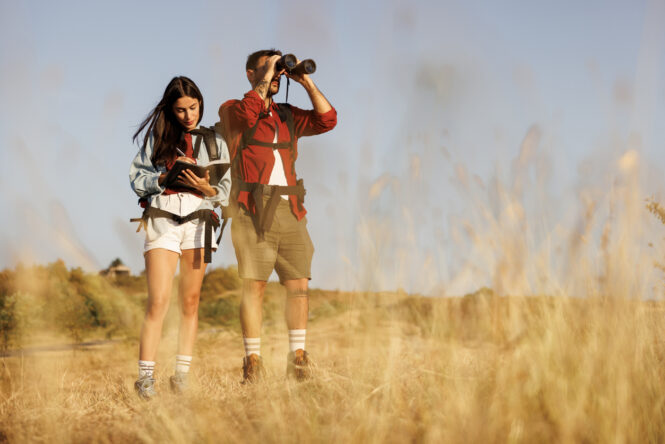
The RSPB has reported a ten-fold increase in birdwatching among Gen Z ahead of International Dawn Chorus Day, making it the second fastest-growing hobby among 18 to 27-year-olds after jewellery-making, and the numbers are still climbing. What used to be stereotyped as a niche pastime for retirees in high-vis jackets is now being taken over by a much younger crowd looking for a genuine way to switch off from the constant digital noise of modern life.
It turns out that trading social media feeds for a pair of binoculars and an early morning walk is exactly what a lot of young people are choosing to do to protect their mental health. This massive surge in interest isn’t just a temporary trend, either; it’s completely redefining how a whole new generation connects with the British countryside and engages with wildlife conservation on their own terms.
The growth across all age groups is pretty striking.

It’s not just Gen Z getting involved. Research by Fifty5Blue published by RSPB found that birdwatching has seen a 47% general increase overall, with millennials up 216% and Gen X up 66%. That’s a hobby long associated with retirees in waterproof jackets suddenly pulling in people of every age and background, and something has clearly changed in how people see it.
Social media has played a major role in stripping away the idea that birdwatching is a niche hobby for serious enthusiasts with expensive equipment. Tips, beginner guides, and videos of people simply sitting in their gardens or local parks and watching what shows up have made the whole thing feel a lot more approachable. You don’t need binoculars, a field guide, or any prior knowledge to get started, which is exactly the kind of low-barrier entry point that tends to take off online.
People describe it as one of the few things that genuinely quiets a busy mind.
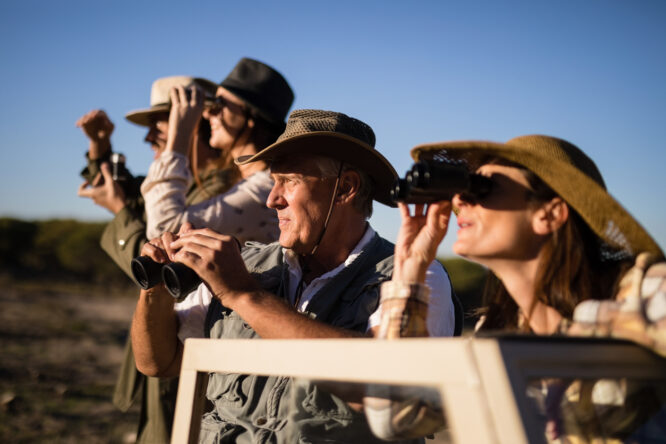
When you’re focused on listening for a call or watching a bird move through branches, there isn’t much room for the usual background noise of daily stress. That kind of absorbed attention is something researchers have been interested in for years in the context of mental wellbeing, and birdwatching seems to deliver it naturally without requiring any particular effort or skill level. Many people who take it up describe it as feeling like proper rest in a way that scrolling or watching television doesn’t.
The focus it demands is effortless rather than forced, which matters because deliberate concentration tends to be tiring, while this kind of soft attention actually restores energy. It’s the same quality of engagement you get from being absorbed in something you genuinely enjoy, except birdwatching pairs it with fresh air, movement, and time away from screens, all of which add to the overall effect.
Birdsong itself has a measurable effect on how you feel.
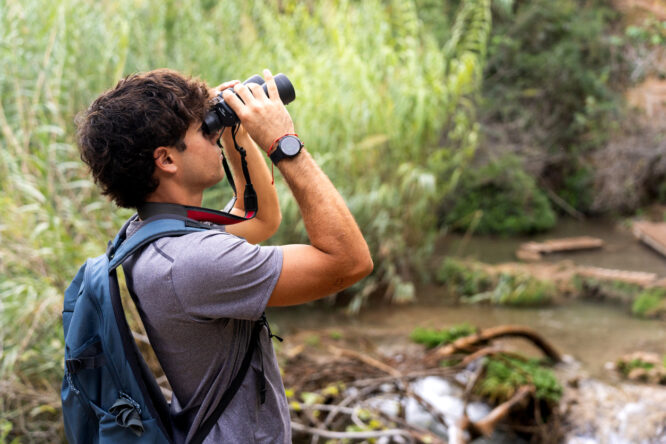
Hearing birdsong has been linked to increased serotonin production, which is the chemical in the brain most associated with feeling good and emotionally stable. The dawn chorus, when multiple species are singing at their loudest simultaneously, produces that effect at its most concentrated and is worth experiencing at least once even if early mornings aren’t usually your thing. One study found that actively listening for birdsong during a walk made an already beneficial activity measurably healthier than walking without that focus, suggesting that attention to birds adds something meaningful on top of the exercise itself.
Beyond the immediate mood lift, there’s also emerging evidence that regular birdwatching may reduce the risk of cognitive decline as we age. That’s a longer-term benefit that sits alongside the more immediate ones, and it makes the hobby worth considering not just as a way to feel better now, but as something that could genuinely support brain health over time.
We’re actually wired to find this kind of thing restorative.
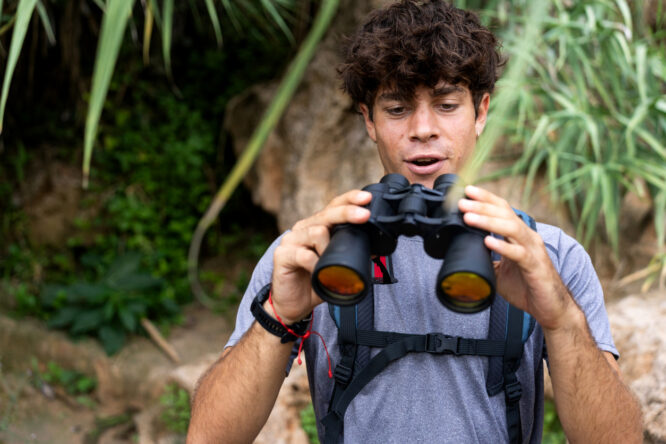
There’s a scientific theory called the biophilia hypothesis that suggests humans are biologically driven to seek out connection with the natural world. We’ve evolved alongside nature for thousands of years and that pull toward it isn’t just a preference, it’s thought to be a genuine biological need. Birdwatching taps directly into that because it requires you to slow down, pay attention, and tune into what’s happening around you in a way that most daily activities simply don’t.
That’s part of why it tends to feel so different from other hobbies. It’s not stimulating in the way that games or social media are, and it’s not physically demanding in the way that sport is, but it leaves people feeling genuinely recharged rather than just distracted. That quality is increasingly rare and increasingly sought after, which helps explain why so many people across different age groups are finding their way to it right now.
You don’t need to go anywhere special to start.
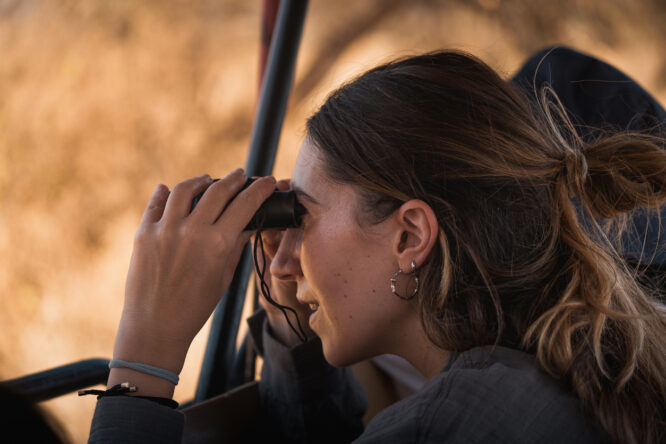
A garden, a window with a view of some trees, a local park, or a patch of woodland are all perfectly good starting points. The key is staying still and quiet for long enough to let birds settle and go about their business without feeling disturbed, which usually doesn’t take long at all. Most people are genuinely surprised by how much activity is going on around them once they stop and pay attention to it.
Woodland walks in particular tend to catch beginners off guard. Most people assume they’re seeing one or two species at most, but stopping to listen rather than just walking through often reveals half a dozen or more species singing at the same time. Chiff-chaffs, blackbirds, woodpeckers, song thrushes, wrens, and tawny owls all have distinctive enough calls that you start to recognise them quickly, and that recognition is usually where the hobby hooks people properly.
Hearing birds counts just as much as seeing them.
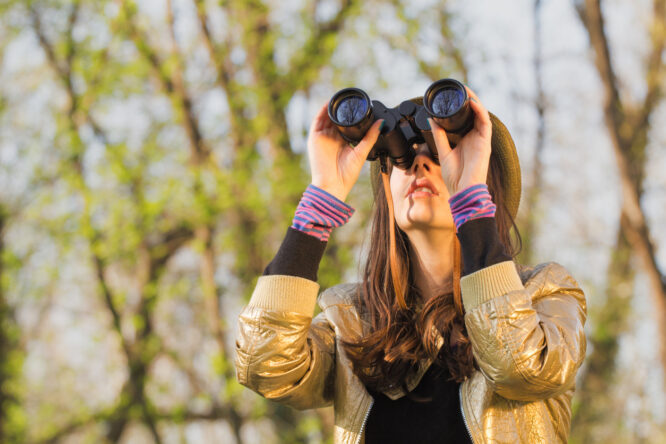
A common misconception is that birdwatching is purely visual, but sound is just as central to the experience and in many ways more accessible for beginners. A lot of species are far easier to hear than to spot, particularly in dense woodland or thick hedgerows where visibility is limited. Learning to identify calls rather than appearances opens up a much wider range of encounters and means you’re picking up information about the birds around you even when you can’t see them at all.
This also makes the hobby genuinely inclusive in a way that some outdoor pursuits aren’t. You don’t need good eyesight, expensive kit, or the ability to cover long distances to engage with it meaningfully. Sitting in one spot and listening carefully is enough to have a rich experience, which is part of why it works so well for people with different physical abilities, different budgets, and very different amounts of time to spare.
Getting started is as simple as stepping outside and paying attention.
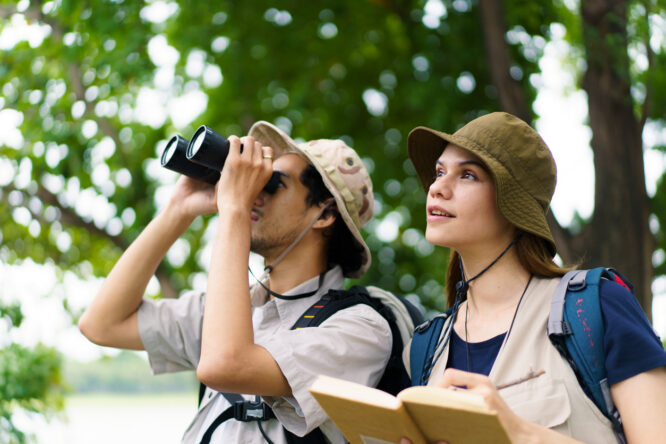
The RSPB describes birdwatching as something everyone can do regardless of how much or how little they know about birds going in. There’s no minimum entry requirement and no wrong way to do it, which makes it unusual among hobbies that can sometimes feel gatekept by experience or equipment. Starting from zero is completely normal, and most people who stick with it say the learning happens naturally rather than needing to be studied.
If you want a loose starting point, heading outside in the morning gives you the best chance of hearing a wide range of species while they’re most active. You don’t need to get up at dawn, though that’s when the chorus is at its peak. Even thirty minutes in a local green space with your phone put away and your attention on what’s around you is enough to understand why so many people are finding this one of the most genuinely enjoyable things they’ve picked up in years.