Staring at an energy bill that you simply can’t afford is a modern kind of dread that thousands of households are dealing with right now.

Staring at an energy bill that you simply can’t afford is a modern kind of dread that thousands of households are dealing with right now. It’s incredibly stressful when the cost of keeping the lights on and the water warm starts outstripping the money coming in. When the numbers don’t add up, the instinct can be to push the paperwork to one side and hope for the best, but that usually makes things more difficult down the line.
Suppliers are legally required to help you find a way forward, whether that means setting up a manageable plan or checking for extra support. Taking that first step to face the situation is tough, but there are practical routes available to get some breathing room.
Start by speaking to your energy supplier.

This is the single most important step, and it’s the one most people put off because the conversation feels intimidating. Energy suppliers are legally required by Ofgem to help you set up an affordable repayment plan if you’re struggling to pay. They cannot just cut you off without warning. By law, they have to offer a grace period, send reminders, and work with you to find a manageable arrangement.
The earlier you ring them, the more options you’ll have. Suppliers can spread your debt over a longer period, lower your monthly direct debit while you get back on your feet, give you payment breaks, or in some cases write off part of the debt through their own hardship schemes. The conversation might feel awkward, but the people on the other end of the phone deal with this every day and won’t make you feel bad about it.
Check if you’re eligible for the Warm Home Discount.

The Warm Home Discount is one of the most useful schemes for anyone struggling with energy costs. It gives eligible households £150 off their electricity bill, usually applied between October and March. To qualify, you generally need to be receiving certain benefits like Pension Credit, Universal Credit, income-based Jobseeker’s Allowance, or Income Support, and have high enough energy costs.
The scheme is run through your energy supplier, so the easiest way to find out if you qualify is to check with them directly. Some pensioners get the discount applied automatically through what’s called the core group, while others need to apply each year. It’s worth checking, even if you’re not sure you qualify because the rules have changed over the years and more people are now eligible than used to be.
Look into Cold Weather Payments and Winter Fuel Payments.

Cold Weather Payments are £25 payments given automatically to people on certain benefits during particularly cold spells, when the average temperature in your area drops to zero degrees or below for seven days in a row. You don’t need to apply, the payment is made straight into the same account that receives your benefits.
The Winter Fuel Payment is the other one to know about. It used to be available to all pensioners, but it’s now means-tested, which means you only get it if you’re receiving Pension Credit or other qualifying benefits. If you’re a pensioner who thinks you might be entitled to Pension Credit but haven’t claimed, it’s worth checking because claiming Pension Credit unlocks the Winter Fuel Payment plus a host of other support. Citizens Advice can help you check.
Join the Priority Services Register.

If you, or someone in your household, has health issues, a disability, is over the state pension age, or relies on medical equipment that uses electricity, joining the Priority Services Register is a really good move. It’s a free service offered by every energy supplier and network operator, and it gives you extra protections during outages, priority support, advance notice of planned power cuts, and additional help with reading meters or moving them somewhere accessible.
It also flags you to your supplier as someone who needs more careful handling if anything goes wrong with your account. Signing up is straightforward, you just contact your supplier or network operator directly, and they’ll add you to the register. It’s worth doing even if you don’t think you need it right now because it’s there if circumstances change.
Ask about hardship funds and grants.

Many of the big energy suppliers run their own hardship funds for customers in genuine financial difficulty, and these are properly worth knowing about. British Gas runs the British Gas Energy Trust, which gives grants of up to several thousand pounds to people struggling to pay their bills, and you don’t have to be a British Gas customer to apply. Octopus Energy has a similar fund called Octo Assist, which can include energy credits, payment holidays, or financial help.
Other suppliers like EDF, E.ON, Scottish Power, and OVO all have their own hardship schemes. The amounts and eligibility rules differ, but most are designed for people on low incomes or facing a specific crisis. Ring your supplier and specifically ask about hardship funds or grants. Don’t wait for them to offer because many won’t unless you bring it up.
Get free debt advice if you need it.

If your energy debt is part of a bigger money problem, free debt charities can take a huge weight off. StepChange is one of the biggest, offering free, confidential debt advice across England, Scotland, and Wales. They can work with you to build a repayment plan, negotiate with creditors on your behalf, or in some cases help you write off debts entirely. You can reach them on 0800 138 1111.
National Debtline is another good option, also free, on 0808 808 4000. MoneyHelper, run by the government, offers free guidance on energy bills and wider money issues on 0800 138 7777. Citizens Advice is another excellent first port of call, particularly for advice on benefits, energy disputes, and dealing with your supplier. None of these services charge you anything, and using them won’t affect your credit score in the way using a commercial debt company might.
The fuel direct scheme is worth knowing about.

If you’re on certain benefits and falling behind on your energy bills, you can ask for the fuel direct scheme. This is where your benefits office pays a small amount of your benefit directly to your energy supplier each fortnight, covering your current usage plus a small amount towards any debt. It removes the stress of having to manage the payments yourself and stops your debt from growing.
The same scheme can be used for water bills too. To set it up, contact your benefits office and ask. It’s particularly useful for anyone who finds managing their own budget difficult, or who’s been disconnected or threatened with disconnection in the past.
Switch your payment method to direct debit if you can.

This sounds small but can save real money. Households who pay their energy bills on receipt of bill, rather than by direct debit, are often paying around £138 a year more on the standard variable tariff. Suppliers offer their best rates to direct debit customers, and most of the cheapest deals on the market require it.
If you’re worried about losing track of payments, you can set up your direct debit on a date that suits your other outgoings, and you can review it every few months to make sure you’re not over or underpaying. If you’ve been a “paying on receipt of bill” customer for years out of habit, this is one of the easier wins. Just be aware that direct debit estimates can sometimes be too high, so submit regular meter readings or use a smart meter to keep things accurate.
Check whether you’re paying too much.

If you’ve been with the same supplier for a long time without switching, you might be paying more than you need to. Comparing energy tariffs through a site like MoneySuperMarket or Uswitch is free and only takes a few minutes. The Energy Switch Guarantee protects you during the move, meaning your switch will be completed within 21 days with no interruption to your supply.
Even with the price cap in place, there can be cheaper fixed deals available, particularly for those willing to commit for a year or more. If you’re not in arrears with your supplier, switching is usually a smooth process. If you are in arrears, you might not be able to switch until the debt is cleared or you’ve been in a repayment plan for a few months, so it’s worth speaking to your current supplier first.
Small changes around the house can really add up.
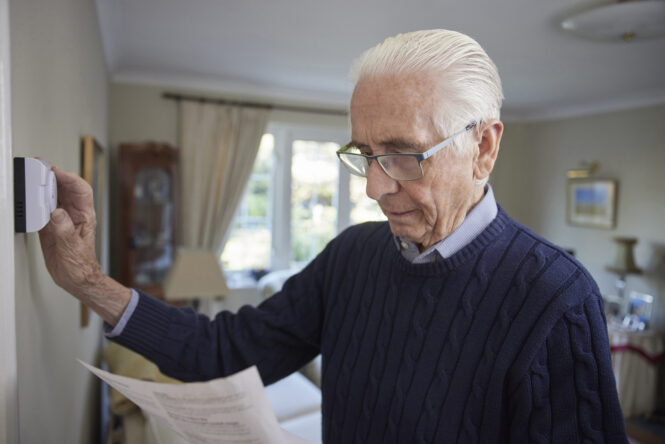
None of these are dramatic, but together they can shave a meaningful amount off your annual bill. Turning your thermostat down by one degree can save around £100 a year for the average household. Draught-proofing windows and doors, especially in older homes, can save another £40 or more, with professional draught-proofing saving even more.
Washing clothes at 30 degrees instead of 40 cuts your washing machine’s energy use in a big way. Using lids on pans, only boiling the water you actually need in the kettle, and turning off appliances at the wall rather than leaving them on standby all add up over a year. Smart meters can help you spot which appliances are quietly using the most, which gives you something concrete to work with rather than guessing.
Help for older people, disabled people, and specific groups is available.

Age UK is urging older people to ring them before turning their heating off or down. They can check whether you’re getting all the benefits and discounts you’re entitled to, point you towards more help with heating costs, and offer guidance on bills, meters, and complaints. Scope, the disability equality charity, offers free energy advice to disabled people in England and Wales through its disability energy support scheme. They can help with managing debt, accessing benefits and grants, fuel vouchers, and registering for the Priority Services Register. You can reach them on 0808 801 0828.
In Scotland, Disability Information Scotland offers similar support. There are also local council schemes in some areas, including emergency household support funds for residents in real financial difficulty. Your local council’s website will have details, or Citizens Advice can point you in the right direction.
What to do if you can’t pay this month

If a bill is due and you genuinely can’t pay it, the most important thing is to act before the payment is missed rather than after. Contact your supplier straight away and explain the situation. They have a duty of care and will almost always work with you on a temporary solution, whether that’s a payment holiday, an extended payment plan, or putting your account on hold while you sort things out.
If you’re on a pre-payment meter, and you can’t afford to top up, ring your supplier and ask about emergency credit and friendly hours credit, which gives you a small amount of gas or electricity to tide you over. In a real emergency, you can also ask your local council about emergency assistance schemes, or apply for a fuel voucher through a food bank or charity. Nobody should be sitting in the cold because they’re embarrassed to ask for help.
Energy debt is one of those things that snowballs quickly if you leave it, and shrinks just as quickly once you start asking for help. The hardest part is almost always the first phone call, whether that’s to your supplier, a debt charity, or your benefits office. Once you’ve made it, you’ll usually find there are more options than you thought, and most of them are designed specifically for people in exactly your situation. The system isn’t always easy to navigate, but help is genuinely there. You just have to ask for it.