Plenty of households have video doorbells these days, and it’s easy to see why.
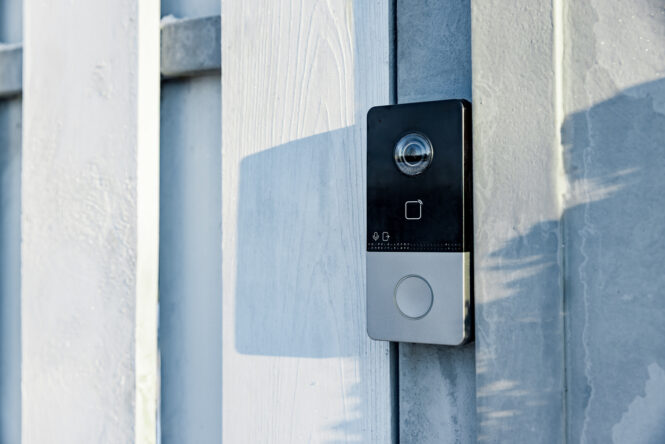
They’re great for keeping tabs on parcel deliveries, warding off opportunistic thieves, and seeing who’s knocking without having to drag yourself off the sofa or open the door to strangers. Of course, that peace of mind gets complicated quickly when the lens points straight into someone else’s daily routine. If the house next door has recently mounted a smart camera by their porch, you might’ve spotted that its wide-angle view catches your driveway, your front window, or your garden path every time you leave for work.
Having your private space constantly filmed creates an uncomfortable tension between neighbours, making it important to know your legal rights under UK privacy laws, what rules the camera owner has to follow, and where the line sits when their security starts trampling all over your privacy.
Are video doorbells actually legal to use?

In the UK, using a video doorbell is generally legal, provided it complies with privacy and data protection rules. Most of the time, there’s no real issue if the camera is set up to record purely within the boundaries of the owner’s own property.
Problems tend to arise when that footage extends further, into public spaces like streets and pavements, or onto a neighbouring property. Video doorbells fall under the UK General Data Protection Regulation and the Data Protection Act 2018, both of which set clear limits on what can be recorded.
The way the cameras are positioned matters.
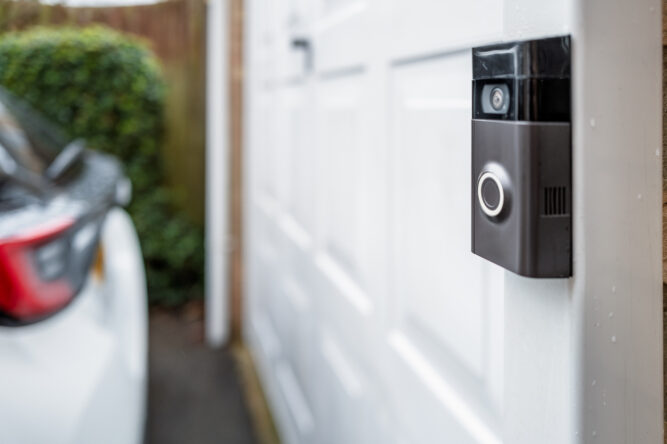
According to home security company Eufy, the key principle here is proportionality. A camera needs to serve a legitimate purpose, like home security, without unnecessarily intruding on other people’s privacy. A standard doorbell camera can typically be installed without any issue, provided it’s positioned to minimise how much of the surrounding area it captures.
A doorbell camera angled specifically to focus on someone’s own front door is generally considered acceptable. One that captures large stretches of public space, or points directly at a neighbour’s windows, is far more likely to be seen as excessive. Local councils have echoed similar guidance too, warning that filming shared or communal areas, public footpaths or streets can breach privacy rights under both the Data Protection Act 2018 and the Human Rights Act 1998.
There are responsibilities that come with owning one.
If a doorbell camera records people outside the owner’s own property, that owner becomes responsible for handling any personal data captured properly. According to Eufy, anyone whose doorbell captures public or shared spaces should carry out a Data Protection Impact Assessment to properly evaluate the privacy risks involved.
Owners are also expected to make people aware that recording is taking place, usually through a clearly visible sign, since asking for individual consent from every passer-by simply isn’t practical. Any footage collected should be stored securely and deleted once it’s no longer needed, and sharing recordings is only permitted for a good reason, such as providing footage to the police.
What happens if the rules are broken?
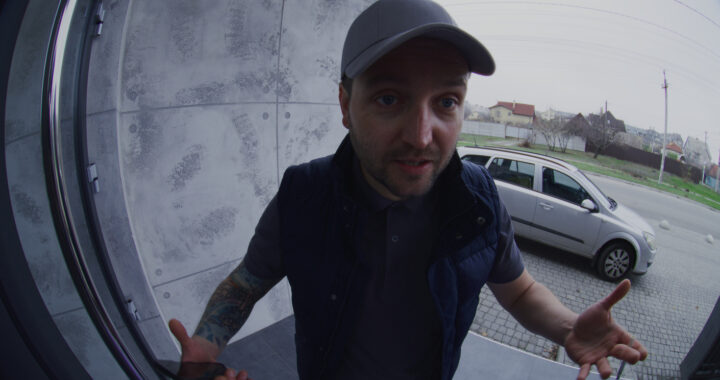
Fines and legal action can both follow if someone fails to follow video doorbell rules properly. Two separate routes exist here: the Information Commissioner’s Office, and the civil courts.
The ICO has the power to issue fines, enforcement notices, and formal orders requiring changes to how a camera is being used. Separately, affected neighbours can pursue civil action of their own. According to Eufy, neighbours may choose to sue if a camera is intrusive or records their property without consent, pointing to a notable 2021 case in which a homeowner was found guilty of harassment and data protection breaches, resulting in damages and costs totalling around £100,000.
What can you do if you’re worried about a neighbour’s doorbell?
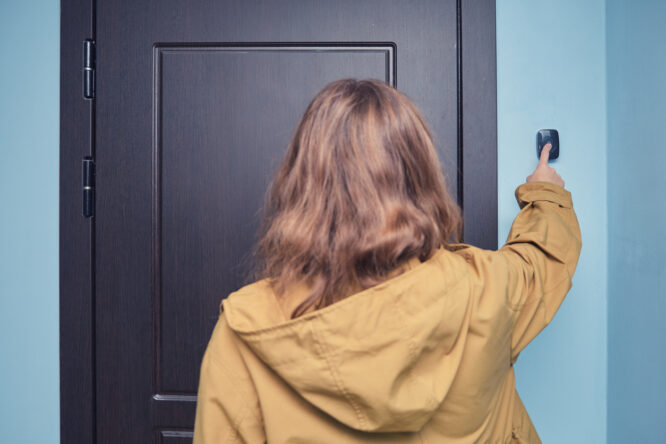
If you suspect a neighbour’s doorbell might be facing toward your own property, the recommended first step is a calm, direct conversation, simply asking when and what the camera actually records. You can also ask to see sample footage, which can help clarify whether your private space is actually being captured.
If the issue isn’t resolved this way, take photos documenting the camera’s position, and noting whether there’s any visible signage warning that recording is taking place. From there, a formal complaint can be raised with the Information Commissioner’s Office, which has the authority to order changes such as repositioning or adjusting the device. In more serious cases, particularly ongoing harassment, contact the police directly or seeking legal advice about pursuing civil action.