The dream of a robot doing your dishes, folding your laundry and tidying up after the kids has been around for decades.
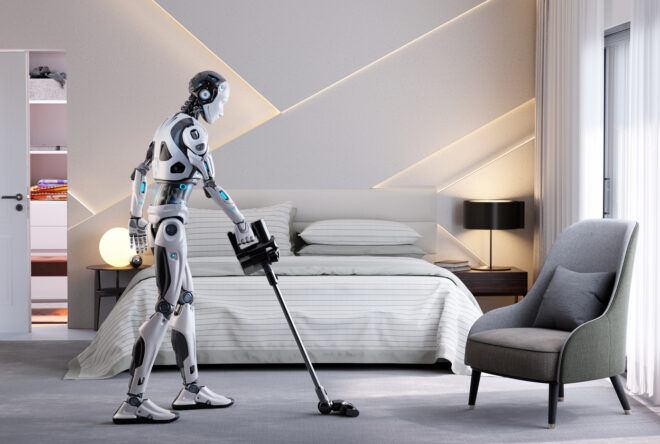
Lately, though, it’s actually seemed close to becoming reality, with humanoid robots completing half-marathons in record time, slick videos showing them carrying out household chores, and major tech companies promising consumer-ready models within years. But how close are we really to having one in our own kitchens? Here’s an honest look at where humanoid robots are today, why China is so far ahead, and how long it’ll genuinely take before one of them is doing your washing up.
A few different robots are making headlines right now.

Several big-name humanoid robots have been capturing the world’s attention in recent months. Tesla’s Optimus and 1X’s Neo are probably the most famous, both attracting huge media coverage and big-money investment. Less well known but equally interesting models include Unitree’s G1, which can be bought for just under £20,000, and UBTech’s Walker E, which costs around three times that price.
Right now in the UK, buying a humanoid robot is tough, but not impossible. Most of the available models still need to be sourced through specialist suppliers, with months of waiting times and limited consumer support. The Unitree G1 even comes without hands as standard, with those costing extra. So while you can technically own a humanoid right now, you’d need a serious budget, technical know-how and a lot of patience.
China is leagues ahead of the rest of the world in this department.
China has raced ahead in humanoid robotics over the past few years, partly out of necessity. The country’s ageing population and shrinking workforce means there’s a major gap between the number of workers available and the work that needs doing. The Chinese government has gone all-in on humanoid robots as a way of plugging that gap, pouring serious money into research, development, and manufacturing at scale.
China also happens to be the world’s biggest manufacturer of the small motors, sensors, and components that humanoid robots need to function. That alone gives them a huge cost advantage. They can produce the parts roughly 100 times cheaper than the UK or US could if they tried to build their own. So while Western companies are still putting together prototypes, China is already moving towards consumer-ready models in some regions.
They have a rare earth metal advantage.

One of the lesser-known reasons China leads the humanoid race is its grip on rare earth metals. These are the materials needed to make the small, powerful magnets that go inside the motors driving humanoid joints. China controls around 90 per cent of the world’s rare earth metal processing, even when the metals themselves are mined elsewhere.
That means almost every motor used in a robot, anywhere in the world, has Chinese supply chains running through it somewhere. Other countries are working hard to build their own capacity, but catching up will take decades rather than years. Until that happens, China will continue to hold a massive head start in the humanoid robot industry.
The honest timeline for getting one in your home isn’t great news.

While you can technically buy a humanoid robot today, the experience is different from picking up a kettle or a microwave. Industry experts reckon it’ll be at least a generation, possibly more than ten years, before you can walk into your local department store and pick out a robot helper off the shelf. Online purchases through specialist retailers will likely come first, similar to how some shoppers in China can already pick them up today.
For the average UK household, the more realistic timeline is probably 15 to 20 years before humanoid robots are a normal feature of family life. The cost, the safety concerns and the technical limitations all need to be solved together, which doesn’t happen overnight. The dream may be close, but it’s still firmly in the dream stage for now.
Why most current robots aren’t in homes

Even in China, where humanoids are most developed, most of them don’t end up in private homes. They’re mainly working in factories, warehouses, and other controlled environments. The reason is simple. Homes are unpredictable, chaotic and constantly changing. A factory floor can be kept clear of obstacles, with predictable workflows and properly mapped layouts. A family home has children running around, pets, kicked-off shoes, bags dropped on the floor and furniture that gets moved around.
The AI brains inside today’s humanoid robots struggle badly in these messy, unpredictable environments. They can handle structured tasks brilliantly, but they get confused by simple things like a cat lying on a kitchen tile, a child’s toy left in the middle of the floor, or a slightly tilted dishwasher rack. Until robots can confidently handle all this chaos, they’ll stay out of most family homes.
Safety is a huge consideration here.
Safety is one of the biggest reasons humanoid robots aren’t quite ready for everyday family life. A humanoid robot is genuinely heavy, often weighing 30 to 50 kilograms or more, with metal joints and motors strong enough to lift bags of shopping. If it falls over, bumps into a person, or drops something it’s carrying, the consequences can be serious.
One example often used by robotics experts is a robot unloading a dishwasher and turning around with a knife in its hand. If a child or pet happens to be standing behind it, the result could be dangerous. Until robots can be guaranteed to recognise people, animals and risky situations every single time, they’re not going to be safe enough for unsupervised use around children or elderly relatives.
There are certain kinds of tasks robots can already do.
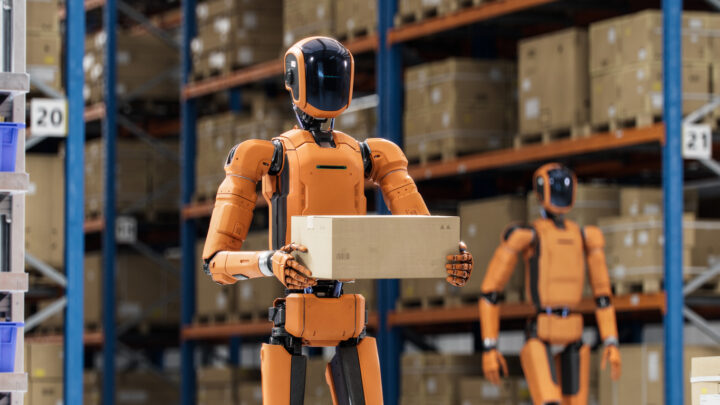
Despite all the limitations, today’s humanoid robots can already handle an impressive range of tasks in the right setting. They can carry boxes, sort items, load and unload shelves, and even perform simple manual jobs in factories and warehouses. Some can fold laundry, pour drinks and prepare basic meals, though usually in carefully controlled demo conditions.
What they can’t yet do is handle the constant variety and unpredictability of a real household. The way your kitchen is laid out, the specific way you stack your dishwasher, the random places where your kids leave their toys, and the moods of your dog all add up to a genuinely tricky environment for a robot to navigate. Today’s models are amazing in controlled settings, but home life is still a step too far.
What’s driving the rush to develop them?
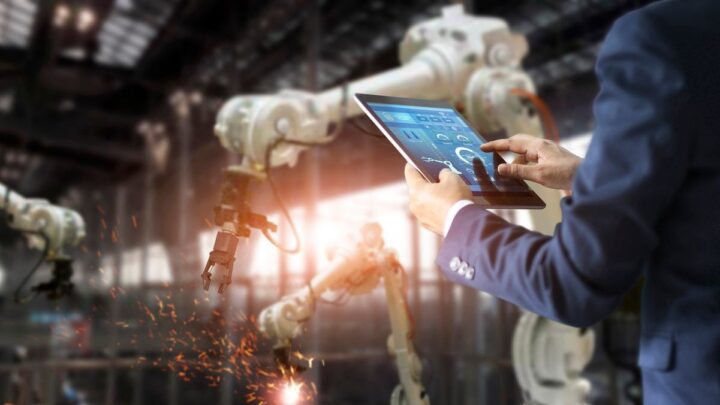
Economic pressure is the biggest force behind the push for humanoid robots. Many developed countries, including the UK, are facing ageing populations and shrinking workforces. Sectors like elderly care, hospitality, and manufacturing are already struggling to find enough workers. Robots that can handle even some of these jobs would relieve a significant amount of pressure across multiple industries.
There’s also straightforward business interest. The market for humanoid robots is expected to be worth hundreds of billions of pounds within the next decade. Major tech firms, automotive companies and venture capitalists are pouring money into the field because whoever cracks the consumer humanoid first stands to make an enormous amount of money. So progress is likely to accelerate rapidly in the coming years.
Smaller robots are already changing homes.
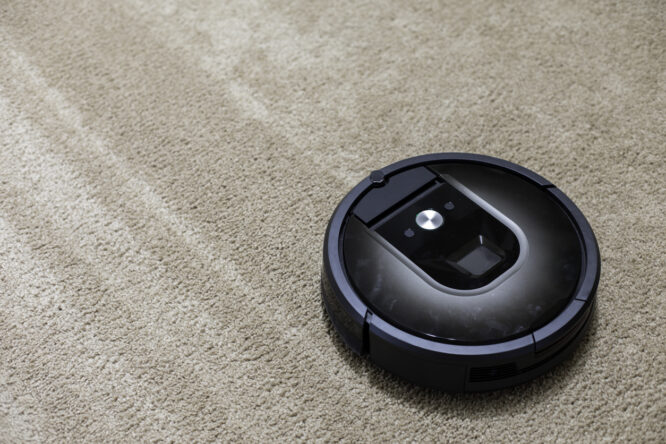
While humanoid robots aren’t quite ready, plenty of more specialised home robots are already doing useful work in millions of households. Robot vacuum cleaners have been around for years and now come with sophisticated mapping, obstacle avoidance and even self-emptying bases. Robot lawnmowers are gradually replacing weekly mowing for many families. Robot window cleaners and pool cleaners are also gaining ground.
These single-purpose robots don’t look like humans and don’t try to do everything. They focus on one task and do it well. That’s actually why they’ve succeeded, where humanoid robots are still struggling. Specialised robots are cheaper, safer and more reliable because they only have to deal with one type of task in one type of environment. They’re a useful glimpse of what household robotics looks like today, even if they aren’t the sci-fi dream.
The helper-robot future is closer than ever, in any case.
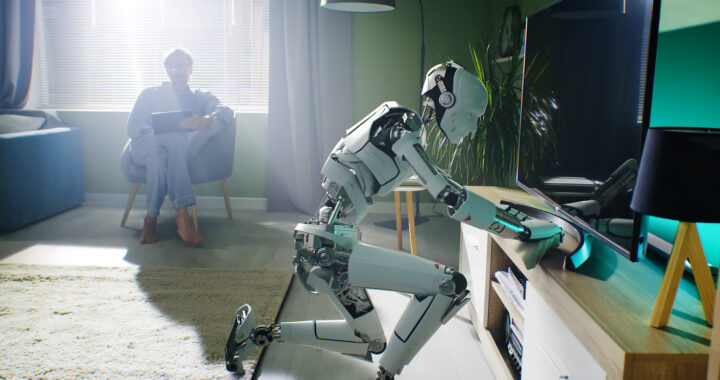
The combination of better AI, cheaper hardware and growing investment means humanoid robots are improving at a rapid pace. Each year, the gap between what robots can do in demos and what they can do in real homes gets a little smaller. What looked impossible five years ago is now happening routinely in research labs, and what’s happening in research labs today will likely be in the early consumer market within the next decade.
The first generation of consumer humanoids will probably be limited. Think of them as helpers for specific tasks rather than full live-in assistants. They might fold laundry, tidy a single room, fetch and carry small items, or help an elderly person move around safely. Full home robots that can do everything, the sci-fi dream, are still a long way off. But the foundations are being laid right now.