
Cutting boards are one of those kitchen tools that get used constantly and thought about rarely. Most people grab whatever’s closest without really considering what it’s made from, even though a cutting board sits directly against your food every single day. If you’re trying to cut down on plastics and chemicals in the kitchen, it’s actually one of the easier swaps to make.
The material is the most important factor when choosing a chopping board.
Plenty of standard cutting boards are made from plastic, and some contain compounds like BPA or phthalates that can gradually leach into food, especially once the surface starts to show knife marks and wear. Cheaper composite or bamboo boards can bring their own issues too, often held together with glues that contain formaldehyde.
Some boards also come with synthetic coatings added for shine or grip, and a few even include antibacterial chemical treatments baked into the surface. None of that is something you want sitting directly against whatever you’re about to eat, which is why choosing the right material makes a real difference.
Solid wood is a reliable, natural choice.

Hardwoods like maple, walnut, and beech make excellent cutting boards because they’re dense enough to resist deep knife grooves, which is exactly where bacteria tends to build up over time. A properly finished solid wood board, made from one single piece rather than several pieces glued together, avoids synthetic adhesives entirely.
The trade-off is that wood needs a bit of upkeep. Regularly applying a food safe oil or beeswax keeps the surface from drying out or cracking, and it should always be washed by hand rather than put through the dishwasher.
Stainless steel is about as low fuss as it gets.
If you want something that’s completely non-toxic without any ongoing maintenance, stainless steel or titanium is hard to beat. Neither material absorbs bacteria or odours, which makes them particularly good for prepping raw meat, and both can go straight in the dishwasher without any issue.
The downside is that metal can be tough on knife blades, meaning you’ll likely need to sharpen them more often than you would with a softer surface. For anyone who values hygiene over how the board feels under the knife, it’s a solid trade-off.
Glass works, though it comes with a catch.
Glass cutting boards are completely non-porous, which means they don’t hold onto bacteria or smells, no matter how many times they’re used. They’re also easy to clean and resistant to staining, making them a low-maintenance option.
The catch is that glass is rough on knife edges and can be surprisingly loud to use, something anyone who grew up with one in the family kitchen will probably remember. It’s a fine choice for certain tasks, but not necessarily one to reach for every single day.
Composite boards can work, with the right brand.
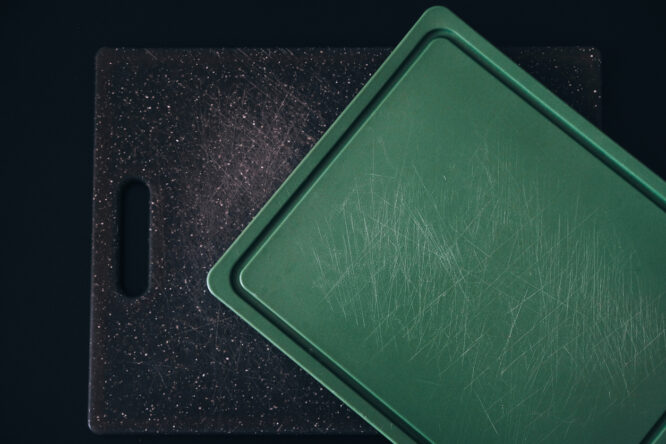
Not all composite boards are created equal, and it’s important to be selective here rather than assuming any composite option is automatically safe. Some responsibly-made brands are tested specifically for toxins and hold recognised safety certifications, offering a lightweight, dishwasher-safe option that’s gentle on knives.
Cheaper composite boards without that kind of transparency are far more likely to use questionable adhesives, so check what a brand actually discloses about its materials before buying. A bit of research upfront saves any nasty surprises later.
Bamboo isn’t the worst, but it’s not the best, either.
Bamboo often gets marketed as the eco-friendly choice, and while it’s more sustainable and affordable than hardwood, not every bamboo board lives up to the non-toxic label. Many are held together with adhesives and sealants that aren’t disclosed clearly, which rather undermines the appeal.
If you’ve got your heart set on bamboo, look specifically for a board made from a single solid piece rather than multiple strips glued together. Brands that are upfront and transparent about their materials are generally the safer bet here.
Making the switch is a small change worth making.
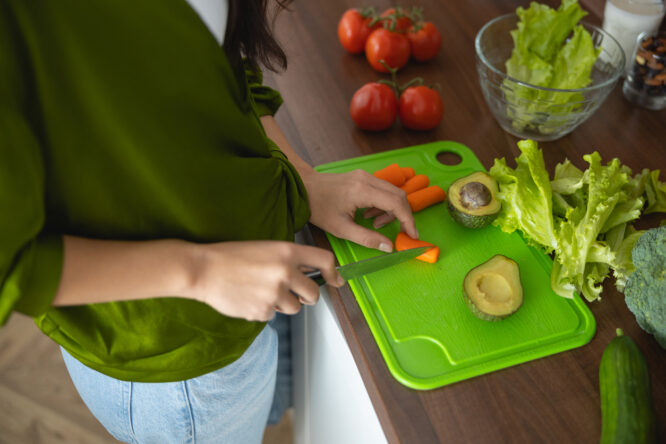
Whether you go for the classic feel of solid wood, the practicality of stainless steel, or the simplicity of glass, there’s a non-toxic option to suit most kitchens and cooking styles. Steering clear of plastic boards and anything with unclear synthetic coatings is the main thing to keep in mind while shopping. It’s a small, one-off purchase that pays off over years of everyday use, and it’s one of the simpler swaps to make if you’re slowly working toward a healthier kitchen overall.