Cats spend a huge chunk of their day washing themselves, so it’s easy to assume they’ve got the whole grooming thing sorted without any help.
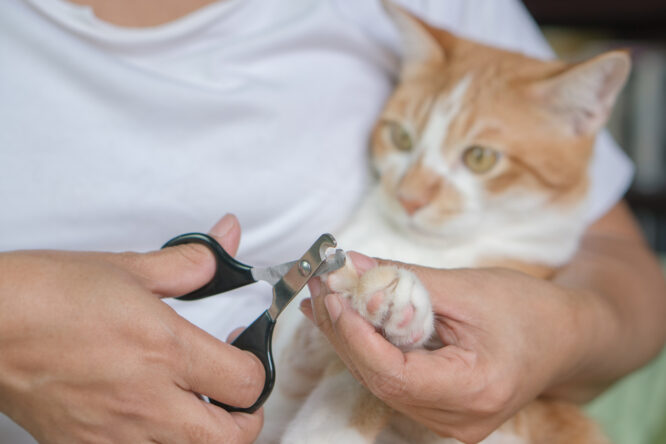
Nails are the one bit they can’t fully manage alone, though, and letting them grow too long can actually cause real problems. Of course, trimming a cat’s nails can quickly turn from a basic grooming chore into a full-blown wrestling match, leaving you with shredded furniture, an offended pet, and an arm full of fresh scratches.
Most cats naturally hate having their paws handled, and the moment they sense the clippers coming out, their fight-or-flight instincts kick in. However, letting their claws grow too long isn’t an option either, as they can split, snag on carpets, or curve round into their paw pads. Here’s how to handle the process smoothly, keep your cat calm, and clip those sharp tips without taking any damage yourself.
You can’t just leave it to the scratching post.
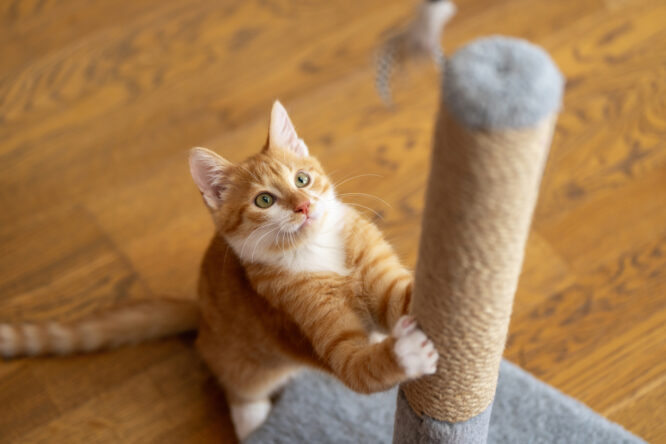
Scratching posts help keep claws in decent shape, but they won’t do the whole job on their own. Indoor cats generally need a trim roughly every two to four weeks, while cats who spend plenty of time outdoors tend to wear their claws down naturally and need trimming less often.
Skipping trims for too long causes more than just sharp scratches on your sofa. Overly long nails can curl round and grow straight into the paw pad, which is painful and can even puncture the skin. Keeping on top of it regularly avoids that entirely.
Getting a cat used to having their paws touched is vital.

Starting young makes life easier, but plenty of cats come into a home fully grown, and that’s fine too, it just takes a bit more patience. Before you go anywhere near clippers, spend a few days simply touching your cat’s paws and rewarding them with a treat or a bit of praise each time they let you.
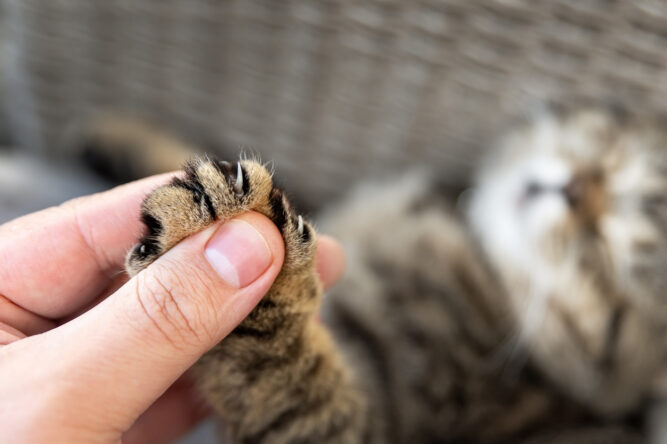
Once that feels normal to them, start gently pressing on their paws so the claws pop out, since cats’ nails retract when they’re relaxed. Reward that too. This step is important because trying to trim a nail your cat hasn’t even let you see yet is a recipe for a bad time for everyone.
Be careful while trimming and only remove the tips.
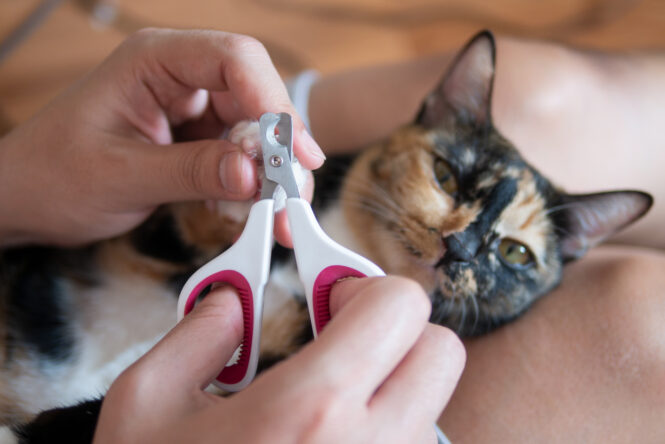
Cat nails are see-through, so you can usually spot the pink section inside quite easily, and that’s the part you want to steer well clear of. Cutting into it will hurt your cat and cause bleeding, so when in doubt, trim less rather than more. Go slowly and only take off the very tip. It’s far better to do a smaller trim more often than to rush and catch the quick accidentally.
There are other things to try if your cat really isn’t having it.

Some cats tolerate nail trims without a fuss, and others act like it’s the end of the world. If yours falls into the second camp, a few tricks can make a real difference. Having a second person around to gently hold or distract your cat while you trim tends to help a lot, and wrapping them in a towel or blanket first can make them feel more secure if they like being held.
If they’d rather not be wrapped up, try sitting them in your lap facing outward instead. You don’t need to do all the claws in one sitting, either. Trimming just one or two nails a day is completely fine, and some owners have real success trimming while their cat’s fast asleep.
Dealing with a cat that bites can be tough, but not impossible.

If nail trims turn your cat into a bit of a piranha, you’re not alone, and there are ways round it. Wrapping them snugly in a towel like a burrito limits how much they can move, and there are also purpose made cat restraint bags or hammocks that hold them gently while leaving their paws free for you to work on. The goal isn’t to fight your cat into submission, it’s to make the whole thing feel calmer and safer for both of you. A slower, more secure approach almost always beats trying to power through a struggle.
Don’t use human nail clippers—opt for ones designed for cats.
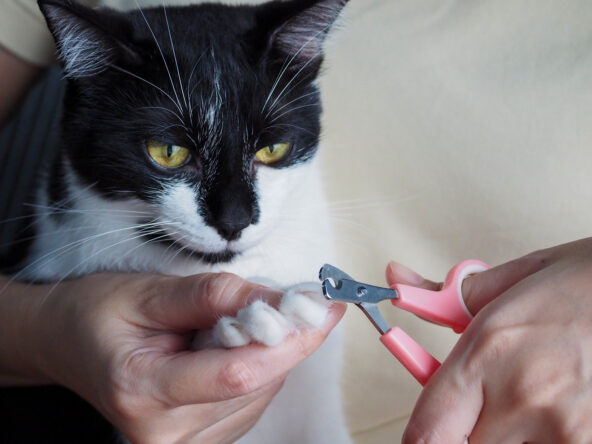
It might seem like any clippers will do the job, but human ones aren’t really built for a cat’s curved claw shape. Using them regularly can cause a cat’s nails to split, which makes walking uncomfortable for them afterwards. Cat specific clippers are shaped to match the curve of their nails properly, so they give a cleaner cut and far less risk of splitting. If you’re going to make this a regular habit, it’s worth picking up a proper pair.
There are other ways to trim without clippers.
If clippers aren’t your thing, a pet nail grinder is a solid alternative. It’s a gentler option overall, though it does take a bit more time and patience than a quick snip with clippers. Keeping scratching posts and toys around the house also helps keep nails naturally shorter between trims, meaning less work for you either way. Little things like this add up over time.
There are times when it might be worth calling in help instead.
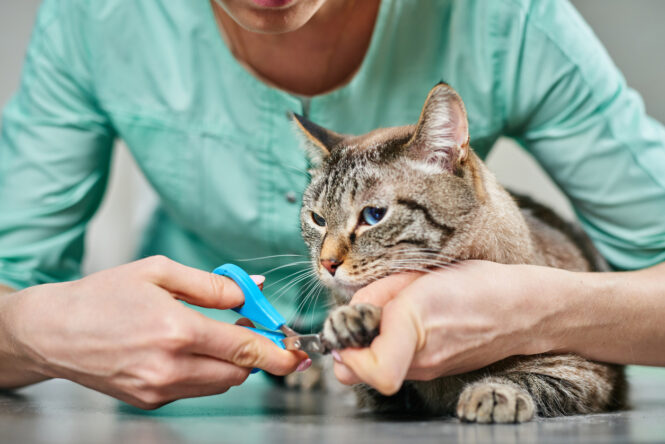
If every trimming session leaves you and your cat both stressed out, it’s completely fine to hand this one over to someone else. A groomer or vet can do it quickly and calmly, and for a lot of owners, the small cost is well worth saving the stress on both sides. There’s no badge of honour in doing everything yourself if it’s making your cat anxious and your own nerves frayed. Sometimes outsourcing one task keeps the rest of your relationship with your cat a lot more relaxed.