Understandably, the vast majority of older adults say they want to remain in their own home as they age, rather than move into a care home.

Recent research found that 93% of people over 65 currently live in their own home and would prefer to keep doing so for as long as possible. That makes sense, but the reality of making it work depends on a lot more than simply wanting it to happen. Even people who are in good health now face odds of needing some form of care or support later on, with around 69% of over-65s expected to need it at some point. That means staying at home successfully usually requires thinking ahead rather than waiting until a crisis forces a decision. The earlier these conversations happen, the more choice and control people tend to have over how things unfold.
It’s important to work out what ageing in place actually means for you.

Everyone’s situation looks different depending on proximity to family, access to local shops and services, and what budget is realistically available. Geriatric social workers who help families plan this often start by asking some fairly direct questions: do you want to stay in your current home and modify it, or is it time to think about downsizing or moving somewhere more suitable? If moving is on the table, what does independent or community-based living actually look like in practice?
Whatever direction feels right, it’s worth treating it as part of a bigger set of decisions rather than an isolated choice. That includes things like a healthcare proxy, power of attorney, and financial and estate planning, along with deciding who your support team will actually be, whether that’s adult children, a partner, or close friends. Getting these things written down and reviewed regularly means people can actually follow through on your wishes when the time comes, rather than guessing.
Think honestly about future health and support needs.
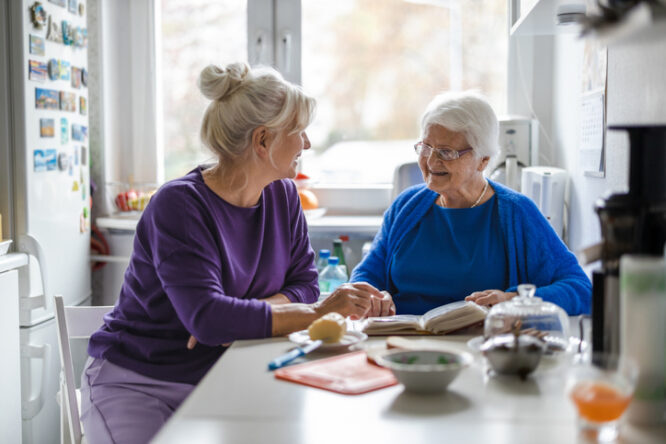
Whether staying at home is realistic depends heavily on current health and the support available nearby, whether that’s a spouse, children living close by, or a wider network. It’s worth asking practical questions early: can you get to the shops independently without a lot of help? Is there a chronic health condition that’s likely to limit how you interact with your home environment over time? These aren’t comfortable questions, but they’re far more useful asked in advance than discovered the hard way.
Social and emotional needs matter just as much as the practical ones. Older adults face a higher risk of isolation and loneliness, which has real links to dementia, depression, heart disease and stroke. Access to the wider world, the pharmacy, the hairdresser, a place of worship, matters for wellbeing in ways that go beyond simple convenience.
It’s also worth factoring in the cost of care if it becomes necessary. Hourly home care for basic help across the UK averages around £32 an hour, which stacks up to roughly £73,000 a year if you need full-time day support, while specialist live-in nursing care easily runs closer to £1,500 a week, or around £78,000 annually. For a lot of families, funding becomes the deciding factor in whether staying at home remains possible, not just personal preference.
Have an honest look at what the home itself would need.

An in-depth safety review of the whole home is worth doing well before it becomes urgent. The priority is usually eliminating stairs or barriers between rooms so a wheelchair or walker could move through the space if needed. Stairs can sometimes be modified with a ramp or stairlift, but having all essential living space on one floor is the ideal where it’s achievable. Doorway width, walk-in showers without a step or curb, and kitchen counters that remain accessible if mobility changes are all worth thinking through now rather than later.
It helps to imagine the home through a future version of yourself: would you still be able to reach things in the kitchen cupboards? Could you still shower independently if your mobility changed? Falls are the leading cause of injury for people over 65, so things like better task lighting and non-slip flooring genuinely matter. If space and budget allow, some families convert an extra room specifically to accommodate a caregiver down the line, which can make a big difference if round-the-clock support eventually becomes necessary.
Know when a renovation is the right call, and when it’s not.
Many people assume their current home will naturally become their forever home, but that’s not always realistic. A property with charming period features might be genuinely difficult and expensive to adapt for wider doorways, ground-floor bedrooms, or accessible bathrooms, and once those changes are made, it might not feel like the same home you fell in love with in the first place. In some cases, moving to somewhere built with accessibility in mind from the start turns out to be a far better long-term option than forcing changes onto an unsuitable property.
For anyone renting rather than owning, it’s worth knowing that basic accessibility accommodations are often legally protected, including requests to install handrails or ramps, permission to keep a service animal, or access to an accessible parking space where one exists. That protection can make a real difference for renters who assumed they had no options at all.
What do home modifications actually cost?

Adapting a property to make it safe as you age usually sets you back between £2,500 and £12,000, with a national average of around £7,500 covering the essentials. This sort of budget handles straightforward tweaks like motion-sensor lighting, sturdy grab rails, widened doorways, and comfort-height toilets. However, if you need to tackle major structural changes, the invoices climb considerably higher.
Converting a standard bathroom into an accessible wet room averages around £10,000, while lowering kitchen worktops can cost around £7,000. If navigating the house becomes a struggle, bedroom alterations run to about £9,000, and installing a curved stairlift can easily cost up to £10,000. These figures stack up incredibly fast, which is exactly why mapping out your budget early matters so much.
The good news is that financial support exists for families who need it. State ageing agencies and non-profit organisations focused on home repair and accessibility can help offset some of these costs, and it’s worth researching what’s available locally well before the need becomes urgent. Waiting until a fall or health crisis forces the issue tends to mean fewer options and less time to plan properly.
What relocation actually looks like if staying isn’t the right fit

For those who decide renovating isn’t the right path, several alternative housing models exist. Building a granny annexe—a small, self-contained home set up right in the existing garden—typically costs around £90,000 for a fully fitted detached build. These setups are becoming massive lifesavers for families, as they allow an older relative to stay right on your doorstep for support while still giving them their own independent front door and privacy.
Senior cohousing blends independent living with shared social spaces, offering both privacy and built-in community, while shared housing models match older adults with spare rooms in other people’s homes. Continuing care retirement communities sit at the more comprehensive end of the market, offering different levels of support on a single site as health needs change. You might move in while you’re independent, knowing you can easily transition into assisted living or full-time nursing care later on without having to pack up and move to a new facility.
These communities tend to carry a much higher initial price tag, often requiring a property buy-in that starts around £250,000 for a flat, alongside ongoing monthly management fees. Despite the heavy costs, the long-term continuity and peace of mind it gives families is something many find genuinely reassuring.
The earlier the conversation happens, the more choice everyone has.

None of these decisions need to be made all at once, and circumstances can change in ways that are impossible to predict years in advance. What matters most is starting the conversation early, before a health crisis forces a rushed decision under pressure. Having other housing options already on your radar, even if you never need them, means choices stay in your hands rather than being dictated by whatever happens to be available in an emergency.
Whether the right path turns out to be staying put with some modifications, downsizing to somewhere more manageable, or eventually moving into a community with more built-in support, the families who navigate this most smoothly tend to be the ones who talked about it honestly long before it became urgent. That conversation, however uncomfortable it feels at first, is ultimately what protects both independence and peace of mind.