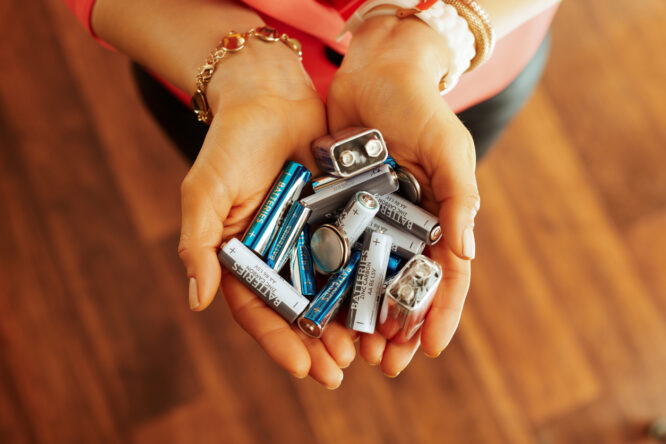
Most of us have a kitchen drawer or a random tub somewhere that’s slowly filling up with dead batteries we’re not quite sure what to do with. It feels wrong to just chuck them in the kitchen bin with the potato peelings, but keeping a growing pile of old power cells in the house isn’t exactly a brilliant idea either.
The problem is that these tiny little things are a lot more temperamental than they look, and getting rid of them the wrong way can lead to some pretty nasty consequences that go way beyond just being bad for the planet. There’s a very specific set of steps you need to take to make sure you’re not accidentally setting up a major hazard in your own home or at the local tip, and most people are skipping the most important parts of the process.
Why putting batteries in the bin is a bigger problem than you think
According to the National Fire Chiefs Council, battery fires in bin lorries and at waste sites across the UK hit an all-time high of over 1,200 in the year leading up to 2024—that’s an increase of 71% from just two years earlier. These aren’t small incidents. Lithium-ion battery fires create their own oxygen, which means they can keep reigniting and prolonging incidents, with smoke and toxic fumes affecting neighbouring areas for up to a week. Insurance claims for individual battery fire incidents have reached up to £20 million in some cases. Within every minute in the UK, around 3,000 batteries are thrown away. That’s an enormous number of potential hazards being added to the waste stream daily, and most of it is entirely avoidable.
Beyond the fire risk, there’s the environmental side of it too. An estimated 20,000 tonnes of old household batteries end up in landfill every year, and batteries contain toxic chemicals and metals, including lead, mercury, zinc, and lithium, that can pollute soil and water. At the same time, all of those materials could be recovered and used again. The lithium recovered from recycled batteries, for instance, could power thousands of electric cars.
@veoliauk♬ original sound – Veolia | UK
Vapes are making things much worse.
Around 8.2 million single-use, pod and big puff vapes are thrown away or improperly recycled each week in the UK, and the incorrect disposal of these lithium-ion battery-containing products is causing a sharp increase in fires inside bin lorries and at waste and recycling centres. There’s footage from Barnet Council showing a bin lorry exploding on a residential street after a resident put a vape in their general waste, and a refuse worker narrowly escaped serious injury.
Single-use vapes were officially banned in the UK from June 2025, but rechargeable and refillable vapes are still widely used and still contain lithium-ion batteries that need to be disposed of correctly. If you have an old vape to get rid of, it counts as electronic waste and needs to go to a proper recycling point, not a general bin.
What you need to know about the different types of batteries
Not all batteries behave the same way, and it helps to know what you’re dealing with before you recycle. Standard alkaline batteries, which are your everyday AAs and AAAs, are less volatile than lithium-ion ones, but they still shouldn’t go in the bin. Lithium-ion batteries, which are the rechargeable type found in phones, laptops, e-bikes, vapes, cordless tools and electric toothbrushes, are the ones that carry the most risk if crushed or punctured.
Button batteries from watches and hearing aids are small but genuinely dangerous if swallowed, and also need careful handling at the recycling stage. Car batteries are in a category of their own and have to go to a designated collection point. It’s actually illegal to put one in a standard rubbish bin.
How to store dead batteries safely at home before recycling
The safest approach is to keep a small bag or box specifically for used batteries and add to it as they run out. Setting aside a bag or box just for batteries means that each time you remove one from a gadget, it goes straight in, ready to take to a recycling point. For button batteries, wrapping a piece of sticky tape around them before storing or recycling is recommended. This stops the terminals making contact with anything metallic, which can cause a short circuit.
The same logic applies to lithium-ion batteries: covering the terminals with a small piece of electrical tape before storing them reduces the risk considerably. If you have a leaky or corroded battery, put it in a sealed plastic bag, so no liquid can get out before you take it to a recycling point. If you have a damaged lithium battery specifically—one that’s been dropped, punctured or swollen—it should go in a sealed container, and you should take it to a recycling centre rather than a standard drop-off point, so it can be handled properly.
Where to take your batteries in the UK
The most convenient option for most people is the battery recycling bin in a local supermarket or large shop. Since February 2010, any retailer selling more than 32 kg of batteries per year has been legally required to provide in-store battery recycling facilities — and major supermarkets including Asda, Morrisons, Tesco and Waitrose are all part of the BatteryBack compliance scheme. In other words, the recycling point is almost certainly closer than you think.
Most pharmacies, some DIY stores, and a number of electronics retailers also have collection points. Household waste recycling centres take all types of batteries, including lithium-ion packs from larger devices. If the batteries are inside an electrical item, and you can’t remove them, the whole product should go to an electrical recycling point rather than the general waste bin.
The Recycle Your Electricals website has a postcode search tool that will show you the nearest collection points for both batteries and electricals. Cancer Research UK shops also accept most standard household batteries, which is a handy option if there’s one nearby.
Some councils now offer kerbside collections, too. Doncaster Council, for example, launched kerbside collections for vapes and waste batteries in late 2025, asking residents to leave them in a sealed clear bag on top of their recycling bin. It’s worth checking your council’s website to see if this is available in your area because it genuinely makes it easier to do the right thing without a separate trip.
@underground.newsandmedia Battery Plant Explodes in North Ayshire, Scotland. #fyp #unitedkingdom #news ♬ epic war cinematic trailer(1537552) – Chau
Hidden batteries are the ones people miss
Lithium-ion batteries are hidden inside many everyday household electricals, from laptops, mobile phones and tablets to electric toothbrushes, vapes and earpods. Nearly half of UK adults didn’t know that electrical items with built-in batteries can cause fires when they’re crushed in a bin lorry.
So, before you put any electrical item in the bin or even the recycling, check whether it has a battery. If it does, and you can remove it, separate the battery and recycle each part at the appropriate point. If the battery is sealed in and can’t come out, the whole item needs to go to an electrical recycling point, not the bin.
Car batteries need a specific drop-off point
Car batteries can be recycled at designated collection points including household waste recycling centres, garages, and scrapyards—and by law, you cannot dispose of a car battery in a rubbish bin. Most garages will take an old car battery without any fuss, especially if you’re buying a replacement at the same time. They contain lead acid, which is both highly recyclable and toxic if it ends up in the wrong place, so it’s worth making the effort.
What actually happens to recycled batteries
It’s worth knowing that recycling batteries isn’t just a box-ticking exercise. When lithium-ion batteries are properly recycled, a large percentage of the materials inside can be reused, including lithium, nickel, cobalt, copper and aluminium, reducing the need to mine for new materials. Lead from car batteries is also almost entirely recyclable.
The recovered materials go back into manufacturing new batteries and other products, which is genuinely better for the environment and cheaper than sourcing everything from scratch. The more people recycle properly, the more valuable the system becomes for everyone.
What to do if you think a battery is dangerous right now
If a battery is visibly swollen, is getting hot to the touch, is smoking or has been badly damaged, don’t put it anywhere near other rubbish or flammable materials. Put it in a non-flammable container if you can, keep it away from heat, and take it to a household waste recycling centre as soon as possible where staff can deal with it safely.
Don’t charge a device if the battery looks swollen or damaged, and don’t try to puncture or dismantle it yourself. If a lithium battery fire does start in your home, get out and call 999. These fires spread fast and produce toxic fumes that make them very difficult to deal with without proper equipment.