Most of us don’t really think about whether the stuff in our homes could be affecting our health.

It’s not something that crosses your mind while you’re making dinner or doing a bit of DIY. However, there are a handful of really ordinary household things that cancer specialists say we should be paying attention to, not because any of them are guaranteed to cause harm, but because they’re easy enough to sort out that it makes sense to do so.
The point isn’t to turn your home into a source of anxiety. Cancer is complicated and rarely comes down to one thing. It’s more that some risks are avoidable, and once you know what they are, most of them take very little effort to address.
Scratched and damaged non-stick pans

Have a look at your frying pans. If the non-stick coating is scratched, flaking, or bits are visibly coming away, it’s time to bin them. Non-stick cookware is generally fine when it’s in good condition and you’re not overheating it, but once the coating starts breaking down, it becomes a different story. It’s also important to avoid cranking the heat to maximum unnecessarily, even on pans that still look okay.
The good news is that replacing a pan is one of the cheapest things on this list. Cast iron and stainless steel are both good alternatives if you want to sidestep the whole coating question entirely. Have a look at what you’ve got and if any of them have seen better days, just swap them out. It really is that simple.
Plastic bottles left in a hot car or in direct sunlight

Leaving single-use plastic bottles baking in a hot car or sitting in direct sunlight for hours isn’t something cancer specialists would recommend drinking from. The concern is around what happens to plastic when it gets really warm, and while the research is still developing, it’s easy enough to avoid that it’s not really worth the gamble. Repeatedly reusing disposable bottles that were never designed to be refilled is in the same category.
A reusable bottle sorts this. It doesn’t need to be anything special, just something sturdy that isn’t a thin single-use plastic container. You’ll spend less on water in the long run and you can stop thinking about it altogether, which feels like a decent trade.
DIY dust without any protection
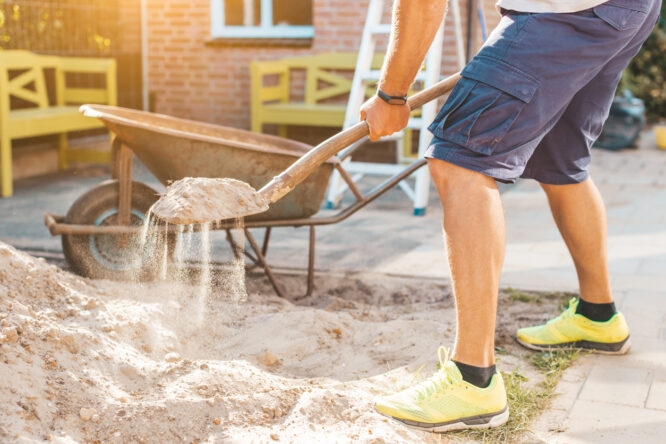
Sanding wood, cutting concrete, and drilling into walls all create dust that builds up in your lungs over time in ways that aren’t obvious while you’re doing it. Silica dust from cutting or sanding bricks, concrete and stone should be taken seriously. It doesn’t cause major problems immediately in most cases. Instead, it accumulates gradually across lots of small jobs over years, which makes it easy to underestimate.
Opening windows helps a bit, but a decent dust mask is better. They’re not expensive and they make a real difference. It’s the kind of thing that feels like extra faff when you’re just doing a quick job, but those quick jobs add up and so does the exposure. Get into the habit of putting one on before you start, rather than halfway through when the dust is already everywhere.
Damaged asbestos in older homes

A lot of homes built before the 1990s still have asbestos somewhere. It turns up in old floor tiles, textured ceiling coatings, pipe insulation, and some older artex finishes. Here’s the thing, though: asbestos isn’t actually dangerous when it’s in good condition and undisturbed. The risk comes when it gets damaged or moved during building work, which releases fibres into the air that can cause serious lung damage over time.
If you have an older home, and you’re thinking about any renovation work, getting a survey done first is really the only sensible approach. It’s not expensive, and it tells you clearly what’s there and where. Finding out during demolition rather than before it is a much harder situation to deal with. If you find asbestos that’s in good condition and you’re not touching it, the general advice is to leave it alone.
Not ventilating the kitchen while cooking

Cooking at high temperatures releases particles and fumes that build up indoors, especially in kitchens without much airflow. It’s one of those things that sounds minor, but indoor air quality matters given how much time most of us spend inside. Kitchens that get cooked in heavily without any fresh air coming through can accumulate quite a lot of this stuff, particularly if you’re frying at high heat regularly.
The fix couldn’t be simpler. Use the extractor fan if you have one, open a window if you don’t. Once it becomes a habit, you won’t even think about it. Most people either forget or don’t bother, so just doing it consistently already puts you in a better position than most.
Never checking whether radon is an issue where you live

This is the one that surprises people most because almost nobody has heard of radon. It’s a naturally occurring radioactive gas that forms in soil and rock and seeps up into buildings, where it can build up to levels that matter for health. It’s actually the second biggest cause of lung cancer in the UK after smoking, which is quite a striking fact for something most people have never thought about.
Some parts of the country have much higher levels than others, including Cornwall, Devon, Derbyshire, Northamptonshire and parts of Wales. The government has maps showing which areas are considered higher risk, and home testing kits are easy to get hold of and pretty cheap. The test takes a few weeks and gives you a clear answer. If you’ve never checked, and you live somewhere on the risk map, you should do so. High levels can be reduced with fairly straightforward measures once you know they’re there.
Setting your home up so healthy choices are harder to make

This one’s a bit different because it’s not really a specific hazard in the home. It’s more about how the way your home is arranged affects the choices you make without really deciding to. If sunscreen is buried at the back of a cupboard, you won’t use it. If fruit is hidden behind things in the fridge, you’ll reach for something else. These sound like small things, but they do shape behaviour over time.
The habits that actually stick are the ones that don’t require effort or motivation. If your home makes healthy defaults the easy option, you end up making better choices without having to think about it. That consistency over months and years is what actually changes your health risk. It’s not life-changing advice, but it’s the kind that works.