If you’re peering out at a garden that’s still looking a bit battered from the winter damp, April is the month where everything finally kicks into gear.
It’s that frantic, brilliant window where the soil is warming up enough to actually do some good, but the weeds are moving just as fast as your prize peonies. You’re not just tidying up the edges or giving the lawn its first proper haircut; you’re setting the stage for how your outdoor space is going to look for the rest of the summer.
Missing a few key jobs now doesn’t just mean a bit of extra work later—it can be the difference between a garden that’s bursting with life and one that’s struggling to get off the starting blocks. Before the showers catch you out, grab your fork and get a handle on these essential tasks to make sure you’re staying ahead of the game.
Start hardening off seedlings you’ve been growing indoors.
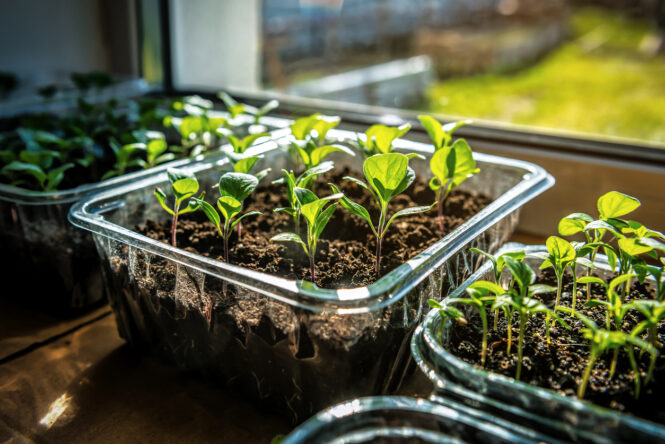
If you’ve been raising seedlings on a windowsill or in a heated greenhouse, April is the month to start introducing them to outdoor conditions gradually. Put trays outside after 9am when the frost risk drops and bring them back in before sunset. Do this consistently for around seven to ten days before planting out.
It’s worth keeping a cheap thermometer outside to track overnight lows, and if temperatures dip below 4 °C, keep everything inside that night. Rushing this step is one of the most common reasons transplants fail, and it’s entirely avoidable.
Get on top of weeds before they get on top of you.
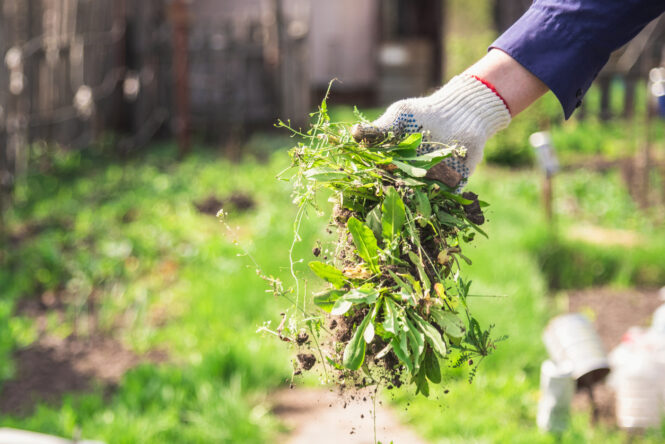
April is the best month to tackle weeds because the soil is soft, and they haven’t had the chance to set seed yet. Hoe off surface weeds on a dry, breezy day so they wilt and die on the surface rather than re-rooting in moist soil. Pull larger weeds by hand and make sure you’re getting the full root out, particularly with perennial weeds like dandelions and bindweed.
Once you’ve cleared a bed, applying a layer of mulch will significantly slow regrowth and save you hours of work through the summer. Getting ahead now is genuinely worth the effort.
Sow directly outdoors now that the soil has warmed.
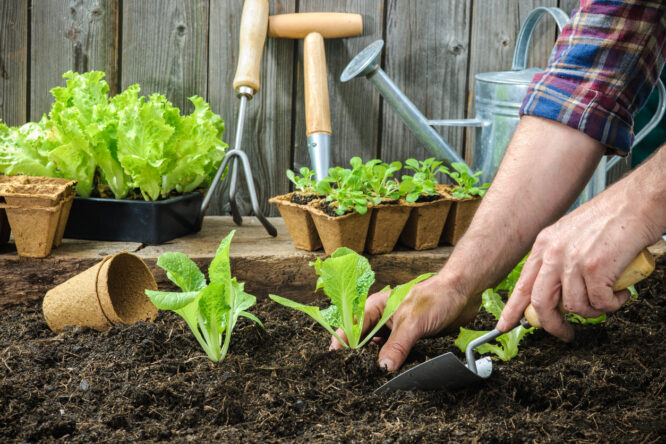
From mid-April onwards, the soil temperature in most parts of the UK is warm enough for direct sowing of a good range of vegetables. Beetroot, spinach, radish, rocket, salad onions, chard, and lettuce can all go straight into prepared beds now. Sow salad crops in small batches every two weeks rather than all at once, and you’ll have a continuous harvest rather than a glut.
Hardy herbs including parsley, coriander, dill, and chervil can also be sown directly into a sunny bed or container this month. Keep tender crops like tomatoes, courgettes, and squash under cover for now.
Feed your lawn and sort out any bare patches.
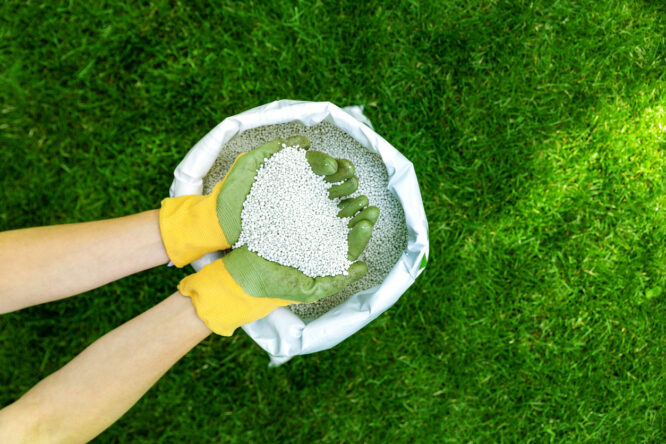
April is the right time to give your lawn its first feed of the year, particularly if you’re in the southern half of the UK, where growth is picking up more quickly. Use a spring lawn feed rather than an autumn one, as they have different nutrient balances.
Start mowing regularly again but keep the blades at their highest setting for now and gradually reduce the height over several weeks. If there are bare patches, rake them lightly, scatter some grass seed, and keep them watered. Aerate any compacted areas by spiking the turf with a garden fork to let air and moisture get to the roots.
Plant summer-flowering bulbs.
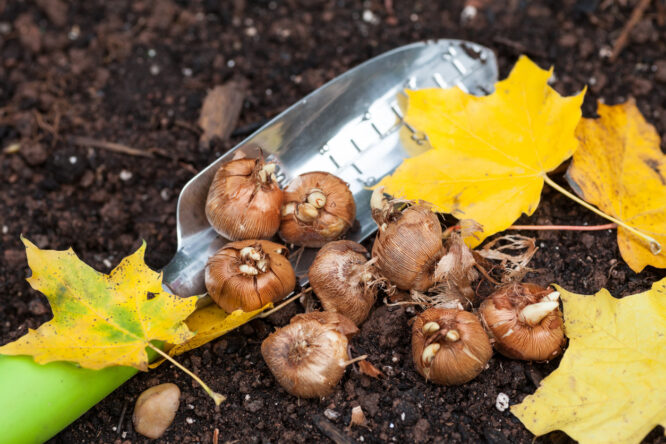
April is one of the last chances to plant lily bulbs before the window closes, and it’s also the right time to get dahlias, gladioli, and begonias in the ground or into pots. Dahlias are frost-tender, so if there’s still a risk of frost in your area, start them off in pots in a greenhouse or sheltered spot and plant them out in May.
Lilies go directly into well-drained soil or deep containers now and will reward you with flowers and fragrance through the summer. Planting in groups of three or five gives a much better visual impact than single plants dotted around.
Sow sweet peas at the base of their supports.
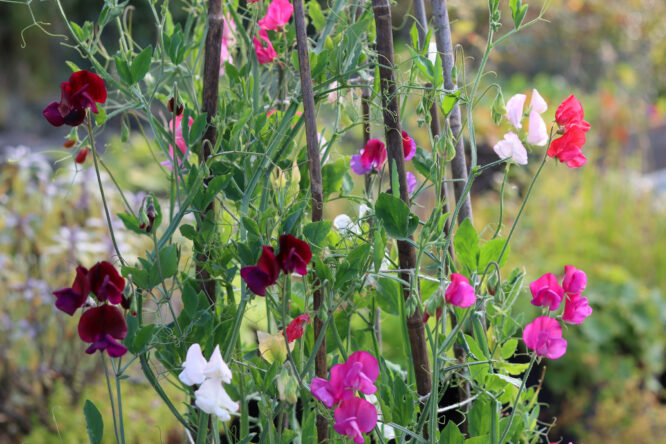
If you haven’t sown sweet peas yet, April is actually a good time to sow them directly at the base of canes, a trellis, or an arch. They’re hardy enough to handle the occasional April cold snap and will establish well. If you sowed them in autumn or earlier in spring, this month is when they go into their final positions.
Sweet peas grown up a support in a sunny spot will flower from June through to July and the more you cut them, the more they produce, so they’re well worth the small amount of effort they require this month.
Deadhead spring bulbs, but leave the foliage alone.
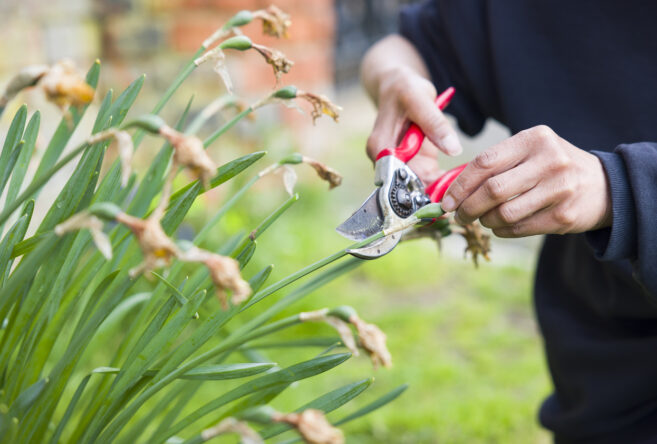
As daffodils, tulips, and other spring bulbs start to go over, remove the spent flowerheads to stop them wasting energy setting seed, but don’t touch the leaves. The foliage needs to stay in place for at least six weeks after flowering finishes so that the bulb can absorb energy through photosynthesis and store it for next year’s display. Tying the leaves in a knot or cutting them back early is one of the reasons spring bulbs gradually stop performing well, and it’s easily avoided.
Take basal cuttings from perennials.
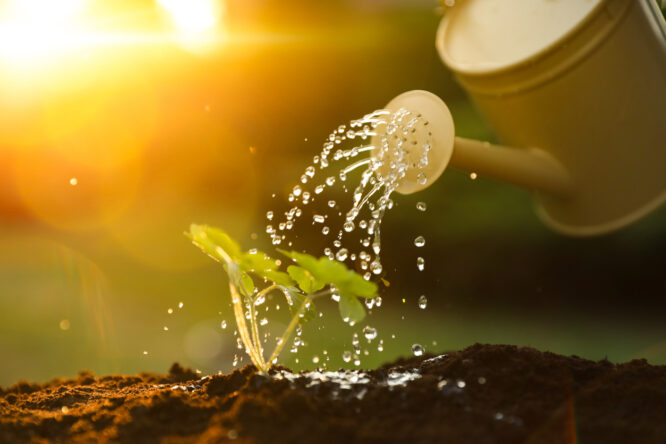
April is a genuinely good month for propagation and one of the easiest methods is taking basal cuttings from perennials like delphiniums, lupins, and campanulas. As new shoots emerge from the base of the plant, cut them off with a sharp knife just below soil level, remove the lower leaves, and pot them up in a gritty compost mix.
Keep them covered and out of direct sun until they’ve rooted. It costs nothing and is an easy way to increase your stock of plants that would otherwise be expensive to buy.
Sort out the greenhouse.
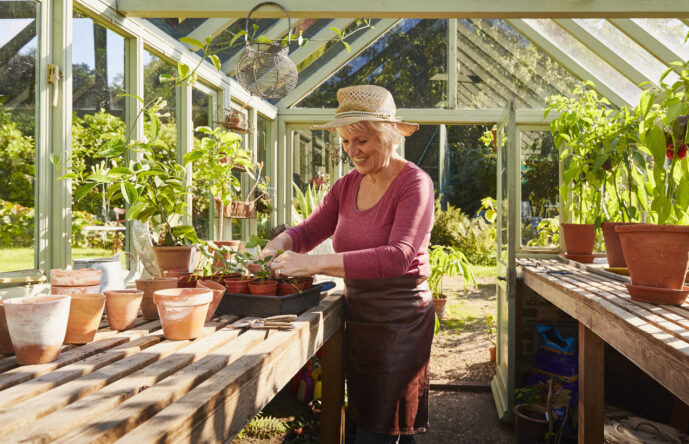
If your greenhouse still hasn’t had its spring clean, it needs doing this month before the real growing season gets going. Clean the glass inside and out to maximise the amount of light getting in, which makes a significant difference to plant growth. Remove any algae, dead plant material, and debris from the staging and floor where pests and diseases can overwinter.
Open doors and vents on warm days to keep air circulating and reduce the risk of fungal problems. April is also a good time to attach guttering and connect a water butt if you haven’t already, so you can make use of April’s rainfall rather than running the tap all summer.
Prune and tidy early-flowering shrubs.
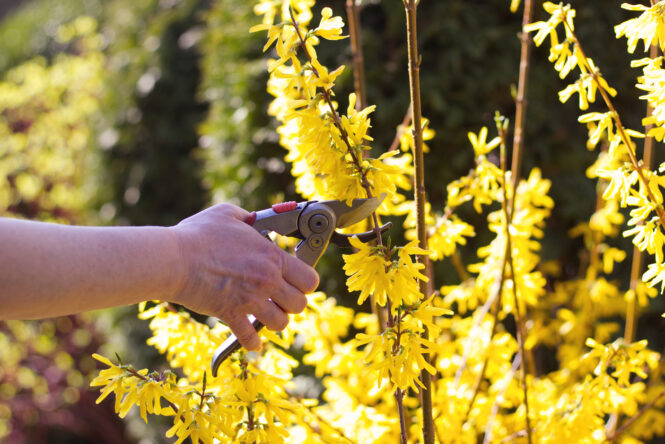
Shrubs that flowered in early spring, including forsythia and flowering currant, should be pruned now once the flowers have faded. Cut back flowered shoots to a strong bud or young shoot lower down to keep the plant compact and encourage good flowering next year. Hydrangeas can also be tackled now, cutting back old stems to a healthy shoot.
Roses are coming into growth this month, and it’s worth spraying the new leaves of disease-prone varieties with a fungicide to get ahead of mildew, rust, and black spot before they take hold rather than trying to deal with them once they’re established.
Protect vulnerable plants from slugs and snails.
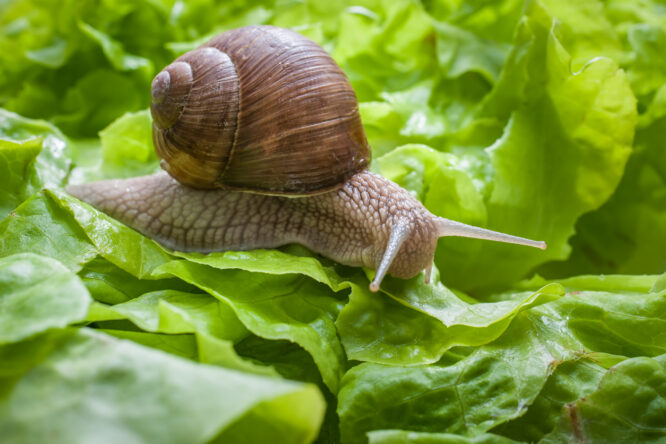
April brings warmer, wetter conditions that slugs and snails love, and they’ll be active now in a way they weren’t through the colder months. The new shoots of hostas, delphiniums, and lupins are particularly vulnerable and need protecting from the moment they emerge.
Copper tape around pots, crushed eggshells, and wildlife-friendly pellets are all options, but the most effective approach tends to be going out in the evening with a torch and physically removing them, particularly after rain. Getting on top of this early in April is considerably easier than trying to rescue damaged plants in May.
Add aquatic plants to the pond.
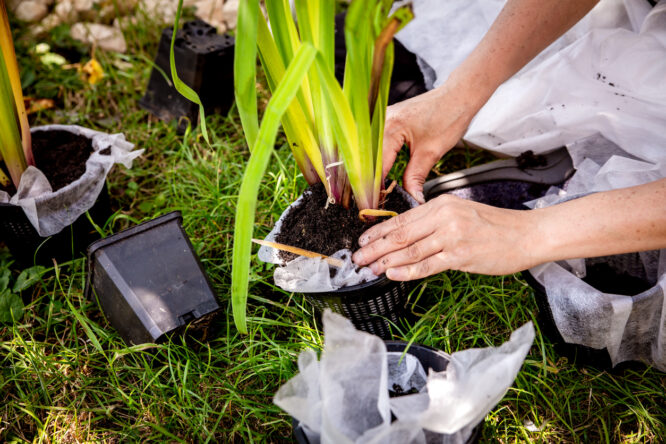
April is a good time to introduce or divide aquatic plants in garden ponds as water temperatures begin to rise. Water lilies, irises, and marginal plants can all go in now. If your existing pond plants have outgrown their baskets, divide them and replant the healthy outer sections.
A well-planted pond with a variety of submerged, floating, and marginal plants is far better at staying clear and supporting wildlife than one that’s left largely empty, and the work you do this month will show through the whole summer.