There’s something about herbal supplements that makes them feel automatically safe, even when they’re not.

Because they come from plants, plenty of people assume they must be inherently good for you, and being natural, surely they can’t do any harm alongside whatever else you’re taking. It’s an easy mindset to fall into; after all, if you can pick it up off a high street shelf without a prescription, it feels far more like food than a pharmaceutical drug.
That comforting assumption, however, overlooks how potent plant compounds actually are. When botanicals enter the body, they’re broken down by the exact same liver enzymes and cellular pathways as prescription medication. Far from being harmless background noise, active herbal extracts can speed up, block, or completely neutralise life-saving therapies. New research suggests that taking unverified supplements alongside modern cancer treatment isn’t just ineffective, it could quietly undermine the very drugs working to keep you alive.
One popular supplement is raising fresh concerns.
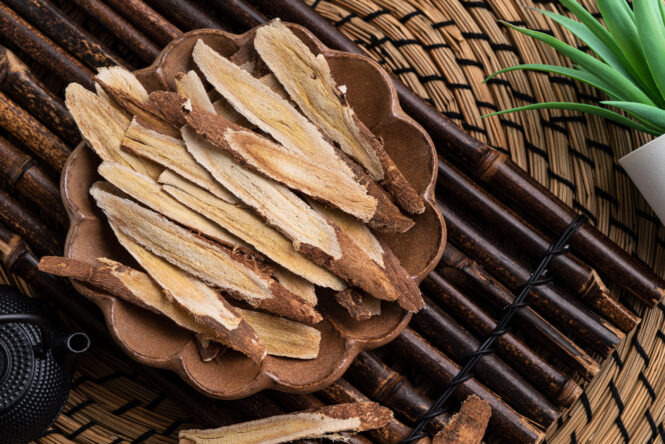
Astragalus is a herbal supplement widely used in Traditional Chinese Medicine, typically made from the root of a specific plant and sometimes known by its Chinese name, huang qi. It’s often marketed as something that boosts the immune system, with claims it can specifically help fight cancer.
Despite these claims, there’s no strong clinical evidence actually backing them up. Even so, plenty of people continue taking astragalus alongside modern cancer treatments, often viewing it as a harmless extra layer of support rather than something with real potential to interfere. New research published in Frontiers in Immunology suggests that assumption might be misplaced.
Cancer immunotherapy is important to protect.

Modern immunotherapy treatments, specifically a type known as anti-PD-1 therapy, are used to treat serious cancers like melanoma, and they carry a steep cost, sometimes running into tens or even hundreds of thousands of pounds a year. Despite that cost, these treatments have solid scientific evidence behind them, making them a valuable option for patients facing an aggressive cancer diagnosis.
Given how expensive and important this treatment is, it’s important to be cautious about anything added alongside it, especially something assumed to be harmless simply because it’s labelled natural.
Researchers actually tested this combination to see how they interacted.

To investigate, researchers worked with 24 mice split into four separate groups, all injected with cells designed to trigger melanoma like tumours. One group received the anti-PD-1 immunotherapy alone, a second received astragalus supplement injections alone, a third received both treatments together, and a final group received a plain saline injection to act as a comparison.
The dose of astragalus used matched what’s typically studied in Traditional Chinese Medicine research, and reflects levels similar to those used in some countries where injectable astragalus is offered as a complementary cancer treatment. Researchers tracked tumour growth every couple of days throughout the study, which ran for a total of 18 days.
What happened when the two treatments were combined?

The results were somewhat unexpected. Rather than supporting the immunotherapy, astragalus actually reduced how effectively the anti-PD-1 treatment worked against the tumours in mice receiving both treatments together.
Anti-PD-1 therapy is designed to help specific immune cells, including certain white blood cells known for fighting cancer, properly penetrate and attack tumours from within. In mice receiving both treatments together, astragalus appeared to interfere directly with this process, effectively creating an environment inside the tumour that suppressed the immune response rather than supporting it.
Why this happens at a molecular level

According to the researchers, astragalus appeared to block certain molecular signals that the immunotherapy treatment relies on to actually function properly. These specific signalling pathways play a key role in how anti-PD-1 therapy manages to activate the immune system’s cancer-fighting response in the first place.
By interfering with these particular signals, astragalus effectively undermined the immunotherapy’s ability to do its job properly, meaning that taking the two together may work against the treatment’s intended purpose rather than simply having no effect at all.
This research still needs to be treated with caution.

It’s important to note this study was conducted in mice rather than humans, so it can’t be treated as definitive proof of the same effect happening in people. Just because a supplement behaves a certain way in mice doesn’t automatically guarantee identical results in humans, even though mice remain a useful starting point for this kind of early-stage research given how biologically similar they are to us in many respects.
The researchers themselves were careful to frame their findings cautiously, suggesting that combining natural supplements like astragalus with immunotherapy treatments may warrant caution, while also stressing that further research is needed to properly confirm these findings and understand what they might mean for actual patients undergoing treatment.
Given how expensive and important cancer immunotherapy treatments are, this research is a useful reminder that even supplements marketed as natural and harmless can potentially interfere with serious medical treatment, making it a good idea to discuss any additional supplements with a doctor before adding them to an existing cancer treatment plan.