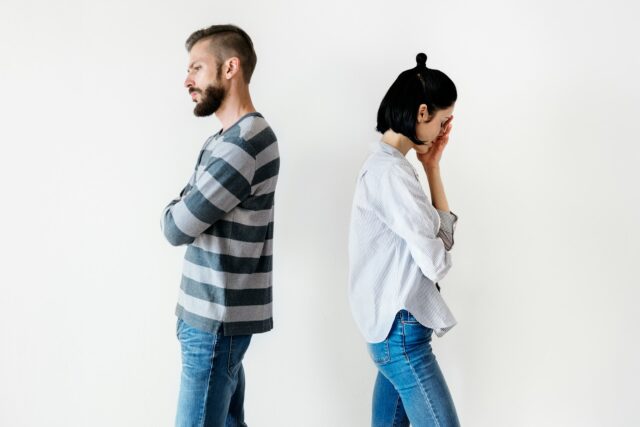
In many traditional cultures, being visibly LGBTQIA+ isn’t just tough—it can be life-altering.

The pressure to “pass” as straight, gender-conforming, and socially acceptable is intense, especially when family, religion, and community reputation all hang in the balance. For some, that pressure leads to a devastating reality: getting married not out of love, but to fit in. These marriages often look perfect on the outside, but beneath the surface is a constant tension between survival and self-erasure. Here are some honest truths about what it means to be married to “pass” when your identity can’t safely exist in the open.
You constantly feel like you’re performing.

Your life becomes a role you have to play convincingly every day. Smiling at the right times, saying the right things, never letting anyone see past the image. It’s exhausting—but stepping out of character feels too risky. This performance isn’t about fooling other people for fun. It’s survival. You’re trying to keep peace with your family, your in-laws, your entire community, while silently pushing parts of yourself into hiding.
You’ve convinced yourself love doesn’t have to feel real.
 Source: Unsplash
 You tell yourself that comfort, stability, and mutual respect are enough. That maybe real love is just a movie fantasy. Still, deep down, there’s a quiet ache you carry around like a secret. That doesn’t mean you don’t care about your partner. You might respect them deeply. However, when the core of who you are is missing from the relationship, it starts to feel more like a polite arrangement than an emotional connection.
There’s a constant fear of being “found out.”

Whether it’s someone going through your phone or a distant relative making a comment, your brain is always half-alert. You’re scanning the room, the conversation, the reactions—just in case something slips. It’s hard to relax when one wrong photo, one text, one past rumour could unravel everything you’ve built. Even if you’re doing nothing wrong, the fear still follows you like a shadow.
Your identity feels frozen in time.

While other people grow into themselves, explore who they are, and form relationships that reflect that growth, you feel stuck. It’s like the version of yourself that once existed had to be packed away in a box and hidden under the bed. Even when you try to reconnect with that part of yourself privately, guilt creeps in. That’s because, in the eyes of your family, your culture, and your partner—you’re supposed to have left that version behind.
You avoid conversations about intimacy.
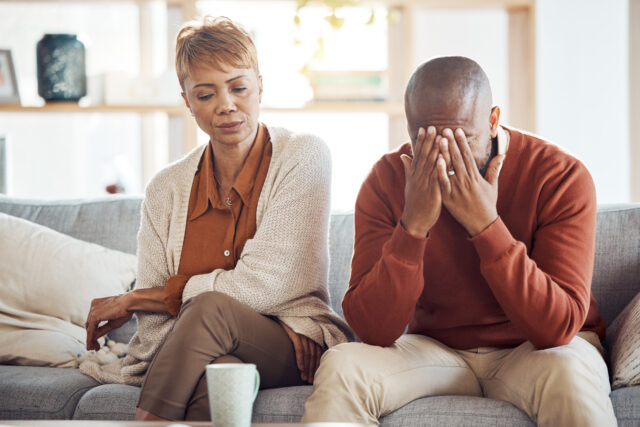
Sex becomes a topic you either joke about awkwardly or steer away from completely. When it happens, it can feel like something you’re doing because you’re supposed to, not because it genuinely reflects desire. It’s not always obvious to your partner, but for you, it’s a disconnect that never really goes away. It turns something deeply personal into something you have to brace yourself for because it doesn’t come naturally, and you’re not allowed to say why.
People praise you for being “the perfect couple”
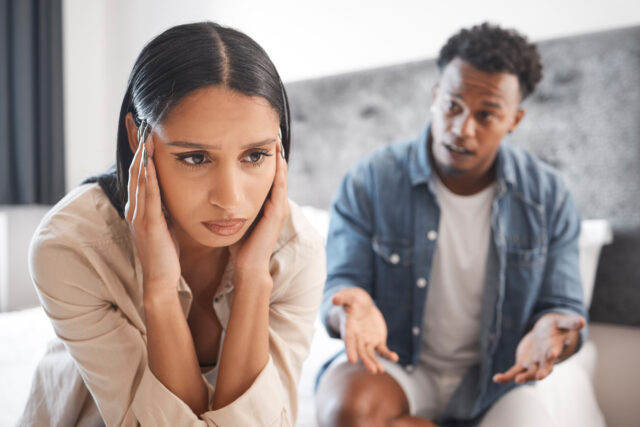
You smile through wedding anniversaries, baby showers, and public celebrations while feeling more and more detached inside. People compliment how well you’ve settled, how lovely your family is—how proud your parents must be. Those compliments sting more than they soothe. Because they’re praising the version of your life you’ve had to build at the expense of your truth. The more validated you are by other people, the more invisible you feel to yourself.
You feel disconnected from the broader LGBTQIA+ community.

You might follow accounts quietly or read stories online, but you don’t feel fully part of it. That’s because your life doesn’t match the visibility or openness that other people seem to have. That gap feels hard to bridge. Even in safe online spaces, there’s a sense of being on the outside looking in. It’s not just about hiding from the world—it’s the ache of not being able to show up for people who would get it, if you could only be fully seen.
You’ve learned to compartmentalise your identity.

There’s the you that exists at home, with your spouse and kids. Then there’s the you that only comes out briefly—online, through fantasy, or in rare moments when you feel anonymous enough, to be honest. That kind of mental splitting keeps you going, but it also chips away at your sense of wholeness. You’re not pretending to be someone else—you’re just never allowed to be your full self all in one place.
You sometimes resent your spouse, and hate yourself for it.

They might be kind. Loving. Completely unaware of what you’re holding back. But the more they lean into the relationship, the more you feel trapped. And that creates a complicated kind of resentment you don’t feel allowed to express. It’s not about blame. It’s about being stuck in a situation where no one’s technically done anything wrong, but you’re still silently suffering, and there’s no easy way out that doesn’t hurt someone.
You overcompensate to silence your guilt.
 Source: Unsplash
 You might be the most attentive partner. The best parent. The hardest-working person in the room. You pour yourself into roles that distract from the deeper discomfort sitting just beneath the surface. Overcompensating isn’t about deception—it’s about trying to be “good enough” to make up for the part of yourself you can’t share. However, no amount of effort erases the feeling that you’re playing someone else’s part.
Any public LGBTQIA+ discussion feels strangely personal.
 Source: Unsplash
 When people talk about “those people” on TV, in politics, or around the dinner table, it hits differently. You’re sitting there, nodding politely, while something inside you clenches, and you can’t say why. You become hyper-aware of every casual joke, comment, or assumption. After all, they’re not just talking about someone—they’re talking about you. And no one in the room knows it.
You’re exhausted by the mental gymnastics.
 Source: Unsplash
 Every day involves small decisions that most people never think about: what you say, how you say it, what you wear, who you follow online, who you can speak openly with… It’s a never-ending filter you apply to yourself out of necessity. That kind of vigilance becomes second nature, but it takes a toll. By the end of the day, it’s not just your body that’s tired. It’s the weight of constantly shape-shifting and making sure no cracks show.
You secretly envy people who were brave enough to choose differently.

You might see someone living openly—married to who they love, raising kids in a queer family—and feel a mix of admiration and sadness. Not because you begrudge them, but because you wish that had felt possible for you, too. It’s not about regret. It’s about grief for the version of life you couldn’t have. That grief can sit deep inside you for years before you even realise it’s there.
You wonder what your kids will think one day.

If you have children, you think about how much of yourself you’ll ever be able to share with them. You want to protect them. Keep them proud of their family. But also, deep down, you wonder if they’ll ever know the whole truth. If they do, will they understand? Will they judge you, or will they see the sacrifice, the fear, and the love you tried to give, even while hiding a part of yourself you couldn’t safely show?
You’re still holding onto the hope that one day, things might change.

You might not say it out loud, but you feel it—when reading someone else’s coming out story, when hearing about cultural changes, when watching someone be fully themselves without fear. You don’t expect your whole world to change overnight. However, you hold onto the quiet hope that maybe, just maybe, there will be a future where you don’t have to choose between love and truth. And in the meantime, you keep surviving the only way you know how.