Weddings are stressful, messy, emotional, and sometimes a bit chaotic, so not every awkward moment means anything serious.

That being said, relationship experts do notice certain patterns that tend to show up again later when things go wrong. It’s not down to just one bad speech or a tense parent; it’s more about what those moments reveal underneath. When something feels off on the day, it’s often because something’s already been off for a while. These are some of the red flags that are quickly noticed by those who’ve seen marriages fail and time and time again.
The wedding feels rushed or like there’s no real way to stop it.

Sometimes the whole thing moves so fast it feels like nobody’s allowed to question it anymore. The venue’s booked, deposits are down, guests are travelling, and even if one person is unsure, it’s brushed off as nerves or overthinking. From the outside it looks like excitement, but underneath it can feel like pressure to just go through with it.
Experts tend to see this less as romance and more as a lack of space to choose properly. If one person doesn’t feel able to slow things down or say hold on before something as big as marriage, that dynamic usually doesn’t improve later. It often carries into bigger decisions around money, living arrangements, and everyday life once the wedding is out of the way.
Legal or money conversations get avoided or turn into arguments.

Talking about things like prenups, savings, debt, or who owns what isn’t exactly romantic, but it’s real life. What stands out to experts is when those conversations just don’t happen at all, or when they immediately turn tense. One person might shut it down, get defensive, or make it feel like bringing it up is a sign of distrust.
That reaction usually points to discomfort with being open rather than the topic itself. Healthy couples don’t have to agree on everything, but they can talk things through without it turning into a row or being brushed aside. If those conversations are already difficult before the wedding, they rarely become easier once you’re married.
Money feels unclear or slightly hidden.

This one often shows up in small ways. One person is vague about what they earn, avoids talking about debt, downplays spending, or keeps things separate without really explaining why. It can be easy to ignore during wedding planning when everything else is taking up attention.
This is often flagged by experts because it grows into something bigger later on. When one person doesn’t really understand the financial situation they’re stepping into, it can lead to stress, resentment, or feeling misled. It’s not about needing full breakdowns of everything, it’s about being open enough that both people know what they’re building together.
One person seems to control everything about the day.

Every wedding has one person who takes the lead a bit more, that’s normal. What feels different is when one person is making every call, deciding how the other looks, who they speak to, what gets said, and how things are presented. It can be brushed off as being organised or having high standards.
Experts usually look at the pattern rather than the moment. When one person is constantly managing or directing the other, it can point to control rather than just planning stress. If someone feels like they’re being handled instead of included on their own wedding day, that’s often something that carries into the relationship itself.
Jokes or speeches are a bit too on the nose.
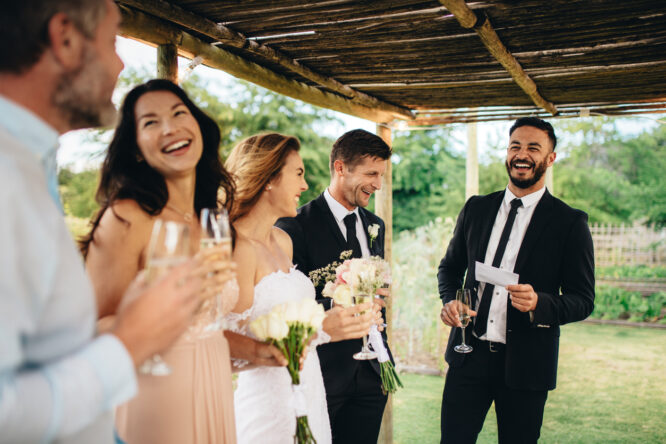
A bit of teasing is normal at weddings, and plenty of couples have that kind of humour. But there’s a difference between playful and uncomfortable. Sometimes the jokes land in a way that makes people squirm in their seats, especially if one person keeps ending up as the punchline.
The focus here is usually on tone. If someone is being put down, embarrassed, or chipped at in front of other people, even under the cover of humour, it can say a lot about how respect works in the relationship. What gets laughed off on the day can feel very different once it becomes a regular thing.
Family involvement feels a bit too heavy or over-the-top.
Families always have opinions at weddings, that’s part of it. But sometimes it goes further, where one side is making most of the decisions, setting expectations, or having the final say on things that should really belong to the couple. It can leave the other person feeling like they’re fitting into something that’s already been decided.
This is usually seen by experts as a boundary issue rather than just wedding stress. If those lines aren’t clear early on, they’re hard to build later. When outside voices carry too much weight from the start, it can make it difficult for the couple to function as their own unit.
It feels like marriage will fix things that haven’t been sorted.
This is one that comes up a lot. There’s a sense that once the wedding is done, everything will settle down. Arguments will ease off, habits will improve, and any underlying tension will somehow smooth itself out once things feel more official.
Experts tend to be quite blunt about this. Marriage doesn’t fix problems, it usually puts more pressure on them. If something already feels unresolved before the wedding, it often becomes more noticeable afterwards rather than disappearing. The ceremony might feel like a turning point, but it doesn’t replace the need to actually work through what’s already there.