The standard advice after a funeral is usually that time heals all wounds, but anyone who’s actually been through it knows it’s not that simple.

We’re often told there’s a timeline for these things, as if you’re supposed to wake up one morning and suddenly feel like your old self again. Yet, for many of us, the weight of a loss doesn’t seem to get any lighter, no matter how many months or years go by.
It’s a strange, lonely place to be when the rest of the world has carried on, leaving you wondering why you’re still standing in the same spot. There are actual, deep-rooted reasons why some of us find the process of letting go so much harder, and it’s rarely down to a lack of willpower.
For some, grief stops changing and starts staying the same.

In the early days after losing someone, intense grief is completely expected. The shock, the longing, the constant thinking about them, all of that is part of how we process loss. Over time, most people begin to adjust, even if the sadness never fully disappears.
For a smaller group, that adjustment doesn’t really happen. The grief stays just as strong, just as consuming, and it begins to interfere with everyday life. This is what researchers call prolonged grief disorder, where someone struggles to move from raw loss into something they can carry without it taking over everything.
It’s not just emotional—your brain is involved too.

One of the most interesting findings is that this kind of grief isn’t only about feelings. Brain scans suggest certain parts of the brain behave differently in people who struggle to move on. Instead of gradually easing, the brain stays locked into the connection with the person who died.
The brain’s reward system, which usually helps drive motivation and attachment, stays highly active. It keeps reacting to memories of the person as if they’re still someone to reach or find again, which creates a loop of longing that never really settles.
That constant sense of “they should still be here” doesn’t go away for everyone.

People often describe this type of grief as something that doesn’t fully register. They understand the loss on a logical level, but emotionally it doesn’t feel completely real. There’s still a sense that the person should walk through the door or message them like nothing has changed.
This gap between knowing and feeling makes it harder to adapt. The mind keeps returning to the same point, almost as if it’s trying to fix something that can’t be fixed, which keeps the grief stuck in place rather than letting it evolve.
Why some people are more at risk than others

There isn’t one simple reason why someone develops this kind of ongoing grief. It usually comes down to a mix of things, including how close they were to the person, how the death happened, and what their life looked like before the loss.
Sudden deaths, unresolved relationships, or relying heavily on that person for emotional support can all make the process harder. In some cases, earlier life experiences also play a part, especially if letting go has always been difficult on a deeper level.
It can seem like depression, but it isn’t the same thing.

At first glance, prolonged grief can look very similar to depression. There’s low mood, withdrawal, and a sense that life has lost its meaning. That overlap is one reason it often gets misunderstood. The difference is that everything still circles back to the person who died. The sadness, the thoughts, and the distress all stay tied to that specific loss, rather than becoming a more general feeling about life as a whole.
The idea of moving on might not be helpful.

There’s a lot of pressure around grief to eventually move on, as if the goal is to leave the person behind. In reality, many experts now see ongoing connection as a normal part of grieving. People often keep a sense of bond through memories, routines, or the way that person shaped who they are. The issue in prolonged grief isn’t the connection itself, it’s that it stays intense and painful instead of becoming something that fits alongside everyday life.
How it starts to affect everyday life
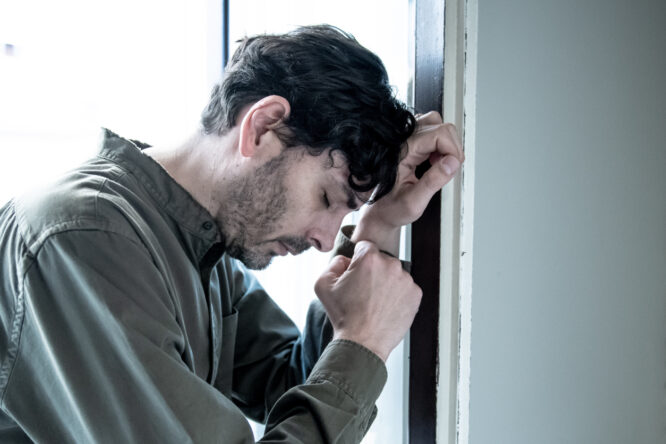
When grief stays this strong, it can begin to impact almost everything. Work becomes harder to focus on, relationships can feel distant, and even simple routines can start to feel pointless or overwhelming. Some people also feel like part of their identity has disappeared with the person they lost. It’s more than just missing someone. It’s more like not quite knowing who you are without them, which makes moving forward feel confusing rather than natural.
It’s not common, but it shouldn’t be ignored when it happens.

Most people do gradually adapt to loss, even if it takes time and comes in waves. That’s why this kind of prolonged grief stands out because it doesn’t follow that usual pattern of easing over time. Even though it affects a smaller number of people, for those going through it, the experience can feel overwhelming and hard to explain, especially when others expect things to have improved by now.
Support looks different when grief gets stuck.

One of the biggest changes in recent years is recognising prolonged grief as something distinct. That matters because it means people can get support that actually fits what they’re dealing with, rather than being told to just give it more time.
Therapies focused on grief can help people slowly reconnect with life while still holding onto their bond with the person they lost. It’s not about forgetting or replacing them, but finding a way to live with the loss without being trapped inside it.
What this tells us about grief overall
The idea that grief follows a set path or timeline doesn’t really hold up. People process loss in very different ways, and sometimes the brain itself plays a part in why that process doesn’t move forward in the usual way.
Understanding that can take some pressure off. If someone feels like they’re not moving on in the way people expect, it doesn’t mean they’re doing grief wrong. In some cases, it simply means their mind is holding on in a way that’s harder to ease without support.