School in the 1980s wasn’t ancient history, but the experience could feel worlds apart from what students know today.

Classrooms ran on chalkboards and exercise books, teachers had enormous authority, and plenty of rules that exist now simply didn’t yet exist. Health and safety was looser, mental health wasn’t a major topic, and a lot of responsibility was placed on kids to simply get on with things. For many people who grew up during that time, the day-to-day reality of school involved situations that would feel surprisingly harsh or outdated by today’s standards.
Teachers could still use corporal punishment in many schools.

In the early 1980s, corporal punishment was still a real possibility in UK classrooms. A pupil who misbehaved might be sent to the headteacher’s office and punished with the cane or slipper, something that was widely accepted as part of school discipline at the time. It wasn’t just for extreme behaviour, either. Talking back, repeated lateness, or ignoring instructions could be enough to earn a trip to the head’s office.
The ban on corporal punishment in UK state schools didn’t arrive until 1986, so many students who were at school during that decade remember the threat hanging over everyday life. Even the possibility of it created a very different atmosphere in classrooms, where authority was rarely challenged and discipline could feel much more intimidating than it does now.
Bullying was often treated as something kids should sort out themselves.

Modern schools usually have safeguarding officers, reporting systems, and anti-bullying programmes. In the ’80s, the approach was far less structured. Many students who reported bullying were told to ignore it, stand up for themselves, or stop reacting to the person causing the trouble.
Teachers did step in sometimes, but the general belief was that conflict between pupils was part of growing up. Emotional effects weren’t widely discussed, and many students simply endured difficult situations without the kind of support systems that exist today.
Homework meant real research, not quick searches.

If you needed information for an assignment, there was no internet waiting to help. Students relied heavily on school libraries or public libraries filled with encyclopedias and reference books.
Research meant flipping through indexes, copying notes by hand, and hoping the book you needed hadn’t already been borrowed. If a library didn’t have the information, there wasn’t another easy option waiting online. It required patience and time that modern students rarely have to spend.
Some schools allowed older pupils to smoke.

Smoking was far more socially accepted during the ’80s than it is today. In some secondary schools, older students were even allowed to smoke in designated outdoor areas during breaks. While this wasn’t universal, it was common enough that many people remember it as a normal part of school life. Strict smoke-free policies in schools only became standard later as attitudes toward smoking began to change.
Staff rooms were often full of cigarette smoke.

Teachers’ staff rooms frequently doubled as smoking rooms. It wasn’t unusual for staff areas to be filled with smoke during break times, and the smell could drift into nearby corridors. This reflected broader social norms rather than anything specific to education. Smoking indoors was common in workplaces, pubs, restaurants, and offices throughout the UK at the time.
Playgrounds and equipment were much less regulated.
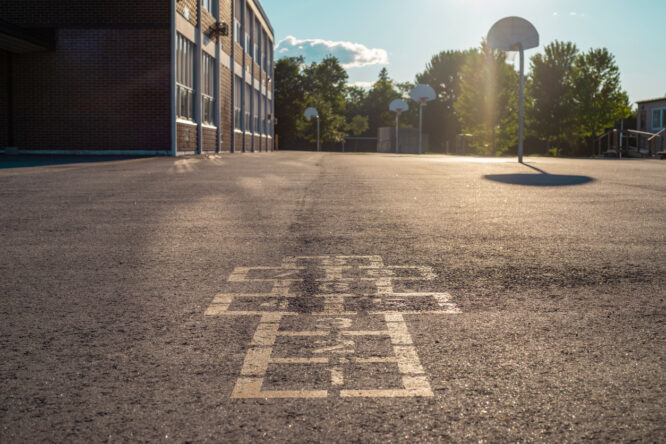
School playgrounds in the 1980s often featured tall metal climbing frames, concrete surfaces, and equipment that would likely fail modern safety inspections. Students climbed high structures and ran across hard surfaces without the protective padding or strict supervision that is now common. Injuries happened, but they were often considered part of normal childhood activity rather than a serious safety concern.
Teachers had far more unquestioned authority.

Classrooms often ran on a strict hierarchy, where the teacher’s word was final. Challenging instructions or arguing about a decision could quickly lead to detention or being sent to the headteacher. This created an environment where discipline was firm and students were expected to follow rules without much discussion. While this could keep order in the classroom, it also meant pupils had far less voice than many do today.
School dinners weren’t designed around nutrition.
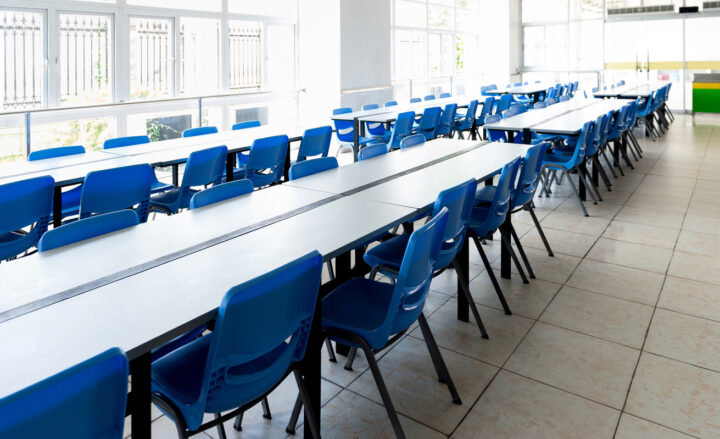
Modern school meals follow strict guidelines aimed at improving nutrition. In the 1980s those rules were minimal, and lunch trays often reflected that. Menus usually included chips, processed foods, sugary desserts, and very little concern about balanced diets. For many students, the highlight of lunch was pudding rather than anything remotely healthy.
Computers were rare or completely absent.

For much of the decade, computers simply weren’t part of everyday school life, especially since they were far more expensive and less readily available. Lessons relied entirely on chalkboards, textbooks, and handwritten notes. Some schools introduced early computer rooms toward the late 1980s, but access was limited and the technology itself was basic compared with today’s devices.
PE lessons were often tough and uncompromising.

Physical education classes tended to emphasise endurance and discipline. Students might run long distances, perform repetitive drills, or participate in demanding activities regardless of ability. Encouragement wasn’t always gentle, either. Some PE teachers used a strict coaching style that pushed students hard, reflecting a wider belief that sport should build resilience and toughness.
Children were expected to travel independently.

Many primary school pupils walked to school on their own or with friends, even at relatively young ages. Parents often expected children to manage the journey independently as part of growing up, and that level of independence was normal then but feels less common today.
Uniform rules were strictly enforced.

School uniforms in the 1980s were often policed very closely. Hair length, shoe types, skirt length, and even the colour of socks could be monitored. Breaking these rules could result in punishment or being sent home to correct the issue. Schools often viewed strict uniform standards as a way to maintain discipline and order.
Learning differences were rarely recognised.

Conditions such as dyslexia, ADHD, and autism were far less understood in schools during the 1980s. Students who struggled academically were sometimes labelled disruptive, slow, or lazy rather than being assessed for learning differences. Support systems that exist today were simply not widely available.
Parents usually heard about problems much later.

Communication between schools and parents moved slowly. Without email or digital systems, information travelled through letters or occasional meetings. Many parents only learned about problems weeks or months later during scheduled parent evenings. Day-to-day updates simply weren’t possible.
Mental health support was almost nonexistent.

Today many schools have counsellors, wellbeing programmes, and mental health discussions built into the curriculum. In the ’80s, those ideas were rarely part of school life. Students who felt anxious, overwhelmed, or unhappy were generally expected to cope quietly and continue with their work. Emotional wellbeing simply wasn’t widely recognised as part of education.
Looking back, school life back then wasn’t necessarily better or worse, but it was undeniably tougher in several ways. The environment placed more responsibility on students to adapt, cope, and navigate challenges without much structured support. For many people who lived through it, those experiences still shape how they remember their school years today.