Few things ruin the start of a holiday quite like watching every other bag come around the carousel except yours.
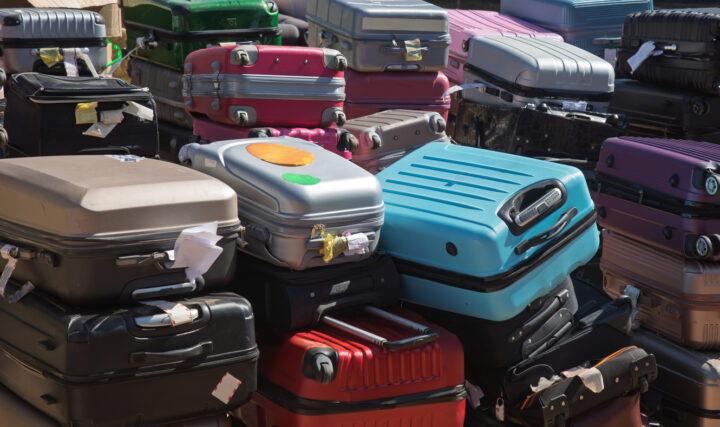
Lost luggage feels like a horrible way to begin a long-awaited trip, and most people have no idea what their rights are when it happens. The good news is that there’s a clear process you can follow, plus a piece of international law that means you can claim up to £1,000 back. Here’s a step-by-step guide to exactly what to do if your bag goes missing, plus how to make sure you actually get the money you’re owed.
How often does luggage actually go missing?
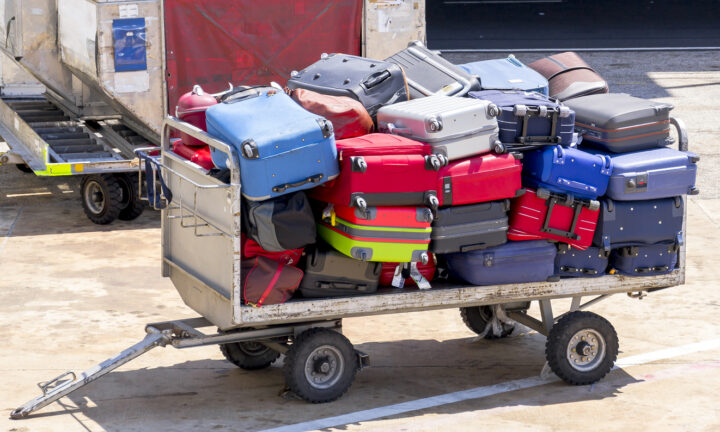
Lost luggage is far more common than most travellers realise. Industry figures suggest that around six bags in every thousand go missing or are delayed each year, which adds up to millions of pieces of luggage worldwide. While most are eventually returned within a few days, a small but significant number are never found at all.
Knowing the system before it happens to you can make a huge difference. Plenty of holidaymakers lose money because they don’t act quickly enough, miss claim deadlines, or accept lower payouts than they’re actually entitled to. A few simple steps and a bit of knowledge can save you a serious amount of stress and money if things go wrong.
There are simple steps to take before you even fly.

Prevention is genuinely worth the small effort it takes. The UK Civil Aviation Authority recommends labelling every piece of luggage with your name, email address, and a contact phone number. Make sure these details are clearly visible on the outside, since old tags from previous trips can confuse baggage handlers and send your case to entirely the wrong city.
It also pays to pop the same details inside your case. If the outside label gets ripped off during baggage handling, which happens more often than you’d think, having a second label inside means staff can still identify the bag as yours. A photo of your packed luggage on your phone before you fly is another smart move. It gives you a clear record of what’s inside, which becomes useful if you ever need to claim.
Step one: Report it straight away.

The minute you realise your bag hasn’t arrived, head to the airline’s baggage or customer service desk in the arrivals area. Every major airport has one near the carousel. If you’ve already left the airport before noticing, you can usually report missing luggage online through your airline’s website, but the sooner you do it, the better.
You’ll need to fill out a form called a Property Irregularity Report, often shortened to PIR. This is the official document that starts the whole tracking and compensation process. Without one, your airline has no record of your case, and you’ll struggle to claim anything later. So this step isn’t optional, even if you’re tired, hungry and just want to get to your hotel.
What you’ll need to complete the PIR

To fill in the form, you’ll be asked for your flight details, including the flight number and itinerary. You’ll need a detailed description of your luggage, including its size, colour, brand and any distinctive features like wheels, straps, or stickers. The more specific you can be, the better the chance of finding it again.
You’ll also need to provide your contact details and a delivery address, which is usually your hotel or your home, depending on where you are. Once the form is submitted, you’ll receive a PIR reference number. This is the most important piece of information you’ll get, so save it in multiple places, including a screenshot on your phone, a note in your email and ideally a paper copy in your wallet.
Step two: Get help with the basics.

If you’ve just landed on holiday with no clothes, no toiletries and no change of underwear, you’re entitled to immediate help from the airline. Most carriers will reimburse you for essentials while your bag is delayed, including basic toiletries, a few items of clothing, any medication you can’t go without, and baby supplies if you’re travelling with a little one.
Some airlines pay a daily rate while your luggage is missing, while others ask you to keep all your receipts and claim back afterwards. Either way, hang on to every single receipt, no matter how small. You’ll need them for your compensation claim later. Be sensible with what you buy, though, since the airline is only obliged to cover essentials, not a brand-new wardrobe of designer pieces.
What counts as a reasonable essential?

The airline gets to decide what’s “reasonable,” and they tend to be on the strict side. Toothpaste, a toothbrush, deodorant, basic shampoo, a couple of t-shirts, underwear, a pair of trousers or shorts and decent shoes for the climate are all fair game. So is any medication you genuinely need and can’t go without.
What you generally won’t get reimbursed for is luxury items, full sets of new clothes for every day of the holiday, or items that go beyond the basics. If you’re heading home rather than out on holiday, your airline may also offer less compensation, since you’ve got access to your usual clothes and toiletries already. The principle is that the airline covers what you genuinely need to function, not what you’d ideally like to have.
Step three: Claim compensation if your bag is officially lost.

After 21 days, if your luggage still hasn’t turned up, it’s officially classified as lost. At this point, you can start the formal compensation claim. This is when knowing your rights comes into its own, since the airline is liable for the value of what you’ve lost under international law.
Make the claim as soon as possible after the 21-day mark. You’ll need to provide your flight details, your PIR reference number, all the receipts for things you had to buy because of the missing luggage, and proof of what was in your bag. Card statements, photos, online receipts and emails can all be used as evidence, so dig out everything you’ve got.
There are deadlines you absolutely can’t miss.

There are strict deadlines for every type of claim, and missing them can mean losing your right to compensation altogether. For damaged luggage, you’ve got just seven days from when you received the bag to file your claim. The same seven-day window applies to missing or damaged items inside an otherwise returned bag.
For delayed luggage, you have 21 days from the date of your flight to make a claim. For lost luggage, which is officially declared after 21 days, you should make your claim as soon as possible after that deadline passes. Keep every email, screenshot every communication, and date every step of the process. Airlines can be slow to respond, and a clear paper trail helps you push back if they try to delay your claim.
You might be owed £1,000.

The international rules governing lost luggage come from something called the Montreal Convention, an international treaty adopted in 1999 that covers most international air travel. Under this agreement, airlines are liable for lost, damaged or delayed baggage, and the maximum payout for each passenger sits at roughly £1,000, though the exact figure can fluctuate with currency values.
When you write to your airline, make sure you specifically mention that you’re claiming compensation under the Montreal Convention. This signals to the airline that you know your rights and won’t be fobbed off with a smaller payout. Citizens Advice and other consumer organisations recommend always using this exact phrase in your letter or email, since it tends to speed up the process.
What to do if the airline drags its feet

Some airlines pay out quickly and politely. Others delay, dispute, or simply ignore claims. If you’re being given the runaround, your first move is to escalate the complaint within the airline itself, asking for it to be reviewed by a senior member of the customer service team. If that doesn’t get results, the next step depends on whether the airline is signed up to an Alternative Dispute Resolution scheme.
If the airline is a member of an ADR scheme, you can complain to that scheme directly, and they’ll act as an independent middleman to resolve the case. If the airline isn’t a member, you can complain to the UK Civil Aviation Authority, which can look into the case on your behalf. Both options are free, and they often achieve a result that the airline wouldn’t have offered on its own.
Small claims court is a last resort.

If all else fails, you can take the airline to the small claims court. This sounds intimidating, but is actually a relatively straightforward process for amounts up to £10,000 in England and Wales. You don’t need a solicitor, and you can do the whole thing online through the government’s Money Claim Online service.
The court fee depends on how much you’re claiming, but it’s usually a small fraction of the amount you’re seeking. Plenty of airlines will settle just to avoid the hassle of going through court, which means simply starting the claim can sometimes be enough to get the compensation you’re owed. Keep all your evidence organised, and present everything clearly when you submit your case.
Travel insurance is genuinely worth it.

The Montreal Convention covers the basics, but travel insurance can add a meaningful layer of protection on top. A decent policy will usually include cover for lost, damaged or delayed luggage, often with higher payouts than airlines offer and faster turnaround times.
Look for a policy that includes specific cover for luggage delay, which pays out within 12 to 24 hours of your bag going missing. This means you can buy essentials without waiting for the airline to authorise the spend. Just keep all your receipts, since most insurers will need them when you claim. Also, check whether your policy has a single item limit, since pricier items like cameras, laptops, or jewellery may need to be declared separately.
There are also some smart packing tricks that protect you.

A few simple packing habits can save you a serious amount of stress if your luggage does go missing. Always pack a complete change of clothes, your essential toiletries, any medication you need, and your valuables in your hand luggage. That way, if your hold bag goes walkabout, you’re not stranded with nothing for a day or two.
Never put expensive items, important documents, electronics or sentimental valuables in your checked luggage at all. If your bag does end up lost, replacing these items is difficult and often only partially covered. Phones, laptops, cameras, jewellery, and passports all belong in your hand luggage, full stop.
Follow the same plan of action for every trip.

If your luggage ever goes missing, the routine to follow is simple. Report it straight away at the airline desk. Fill out a Property Irregularity Report and save the reference number. Buy essentials and keep every receipt. Wait 21 days. If your bag hasn’t turned up, claim compensation under the Montreal Convention, using that exact phrase. Keep records of every email, every receipt and every conversation. If the airline doesn’t pay, escalate to the relevant ADR scheme or the CAA, and use the small claims court if needed.
Doing this can mean the difference between losing hundreds of pounds and recovering up to £1,000 of what you’re owed. A bit of knowledge and a few minutes of action at the right moment is genuinely all it takes. Save this guide, share it with anyone you know who travels, and the next time a holiday gets off to a wobbly start, you’ll know exactly what to do.