Being a good hotel guest isn’t rocket science, but you’d be surprised how many people struggle with it.
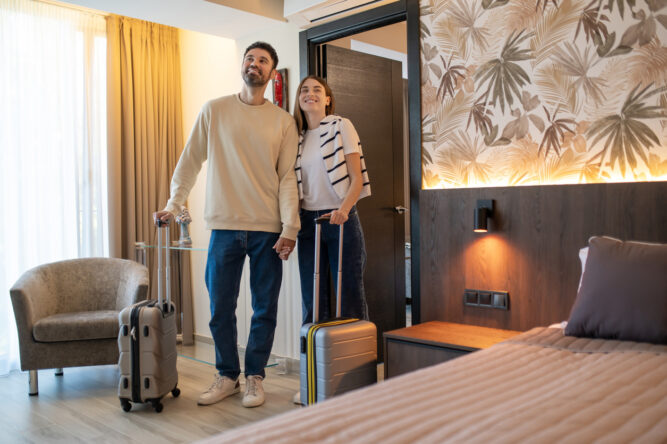
A new survey of 2,000 British adults has pulled back the curtain on what people actually get up to when they’re staying in hotels, and some of it is genuinely surprising. One in three guests admit to sneaking food out of the breakfast buffet to eat later. More than a third regularly put the wrong number of guests when booking to keep the cost down. And yes, some people are washing their underwear in the kettle.
Hotels.com teamed up with British etiquette expert William Hanson to put together a guide on hotel manners, covering everything from breakfast behaviour to what you’re actually allowed to take home with you. Some of it is common sense. Some of it turns out to be less obvious than you’d think.
Being rude to staff is the thing people find most unacceptable.

Out of everything surveyed, rudeness to hotel staff came out as the single most disliked behaviour from other guests. That feels right. Hotel staff deal with an enormous range of people every single day, often under pressure and for not much money, and being dismissive or unpleasant to them says a lot about a person. Hanson’s advice is simple: treat everyone who works there with genuine respect, from the person cleaning your room to whoever’s on the front desk.
There’s also a practical angle to this. Staff who feel respected tend to go further for the guests who treat them well. That doesn’t mean being overly friendly or performatively cheerful about it, just basic human decency. It costs nothing, and it makes the whole experience better for everyone in the building.
Hotel corridors are not an extension of the bar.
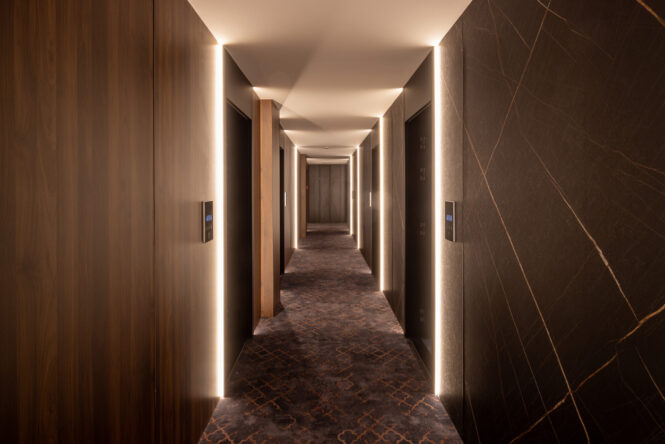
Noise in hotel bars and lobbies is expected. People are on holiday, they’re relaxed, they’re having a good time. Corridors are a completely different situation. Other guests behind those doors are trying to sleep, or at least wind down, and the sound travels in ways that feel much louder at midnight than they do in the afternoon. Slamming doors, raised voices, and heavy footsteps in hallways are among the most reliably annoying things you can do to fellow guests.
It doesn’t require much effort to walk quietly, speak in a lower voice, and close a door gently. Most people manage it the rest of the time without thinking about it. It’s just that some people switch off that consideration the moment they’re on holiday, and everyone around them pays for it.
The breakfast buffet has rules, even if nobody’s enforcing them.

The breakfast buffet brings out an interesting side of people. Queuing properly, not piling food higher than you can reasonably eat, and letting other guests get a fair go at what’s on offer are all part of behaving like a decent person in a shared space. One in three guests admits to taking food away from the buffet to eat later, which sits in a slightly greyer area depending on the hotel’s policy, but loading up a bag for the whole day is pushing it.
The sunbed situation at the pool follows the same logic. Leaving a towel on a lounger at seven in the morning and not returning until the afternoon isn’t reserving a spot, it’s just blocking one for everyone else. Hanson puts it well: a lounger isn’t secured by a towel alone, it’s secured by actually being there. Turning up later and expecting to find your chair waiting is the kind of behaviour that starts genuine arguments on holiday.
The kettle is not a laundry device.
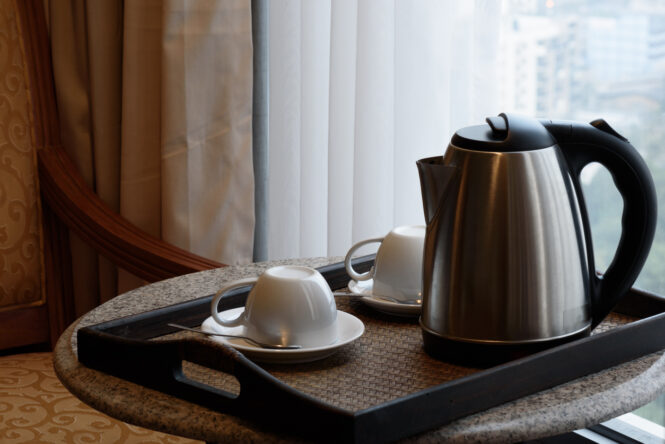
An influencer went viral not long ago for suggesting guests use the hotel kettle to wash underwear, and the response was about as positive as you’d expect. Twenty-three percent of people surveyed said this is a firm no, and it’s hard to argue with them. The kettle is used by every guest who stays in that room, often multiple times a day, and using it to wash clothes is deeply unpleasant for everyone who follows you. Just don’t.
On a related note, the in-room toiletries and slippers are generally considered fair game to take home. Most hotels factor that into costs, and guests have been doing it for years. Where it crosses a line is with larger items: robes, pillows, towels, hangers. Hotels do charge for these when they go missing, and beyond the bill, it’s just a bit embarrassing to be caught walking out with a pillow under your arm.
Drinking is fine, making it everyone else’s problem isn’t.
Nobody’s suggesting people don’t drink on holiday. Most people do, and that’s completely fine. The issue is when it tips into behaviour that affects other guests, whether that’s getting loud in shared spaces, being unpredictable around families, or just losing the thread of how you’re coming across. Hanson’s point is that enjoying a drink shouldn’t become a public performance, and that’s a reasonable way to think about it.
Most people know the difference between having a good time and going too far. Hotel common areas, pools, and restaurants are shared spaces with a fairly wide range of people in them, including children and people who just want a quiet evening. Keeping that in mind doesn’t ruin anyone’s holiday. It just means you’re not ruining anyone else’s either.
Smoking indoors is one of those rules that applies to everyone.
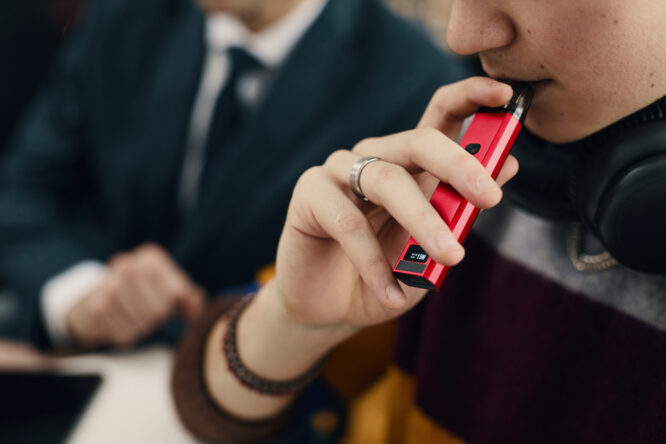
Indoor smoking bans have been in place in the UK for nearly twenty years now, and most of Europe has followed suit. That doesn’t stop people trying it in hotel rooms, apparently, despite the fact that it can trigger fire alarms, lead to evacuations, and leave a smell that ruins the room for whoever comes next. Hotels take this seriously enough to impose major financial penalties when they catch it, and they do catch it.
There’s not much more to say about this one. The rules exist, the reasons are obvious, and the consequences of ignoring them are real. If you need to smoke, go outside like everyone else.
Keeping your room reasonably tidy genuinely matters.
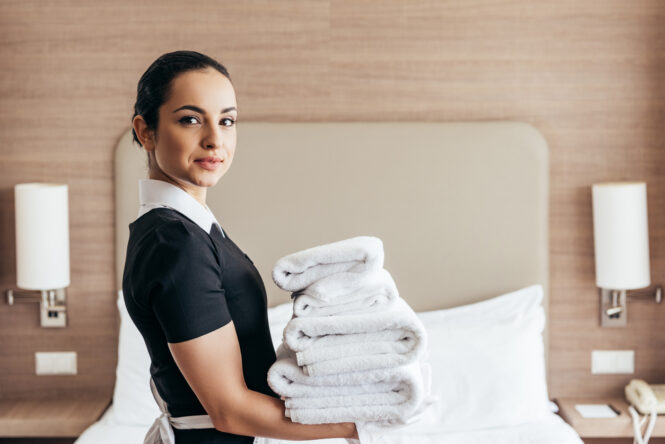
Nobody expects a hotel room to look untouched at the end of a long day, but there’s a difference between lived-in and genuinely chaotic. Housekeeping teams work through a lot of rooms in a short window of time, and a room that’s been properly trashed slows everything down and makes an already demanding job harder. Beyond that, coming back to a room that’s been cleaned is much nicer when there’s actually space to clean.
It doesn’t need to be neat. Just not a disaster. Put rubbish in the bin, keep wet towels off the carpet, and try not to spread your belongings across every surface. It takes about two minutes, and it means the people cleaning up after you can actually do their job properly.