We all know someone who leaves people completely stunned when they reveal their actual age.

They have an energy and a glow that makes them look and feel like they’re living in a completely different decade to the one on their birth certificate. It’s easy to chalk it up to lucky genetics, but the reality usually comes down to a specific set of daily rituals they refuse to compromise on. These routines keep their minds sharp and their bodies functioning at a level that completely defies the calendar. Here’s what it really takes to keep that youthful spark alive.
They actually wear sunscreen daily, even when it’s cloudy.

This one is genuinely the biggest predictor of how your skin will age, and the research is properly clear. UV exposure accounts for up to 80% of visible facial ageing, including wrinkles, age spots, sagging, and that leathery, uneven texture that no amount of retinol can fix later.
People who look noticeably younger in their 50s and 60s usually started wearing sunscreen daily in their 20s and 30s even on grey days, even when they weren’t planning to be outside much. It doesn’t have to be expensive. A decent SPF 30 or 50 on your face every morning, year-round, is one of the single best long-term investments you can make in your skin.
They prioritise sleep instead of treating it as optional.

Pulling all-nighters used to be a badge of honour, particularly at work, and plenty of people in their 20s and 30s thought they were being efficient by surviving on five hours of sleep. The people who age slowly figured out early that this isn’t sustainable. Sleep is when your body produces growth hormone, repairs cells, processes the day, and resets your hormones, immune system, and mood.
People who consistently sleep seven to nine hours a night don’t just feel better, they look better, with brighter skin, fewer eye bags, and noticeably less puffiness. Chronic sleep deprivation, on the other hand, accelerates pretty much every visible sign of ageing and quite a few invisible ones too.
They move every day and eat real food most of the time.

People who look much younger than their age tend to move every day, but they aren’t usually killing themselves at the gym. A daily walk, some strength training a couple of times a week, swimming, cycling, gardening, yoga, whatever they actually enjoy. The point isn’t to torture themselves into looking a certain way, it’s that regular movement keeps muscles strong, joints mobile, posture upright, and circulation good, all of which read as “young” to the eye.
Their eating habits are just as unglamorous. Plenty of vegetables, decent protein, plenty of fibre, and not much ultra-processed food. They don’t tend to do dramatic diets, they don’t yo-yo between losing 30 pounds and gaining it back, and they keep their weight roughly stable for decades. Mediterranean-style eating, with vegetables, fish, beans, olive oil, nuts, and whole grains, keeps coming up in the research as the pattern most linked to slower biological ageing.
They drink plenty of water and tend to go easy on the alcohol, both of which dehydrate the skin and properly accelerate ageing inside the body.
They’ve kept their friendships and their curiosity.

One of the biggest predictors of how well someone ages isn’t physical at all, it’s social. People with strong relationships in midlife consistently live longer and stay healthier than people who become isolated. Studies have linked loneliness to ageing the body at a rate comparable to smoking around 15 cigarettes a day.
The people who age slowly have usually kept up with their close friends, made new ones in midlife, and not let work and family squeeze every other relationship out. They’ve also stayed properly curious. They take up new hobbies, learn new skills, pick up new languages, read widely, and keep engaging with the world rather than narrowing down into the same routines for decades.
Keeping your brain genuinely active is linked to lower rates of dementia and Alzheimer’s, but the bigger benefit comes from staying interested in things, which keeps you interesting to others too.
They’ve made peace with stress and ageing itself.
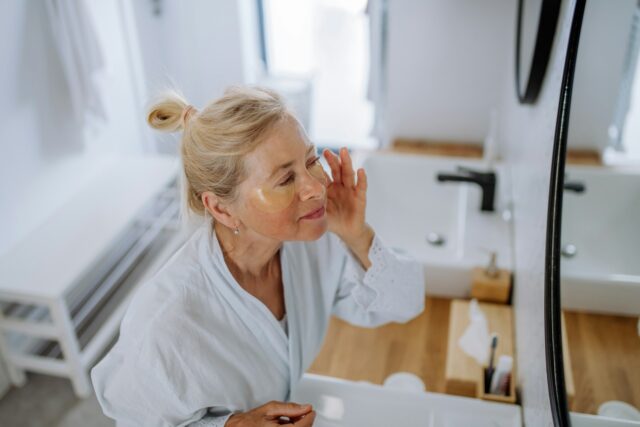
Chronic stress is one of the most powerful ageing accelerators known to science. It raises inflammation, disturbs sleep, shortens the protective caps on your DNA, and shows up on your face in fairly short order. People who look younger than their age usually have some way of managing stress, whether that’s meditation, walking in nature, gardening, therapy, prayer, breathwork, or just keeping a tight grip on what they let into their lives.
Just as surprisingly, the way they think about ageing itself seems to matter. A famous study by psychologist Becca Levy at Yale found that people with positive views of ageing lived an average of 7.5 years longer than people with negative views, even after controlling for health, wealth, gender, and loneliness. That’s a bigger longevity boost than not smoking, low blood pressure, low cholesterol, maintaining a healthy weight, or exercising regularly.
People who treat ageing as a slow disaster tend to live as if it is one. People who see it as a different, but still good stage of life seem to draw that experience out for themselves.
They don’t smoke and they protect their teeth.

Smoking ages you faster than nearly anything else, and even “social” smokers show measurable damage. People who look young for their age either never started or quit completely early on. The other underrated one is dental health. Gum disease has been linked to heart disease, dementia, diabetes, and a host of other age-related conditions, and missing or poor teeth visibly age your face in ways that are quite hard to fix later.
People who age slowly brush properly twice a day, floss, and see the dentist regularly. None of this is glamorous, but it shows up properly in how someone looks and feels into their seventies and eighties.
They still play, and they look after their mental health.
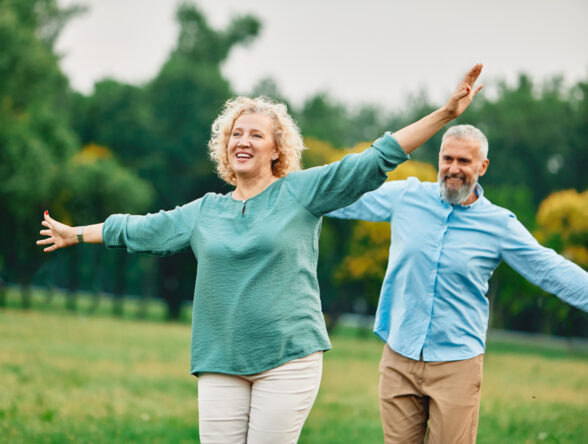
This sounds soft, but the research backs it up. People who age slowly often keep a sense of fun, playfulness, and curiosity that most adults quietly let go of somewhere in their 40s. They mess about with their grandchildren or nieces and nephews. They learn instruments. They take silly photos. They get genuinely excited about small things.
The grim, joyless version of midlife is the one that ages you fastest. Alongside that, they take their mental health seriously, whether that means therapy, medication if they need it, a good support network, or just being honest with themselves about how they’re feeling. Untreated depression, chronic anxiety, and long-running unprocessed stress all show up in the body as faster ageing.
They don’t treat looking after their mind as separate from looking after their body because they’ve worked out the two are really the same thing.