Finding a clump of hair in the shower drain or tangled in your brush can instantly trigger a massive wave of panic.
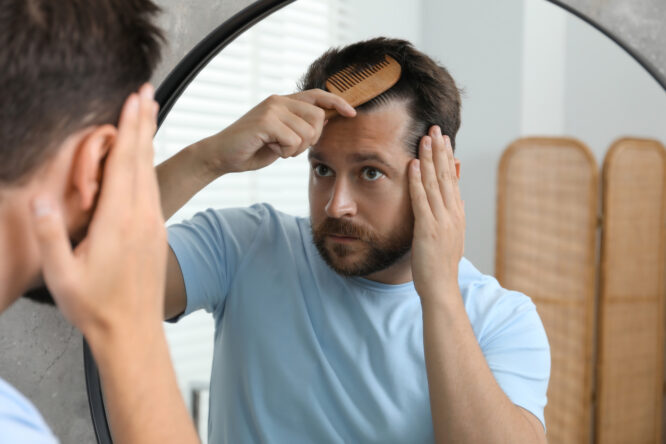
It’s easy to jump straight to the conclusion that you’re going bald, but there’s a huge difference between normal daily shedding and actual hair thinning. Your scalp naturally drops dozens of strands every single day as part of its regular growth cycle, especially during certain times of the year or after a stressful month.
Before you go spending a fortune on expensive thickening shampoos and miracle hair vitamins, you need to look at how and where the hair is coming away. Knowing exactly what to look for at your roots and along your parting will help you spot whether your mane is just having a temporary wobble or if it’s genuinely losing its density.
We all shed hair every single day.

Hair has its own quiet life cycle, and shedding is a completely normal part of it. Each strand on your head goes through three phases. First it grows, which can take anywhere from two to seven years. Then it stops growing and rests for a little while. Finally, it falls out to make room for the next one.
On a typical day, most adults shed somewhere between 50 and 100 hairs. That’s a surprisingly large number when you actually picture it, which is why it can look so alarming on the shower wall or in your brush. The follicles, which are the tiny pockets in your scalp where hair grows from, are perfectly healthy during normal shedding, and they’re already getting ready to produce a fresh strand to replace the one you’ve lost.
What hair thinning actually means

Hair thinning is a different thing entirely. This is what happens when the follicles themselves start to falter, either gradually producing thinner strands than before or stopping production altogether. The hair you lose during thinning isn’t being replaced the way it used to be, which is why the overall volume of your hair starts to drop over time.
Thinning tends to be slow and steady rather than sudden, which can actually make it harder to spot in the early stages. You might notice it most in the mirror under bright lights, or when your ponytail feels noticeably skinnier than it used to. It can affect just the top of your head, the temples, or the crown, or it can spread more widely.
There’s a quick way to tell them apart.

The clearest difference is whether you’re losing more hair than usual, or whether the hair you’ve still got is changing. Shedding shows up in the everyday clues, like more strands in the brush, more in the shower drain or more on your pillow. The hair on your head itself usually looks much the same.
Thinning is the opposite. The amount of hair you find around the house might be similar to before, but the hair on your scalp is looking sparser, finer or more see-through under the light. If you find yourself thinking, “There’s just less of it up there,” that’s thinning rather than shedding.
Everyone tries the shower test first.

Most of us judge our hair loss by what we see in the shower, but it’s worth knowing that washing your hair often makes things look much worse than they are. If you only wash twice a week, you’re collecting several days’ worth of normal shedding in one go, which can easily look like a horror film.
People with longer hair also see what looks like more loss, simply because each strand is more visible. Try not to panic at what’s in the drain. A more accurate sign of trouble is whether the volume of hair on your head is dropping, not how much is coming out in the shower.
The ponytail test is another popular one.

A really simple home check is the ponytail test. Tie your hair back in roughly the same spot you usually do, and notice the thickness of the ponytail in your hand. If it’s noticeably skinnier than it used to be six months or a year ago, that’s a clue that thinning is happening.
The same goes for the diameter of a bun, the way a hair tie wraps around more times than it used to, or how much of your scalp shows through when your hair is pulled back. None of these are diagnoses, but they’re useful little markers that go beyond what’s in your hairbrush.
The parting test can tell you a bit, but not everything.

Another easy home check is the parting test. Stand in front of a mirror in good natural light and look at the parting line in your hair from above. If the parting is widening, or you can see more of your scalp than you used to, that’s a sign of thinning rather than shedding.
This is especially worth knowing for women, since female pattern thinning often shows up most clearly along the parting line before anywhere else. Take a photo of your parting every few months, and you’ll have a much clearer picture of what’s changing than relying on memory alone.
What causes a sudden burst of shedding

If you’ve noticed hair coming out in alarming amounts over the past few weeks, the culprit is often something called telogen effluvium. That’s a fancy name for a temporary spike in shedding triggered by a stress on the body, usually two to three months earlier. Common causes include a major illness, surgery, childbirth, a big emotional shock, a sudden change in diet, certain medications or even the change of seasons.
The good news is that this kind of shedding is almost always temporary. The hair tends to grow back over the following six to nine months, although it can take a year for things to fully bounce back. The trick is recognising it for what it is and not panicking.
The most common cause of thinning

By far the most common reason for genuine hair thinning is genetics. Pattern hair loss, known medically as androgenetic alopecia, affects both men and women. In men, it tends to show up as a receding hairline, thinning at the crown or both. In women, it usually shows up as a widening parting, a thinner ponytail and reduced volume on the top of the head.
Crucially, women rarely lose their hairline the way men do. This kind of thinning is hereditary, so if it runs in your family on either side, you’re more likely to experience it yourself. It tends to creep in slowly, sometimes over many years.
Other reasons hair might genuinely be thinning

Genetics isn’t the only cause, though. Thyroid problems, both overactive and underactive, can leave hair noticeably thinner. Iron deficiency is a really common one that gets missed, particularly in women who menstruate, and it can be present even when other blood tests come back normal. Low vitamin D and B12 levels can also play a part.
Hormonal changes, including pregnancy, the postnatal period, perimenopause and menopause, can all change the hair on your head significantly. Some medications, including certain antidepressants, blood pressure pills and acne treatments, list hair loss as a side effect. Autoimmune conditions can also affect hair, sometimes causing distinct bald patches rather than overall thinning.
There are signs that mean it’s time to see a doctor.

There are a few clear signals that mean your hair situation is worth getting checked out properly. Sudden, dramatic hair loss over a matter of weeks rather than months is one. Patches of bald scalp, particularly round, smooth ones, are another. Any redness, scaling, itching, burning, soreness or tenderness on the scalp deserves attention, since these can point to skin conditions that need treating.
Hair loss alongside other symptoms, like unusual tiredness, weight changes, periods becoming irregular or feeling unwell in general, is also worth flagging. Your GP can run some basic blood tests to check for the most common causes, and refer you on if needed.
What to expect at an appointment

If you do go to your GP about hair loss, the appointment is usually pretty straightforward. They’ll have a look at your scalp and hair, and may do a gentle tug test to check how easily hairs come away. They’ll ask about when you first noticed changes, any recent stresses, illnesses or medication changes, and whether anyone in your family has experienced hair loss.
Blood tests often check thyroid function, iron and ferritin levels, vitamin D and sometimes hormone levels. If they think it’s needed, they may refer you to a dermatologist, who specialises in skin and scalp conditions. Don’t worry that you’re wasting their time. Hair changes are a perfectly valid reason to see a doctor.
What you can do at home in the meantime

If you’re going through a phase of heavier shedding, or you’re worried about thinning, there are a handful of small things you can do at home. Eat well, with plenty of protein, leafy greens, oily fish and iron-rich foods. Be gentle with your hair, avoiding tight ponytails, harsh brushing when wet, and overuse of heat tools.
Try not to wash it more aggressively than it needs. Manage stress where you can, since stress is a sneaky contributor to shedding spikes. And resist the urge to buy every miracle hair product on the internet, since most of them don’t deliver. Save your money for proven options, ideally guided by a professional.
Why the difference between shedding and thinning really matters

The reason it’s worth knowing whether you’re dealing with shedding or thinning is that the treatments are very different. Shedding usually resolves on its own once the underlying trigger passes, and it doesn’t need much in the way of treatment beyond looking after yourself.
Thinning, especially the genetic kind, generally needs ongoing care to slow it down, since the follicles themselves are changing. Catching thinning early gives you the best chance of keeping more of your hair for longer because most treatments work better at protecting what you’ve still got than at bringing back what’s already gone. So if something feels off, getting it checked sooner rather than later is genuinely worth doing.
The reassurance most people need to hear

For the vast majority of people who notice their hair coming out, the news is reassuring. Most hair shedding is temporary, and most of us are simply going through a phase that’ll quietly resolve over the next few months. The clumps in the plughole almost always look more dramatic than they actually are.
If your overall hair volume is staying steady, your parting isn’t widening and your ponytail still feels roughly the same, you’re almost certainly in shedding territory rather than thinning. Hair has been doing this same growing and falling out routine for as long as humans have had it, and yours is most likely just doing exactly that.