Your joints carry you through every single day without much thought, until something starts to hurt and suddenly, they’re impossible to ignore.

The good news is that rheumatologists and orthopaedic surgeons say there’s a huge amount you can do to keep hips, knees, elbows, and shoulders working well for decades, and most of it doesn’t require anything expensive or complicated. It’s really about consistency rather than intensity. The official guidance is 150 minutes of moderate exercise a week, or 75 minutes of something more vigorous like running.
Sadly, around 27% of adults in England currently manage less than 30 minutes a week of anything that gets them out of breath, and experts say even a small increase from that baseline produces a meaningful and measurable improvement in health. You don’t need to become an athlete to see a meaningful difference.
Moving more is genuinely one of the best things you can do for arthritis.
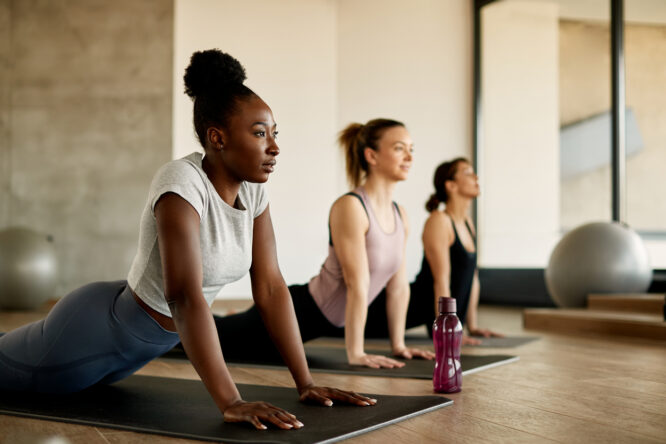
Arthritis tends to reduce as activity levels go up across a population, even though individual sports can carry some injury risk. Osteoarthritis, the most common type, happens when the protective cartilage around bones wears down, and it’s no longer described as simple wear and tear because joints actually function better when they’re used regularly. Staying active and building muscle around a joint helps keep it strong and can genuinely reduce pain rather than make it worse.
The difficulty is that exercise can feel frightening when you’re already in pain because the instinct is to assume movement will make things worse. Rheumatologists say the priority is helping people understand how to look after their joints without fear, and finding a type of activity that actually works for their specific situation rather than pushing a generic routine that doesn’t suit them.
Even small amounts of movement help your body heal.

Movement genuinely functions as medicine, particularly during recovery. Orthopaedic surgeons say that getting someone moving after something like a hip fracture is one of the very first priorities because it helps the body release chemicals that support tissue healing. Starting with low-intensity activity like gentle stretching or cycling and building up gradually over a few weeks is the recommended approach if you’re easing back into movement after an injury or a period of pain.
There are clear warning signs worth watching for. Pain that wakes you up at night repeatedly, or needing painkillers for more than a week, are signals that you should get proper medical advice rather than trying to push through on your own. Outside of those red flags, gentle movement is almost always a better starting point than complete rest.
Glute bridges and squats are two of the most useful exercises around.

Glute bridges come up repeatedly as one of the safest exercises available, suitable even for people recovering from fractures, hip replacements or back surgery. Lying on your back, bending your knees to 90 degrees and pushing your pelvis towards the ceiling works the gluteal muscles with essentially no risk of causing harm. Adding a resistance band around the lower thighs increases the benefit further, supporting both hips and knees at the same time.
Squats are just as important, particularly for maintaining independence as you get older. The ability to get up off the floor if you fall is directly tied to glute and thigh strength, and squats build exactly that. If squats feel difficult, going up and down stairs or practising sitting-to-standing movements from a chair work the same muscle groups in a more accessible way.
Running and parkrun are better for your joints than most people assume.

Impact sports like running often get unfairly blamed for joint damage, but the evidence tells a different story. Muscles and tendons actually need a degree of impact to stay healthy and strong. Astronauts who spend time in zero gravity come back with measurable bone density loss purely from the absence of impact on their bodies, which illustrates how important this kind of stress on the skeleton actually is.
A 5k run is often described as a sensible amount, not too much and not too little, and walking it counts just as well if running isn’t accessible to you. The key to making any of this stick long term is habit. Regular, repeatable activities like parkrun work precisely because they become part of a routine rather than something you have to motivate yourself to do from scratch every week. It’s also worth knowing that the benefits of exercise plateau at around an hour a day, so smaller, consistent doses do more for you over time than occasional intense sessions.
Swimming is an excellent option if running isn’t for you/

Low-impact aerobic activities like swimming reliably improve joint function and reduce pain, making them a strong option for anyone who finds running uncomfortable or who’s managing existing joint pain. Despite some assumptions about high-impact activity being harmful, there isn’t strong evidence that running itself causes long-term joint damage unless an injury occurs along the way.
For anyone currently experiencing joint pain, getting into water tends to make exercise considerably more manageable. It doesn’t need to be structured swimming laps, either. Walking up and down a pool or doing gentle stretches in water is a genuinely good way to build activity back into your routine without the same strain that comes with movement on land.
Strength training is described as the single best way to prevent arthritis.
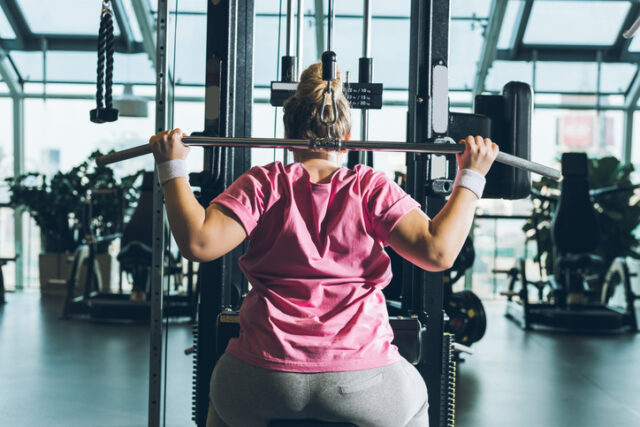
Of everything covered here, strength training using weights or resistance work is singled out as the most effective tool available for preventing arthritis, and it’s never too early or too late to start. This applies even to people heading towards joint replacement surgery. Strong muscles around a joint before an operation can really improve recovery time and outcomes afterwards.
Preparing for surgery is incredibly important. Pain when standing up from a chair before an operation doesn’t necessarily mean that pain continues afterwards, and building strength beforehand through cycling, swimming, or static cycling makes a real difference. Practising balance on your stronger leg is also useful because being able to balance well enough to get to the bathroom and back independently is often what determines how quickly someone can leave hospital after surgery.
Combining strength with cardio is what actually prevents injury.

Strength training paired with cardiovascular or aerobic conditioning is considered essential for avoiding injury, a principle well understood by professional athletes but less widely applied by everyday gym-goers. People who focus heavily on flexibility and stretching, such as regular yoga practitioners, often need more strength work rather than more stretching. Conversely, people who lift heavily and build muscle often need more mobility and conditioning work rather than more strength training. The ideal is somewhere in the middle for most people.
Stronger muscles around a joint also reduce the strain placed on that joint to maintain stability, which has knock-on benefits across the whole body. It isn’t just joints that benefit from this kind of training, either. Resistance exercises are proven to keep bones strong and meaningfully reduce the risk of fractures, which becomes increasingly important with age.
What you eat plays a real role in how your joints feel.
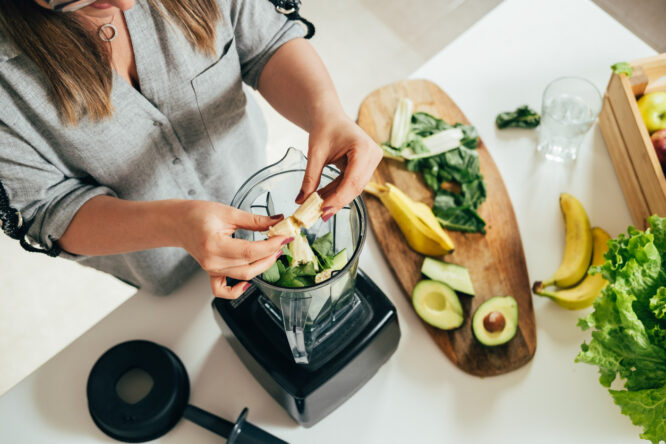
A diet built around whole foods, fresh fruit, fresh vegetables and meals cooked from scratch supports joint health in ways that go beyond simple weight management. There’s increasing evidence that gut health has a knock-on effect on inflammatory conditions like rheumatoid arthritis, and likely on other forms of arthritis too. Rather than chasing a specific trendy diet, focusing on these basics tends to support health across nearly every area of the body, joints included.
Vitamin D and vitamin K are worth considering as supplements, particularly during UK winters, since they support musculoskeletal tissue broadly. A dose of around 400 IU of vitamin D3 during the darker months is generally considered sensible. Cod liver oil, rich in anti-inflammatory omega-3 fatty acids, can also be helpful for general joint comfort, although it isn’t recommended as a treatment for inflammatory arthritis specifically. Supplements like creatine, glucosamine, and chondroitin come up frequently in conversations about joint health, but experts remain cautious about how much benefit they genuinely provide.
A few other habits make a noticeable difference, too.
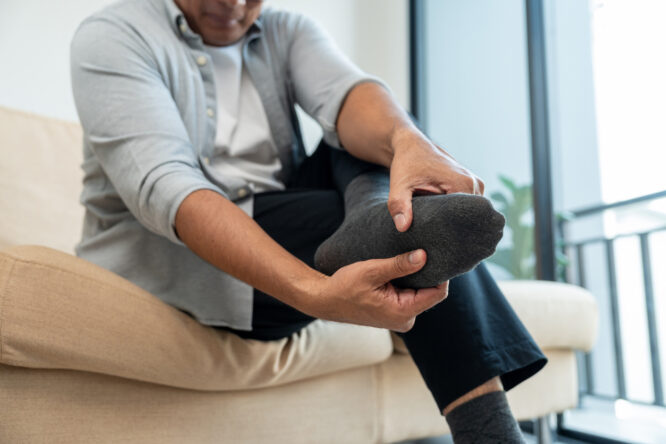
Carrying excess weight increases strain on weight-bearing joints, and losing weight where appropriate reduces both that mechanical strain and inflammation linked to metabolic health more broadly. Smoking is worth stopping for almost every health reason imaginable, but it’s particularly strongly linked to worse outcomes and increased severity in rheumatoid arthritis specifically.
Footwear is a smaller but still relevant factor. Heavily engineered shoes designed to improve speed change the way force moves through your body, and without the strength to support that change, the risk of injuries like stress fractures increases. The same caution applies to barefoot-style shoes at the other extreme. There’s no single shoe that’s right for every activity, and comfortable, affordable footwear that suits what you’re actually doing is generally a perfectly sensible choice.