Fraudsters are finding fresh ways to trick worried parents out of their money, and the latest version leans directly on the current heatwave sweeping the country.

Scammers are sending texts and WhatsApp messages pretending to be a son or daughter suffering in the heat, hoping to catch parents off guard at exactly the moment they’d be most likely to want to help. It’s a new twist on an old trick, and experts are urging families to know the warning signs before anyone gets caught out.
How this particular scam actually works

The messages typically start simply, with something like “Hi mum” or “Hi dad”, before quickly moving into a claim that the sender is overheated and stressed because of the weather. They’ll often ask the parent to reply on a brand new number, claiming their own phone is somehow unavailable.
Once contact is made, the fraudster will usually follow up with a request for money, framing it as urgent and often providing bank details for the parent to send funds to directly. The whole approach relies on catching someone off guard, using genuine worry about a loved one to override the usual caution people might otherwise apply.
It’s a twist on a scam that’s been running for years.

This heatwave version isn’t a new invention, it’s a variation on a scam that’s been doing the rounds for a while already. The original version usually claims the sender has lost their phone and is borrowing a friend’s, rather than mentioning the heat specifically.
What makes this new twist worth flagging is how well it’s timed. With genuine heatwave warnings already circulating about heat stress and staying safe in high temperatures, a message like this can feel far more believable than it otherwise might, especially to a parent who’s already been thinking about how the weather might be affecting their child.
Why parents are especially likely to fall for it

These scams work because they’re built entirely around triggering an emotional reaction rather than a rational one. A parent seeing a distressed message from someone claiming to be their child is naturally going to want to respond quickly, without necessarily stopping to check whether the message is genuine first.
Fraud experts have specifically pointed out that parents are increasingly vulnerable to this kind of approach, since the whole scam is designed to bypass normal caution by playing directly on sympathy and urgency rather than logic.
What experts are advising people to do

The UK’s Report Fraud service, which works with police to help trace cybercriminals, has clear advice for anyone who receives a message like this. Don’t reply to the number given in the text, and don’t send any money, no matter how urgent or convincing the message seems.
Instead, the recommended step is to contact your son or daughter directly using their usual, already saved phone number. If it turns out to genuinely be them, they’ll be able to confirm it quickly, and if it’s a scam, you’ll have avoided sending money to a stranger pretending to be someone you love.
Reporting a suspicious text if you receive one

Anyone who receives a message like this is also encouraged to forward it to 7726, a free reporting service that helps phone networks track and block numbers being used for scams like this one. It takes seconds to do and helps build a picture of which numbers are actively being used to target people.
Reporting suspicious texts doesn’t just protect you, it also helps prevent the same message reaching someone else who might be more likely to fall for it, particularly if they’re dealing with a genuinely worrying situation involving a family member at the time.
How much money victims have actually lost
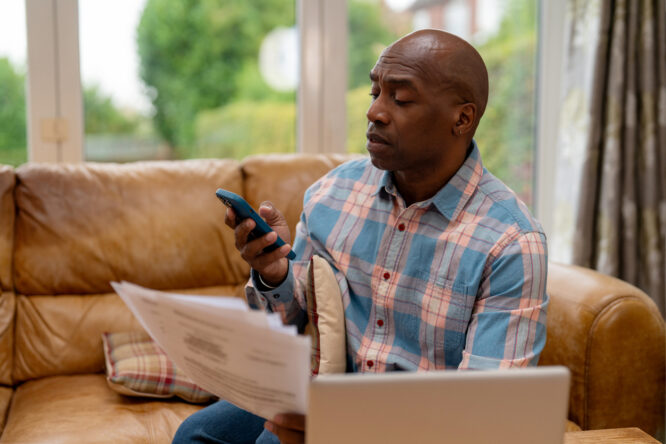
The financial damage caused by this type of scam has been significant. Victims in the UK typically lose up to £3,000 once they’ve been drawn in, according to figures from UK banks, though the true cost can climb far higher in some cases.
One case reported by the BBC saw a parent manipulated into sending as much as £47,000 across several separate payments, showing just how far scammers are willing to push once they’ve gained someone’s trust. Figures obtained through a Freedom of Information request show that “Hi mum” style scams led to a total loss of £226,744 across the UK between 2023 and 2025.
Why this scam keeps getting harder to spot

Banks have already flagged how quickly this particular scam continues to change and adapt. Santander previously warned that the tactics being used were evolving at what it described as breakneck speed, with fraudsters constantly tweaking their approach to stay one step ahead of public awareness.
Tying the scam to a genuine, ongoing heatwave is a clear example of that evolution in action, using real-world events to make a fake message feel far more believable than a generic one might otherwise seem.
How to stay one step ahead of the scammers

The simplest way to avoid falling victim to this scam is to slow down before reacting, even when a message feels urgent or distressing. A quick call to your child’s usual number takes only a moment and instantly confirms whether a message is genuine or not.
With scams like this constantly changing to match whatever’s happening in the news, whether that’s a heatwave, a lost phone, or some other believable emergency, staying alert to the pattern behind them is far more useful than trying to memorise every new version as it appears.