The idea of counting your five-a-day already feels like a chore for most of us, so hearing that we should actually aim for 30 different plants every single week is overwhelming.

This ambitious target has been popping up everywhere lately, backed by gut health gurus and nutrition scientists who promise it’s the ultimate secret to a happier digestive system. It sounds like you’d need to live on rabbit food and spend a fortune at the supermarket just to hit the quota, but the actual science behind the rule is surprisingly flexible.
Before you go throwing out your usual meal plan or panic-buying every vegetable in the aisle, it helps to understand what actually counts as a plant, and whether this number genuinely matters for your health.
Where the 30 plants idea came from

The 30 plants advice didn’t appear out of thin air. It comes from a big ongoing research project that has gathered diet information and poo samples from thousands of volunteers, all in the name of mapping the human gut. In 2018, researchers compared the gut bacteria of people who ate more than 30 plant-based foods a week with those who ate fewer than 10.
They found that the high-plant group had more of the helpful bacteria linked to things like reducing inflammation, supporting the gut lining and even looking after your skin. From there, the “30 plants a week” idea took off and became one of the most repeated bits of nutrition advice on the internet.
Why 30 might not be the magic number

Here’s the bit the headlines tend to skip. That research compared people at the two extremes of plant eating, the very high group and the very low group. It didn’t actually look at what happens at 15 plants, or 20, or 25. So we genuinely don’t know whether someone eating 20 plants a week has a gut that’s noticeably worse off than someone eating 30.
The study also didn’t take other dietary habits into account, so the difference might have been partly because the low-plant group was eating more processed food, drinking more alcohol or generally living differently. The sample was also mostly health-conscious, well-off people in Western countries, which doesn’t necessarily reflect everyone. In short, 30 is a memorable number, but it’s not a proven cut-off.
Plants matter, but so does plain old fibre.

The bigger picture from the science is that yes, eating a wide range of plants is genuinely helpful, but it’s not the only thing that matters. The total amount of fibre you eat, no matter what shape it arrives in, plays a huge role in keeping your gut bacteria happy. That means even simple staples like wholegrain bread, oats, beans, and lentils are doing a lot of the heavy lifting.
In other words, if you’re not hitting 30 plant varieties, but you are eating plenty of fibre across the week, you’re still doing your gut a real favour. The same goes for staying away from things that work against your gut, like very heavy drinking and the artificial sweeteners and emulsifiers found in lots of ultra-processed foods.
Lifestyle matters more than people think.

Your gut bacteria aren’t just shaped by what you eat. Sleep, exercise, and stress all leave their mark too. People who move their bodies regularly tend to have a more varied mix of gut bacteria than those who don’t. Poor sleep and chronic stress can both nudge things in the wrong direction.
Even something as simple as getting outside, mixing with people and spending time in green spaces seems to help. So, if you’re nailing your diet but running on five hours of sleep and constant pressure, the diet alone won’t make up for it. Looking at the whole picture, rather than obsessing over a single number, tends to do far more for your gut than any one trick.
A diverse gut isn’t always a healthy gut.

There’s another important catch in the 30 plants story. Having lots of different bacteria in your gut, often called a diverse microbiome, isn’t always a sign of good health. Some perfectly healthy people have less diversity than people with certain conditions, and the other way around. What seems to matter more is what those bacteria are actually doing, rather than just how many different types you have.
Are they producing the helpful compounds that protect your gut and dampen down inflammation? That’s the real question. In healthy people especially, eating a wildly varied diet might not be hugely different from eating a moderately varied one, as long as both are high in fibre and rich in plants.
Your gut is more than just bacteria.

When we talk about gut health, it’s easy to think of it as just the bacteria living inside, but there’s more to it. A healthy gut also needs a healthy gut wall, the thin lining that decides what gets absorbed into your bloodstream and what doesn’t. It needs a working liver to process everything you eat and drink, too.
All three parts, the bacteria, the gut wall and the liver, depend on each other. If the wall gets damaged, bits of waste can leak into the blood and trigger inflammation through the rest of the body. That can also change the conditions inside the gut and kill off the good bacteria, which is why looking after the whole system matters, not just the bug count.
How to actually eat for a happier gut

The good news is the practical advice doesn’t really change, just because the 30 plants number isn’t quite as solid as it sounds. The same simple habits keep coming out on top. Eat plenty of whole foods, including fruit, vegetables, beans, lentils, nuts, seeds and whole grains.
Add fermented foods like live yoghurt, kefir, kimchi, and sauerkraut into your week, even just a couple of times. Try to cut back on heavily processed foods, processed meats, and very sugary drinks. None of this requires a spreadsheet, and none of it requires you to eat 30 different things by Sunday night.
Easy ways to add more plants without trying too hard
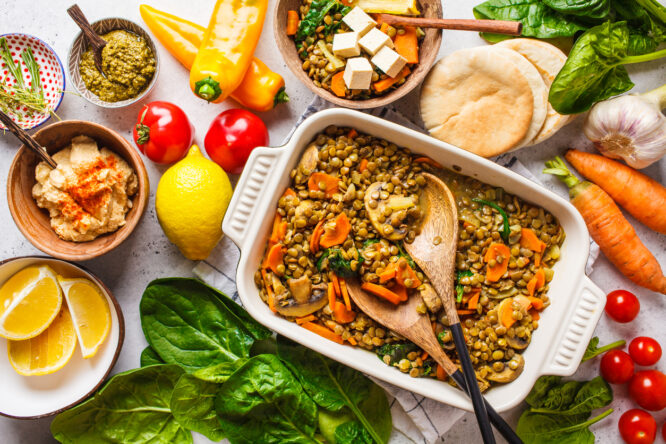
If you fancy upping your plant variety without going broke or chucking out half-eaten veg, a few simple swaps go a long way. A handful of mixed nuts and seeds tipped onto your porridge or yoghurt counts as several different plants in one go. Tinned beans, lentils, and chickpeas are cheap, last forever in the cupboard and add real fibre and variety.
Frozen fruit and veg are just as nutritious as fresh and don’t go off in the salad drawer. Herbs and spices count as plants too, so sprinkling fresh basil over pasta or adding ginger and garlic to a stir-fry subtly bumps your numbers up. Little tweaks like these are far easier to keep up than a strict shopping list.
Why supplements aren’t a magic shortcut

Fibre supplements have become big business, but the evidence suggests they don’t deliver the same wide range of benefits as fibre from actual food. Some specific supplements can be useful for specific things, like keeping you regular, but they don’t replace whole plants. There seems to be something about the natural structure of fibre inside real food that makes it more powerful for your gut as a whole.
If you have any existing gut issues, or you take medication like acid blockers, it’s also worth being cautious with extra fibre, since piling it on suddenly can cause discomfort. As a general rule, real food first, supplements only if there’s a clear reason for them.
Start slow and build it up gently.

If you’re not used to eating much fibre, suddenly piling your plate with beans, lentils, and bran is a recipe for an uncomfortable few days. Your gut needs time to adjust, and the bacteria themselves take a while to settle into a new pattern. Add one or two new things a week, see how you feel, and build up gradually.
Some foods will work brilliantly for you and others might not, and that’s normal. The aim isn’t perfection, it’s a steady, sustainable move in the right direction. A bowl of porridge with seeds, a salad with chickpeas in it, a soup full of lentils, these tiny daily moves do far more over a year than a panic week of trying to hit 30.
Why this changes how you should think about gut health

The big takeaway here isn’t that 30 plants is bad advice, it’s that it isn’t the only target worth caring about. Eating a decent variety of plants matters, eating plenty of fibre matters, looking after your sleep and stress matters, and not undoing it all with heavy drinking and lots of ultra-processed food matters too.
If counting plants helps you eat better, brilliant, keep counting. If it stresses you out or makes you feel like a failure when you fall short, drop the number and focus on the bigger habits. Your gut, and the rest of you, will be perfectly happy with that.