We’ve all heard of white noise for masking background disruptions, and you might have even tried pink or brown noise to help you unwind after a stressful day.

However, there’s a different colour of sound currently getting a lot of attention in the wellness world, and it could be the exact thing you need if you’re struggling to get a decent night’s rest. Known as blue noise, this specific sound profile has a very different energy compared to its deeper, rumbling cousins, making it a popular choice for people looking to quieten a racing mind.
Before you update your sleep playlist or download another ambient sound app, here’s a look at what blue noise actually sounds like and the science behind whether it can genuinely help you drift off.
What does blue noise actually sound like?

It’s brighter and crisper than most sleep sounds. Think of the hiss of a spray can or the high-pitched edge of a heavy rainstorm. It leans into the higher frequencies rather than the lower ones, which gives it that sharper, more present quality. Some people find it really soothing, others find it a bit much. It very much depends on how you respond to sound generally.
The reason different noises get assigned colours is that it’s a way of describing how the sound is spread across frequencies. Blue noise turns up the higher end. White noise spreads everything evenly. Pink and brown noise both lean towards the lower, softer end. None of them are better or worse in an objective sense, they just suit different people and different situations.
It’s particularly good at blocking out sudden noises.
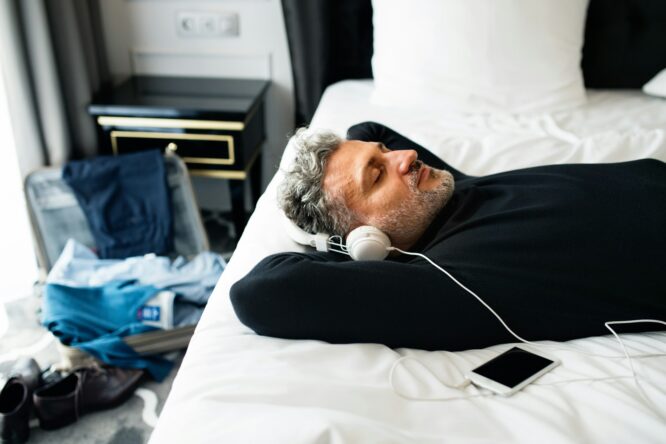
This is probably blue noise’s strongest selling point. Because it focuses on higher frequencies, it’s really effective at masking the kind of sharp, sudden sounds that jolt you out of sleep. A door closing in another room, someone raising their voice outside, a dog barking down the street. Those sounds sit in a similar frequency range to blue noise, so it essentially drowns them out before they can register.
If white noise or pink noise has never quite done the job for you in a noisy house or a busy street, you might want to try blue noise specifically for that reason. It’s not just general background coverage, it targets the type of sound most likely to wake you up in the middle of the night.
How does it compare to the other noise colours?

White noise is the one most people have heard of. It covers all frequencies equally, which makes it decent at masking a wide range of sounds but can feel a bit harsh to some ears. Pink noise is softer, more like steady rain or wind through trees, and a lot of people find it easier to relax to. Brown noise goes even deeper and has more of a rumbling quality, good if you like the sound of distant thunder or a heavy river.
Blue noise sits on the opposite end from brown. It’s the brightest and sharpest of the four. If you’ve tried the others and found them either too grating or too flat, blue noise might land differently for you. Try cycling through them to find what your brain actually settles into, rather than assuming one is definitively better.
It tends to work best for certain types of sleepers.

People who are light sleepers and get woken up by high-pitched sounds tend to get the most out of blue noise. It’s also worth a try if you’ve ever found brown or pink noise too dull and almost sleep-inducing in an uncomfortable way rather than a restful one. Some people need a bit more presence in a sleep sound for it to work, and blue noise delivers that.
It can also be useful if you’re trying to nap during the day in a house that’s not particularly quiet. The daytime is full of sharp, intrusive sounds, and blue noise handles those well. It’s less effective if your main issue is low-frequency noise, heavy traffic, a rumbling boiler, bass from a neighbour’s speaker. For those, brown noise is usually the better match.
It might take a few nights to get used to.

If you’re not used to having any background sound when you sleep, blue noise might feel a bit odd at first. That’s normal. Most people need a few nights before their brain starts associating a new sound with sleep rather than just registering it as noise. Give it at least three or four nights before you decide whether it works for you.
Volume matters too. It shouldn’t be loud, just present enough to sit in the background without demanding attention. If you find yourself noticing it or thinking about it, it’s probably too loud. The point is for it to blend into the room rather than become the main thing your brain is focused on.
Things to think about before you try it

If you’re quite sensitive to high-pitched sounds generally, blue noise might feel sharp or slightly grating rather than calming. There’s no point persisting with something that’s winding you up. In that case, pink noise is usually the better starting point because it’s gentler and more balanced.
If you have tinnitus, start at a very low volume and seeing how your ears respond before committing to it. Some people with tinnitus find that higher frequency sounds make things worse rather than better, though for others it can actually help mask the internal ringing. Everyone’s experience is different so it’s not something you can predict in advance.
You can use it for more than just sleep.

Blue noise works reasonably well as a focus sound too. If you’re working from home and finding it hard to concentrate with background noise, having blue noise on quietly can help muffle distractions without making you feel like you’re in a sensory deprivation tank. It’s less intrusive than music, but more effective than silence for a lot of people.
Some people also find it useful for winding down before bed, without actually sleeping. Playing it during a bath or while reading gives the brain a consistent background to settle into, which can make the transition into sleep feel a bit smoother.
How to actually try it tonight

Blue noise is easy to find for free on YouTube and most streaming platforms, and there are also apps that let you mix different noise colours together if you want to experiment. Starting with a straightforward blue noise track for 20 to 30 minutes as you’re falling asleep is a simple way to test it without any commitment.
If it’s working, you’ll probably notice that you’re drifting off a bit more easily or staying asleep through sounds that usually wake you. If after a week it’s not making any difference, or you actively dislike it, just move on and try something else. Sleep sounds are very personal and there’s no single right answer.