Geordie is widely considered one of the most distinctive dialects in the entire country, and it has a habit of leaving people from outside the North East genuinely lost in conversation.

It’s not just an accent; it’s a whole separate vocabulary with roots stretching back to Old Norse, Viking settlements and Anglo-Saxon England, which is part of why it sounds so different from anything you’d hear south of Birmingham. If you’ve ever stood blankly nodding along while a Geordie talked at you, this is for you.
“Why aye, man”

This is probably the most recognisable Geordie phrase in the country, and still the one that causes the most confusion on first hearing. It means “yes, of course,” but enthusiastically. The “why” isn’t questioning anything, it’s just adding emphasis, in the same way you might say “oh absolutely” or “definitely yes.”
You’ll hear it delivered with genuine warmth and a lot of conviction. It’s also sometimes shortened to just “why aye” and serves as a complete sentence on its own, usually meaning agreement that borders on enthusiasm.
“Howay”

Howay is one of those words that does a lot of different jobs depending on tone. It can mean “come on, let’s go,” “hurry up,” “get out of here” or even “stop talking rubbish”—context does a lot of heavy lifting here. “Howay man, we’re going to miss the match” means hurry up. “Howay, that’s not true” is closer to disbelief.
Newcastle United fans have been chanting “Howay the lads” for decades, which is essentially “come on.” A Londoner hearing it cold is unlikely to land on any of these meanings immediately.
“Canny”

In London, if someone calls you canny you might assume they’re saying that you’re shrewd or calculating because that’s the general English meaning of the word. In Geordie, it means something close to the opposite—it means good, nice, quite, or pretty decent. “She’s a canny lass” means she’s a lovely person. “It’s canny far” means it’s quite far away. “Canny good” means pretty good.
It’s one of the most versatile words in the Geordie vocabulary and gets used constantly, which makes it especially confusing if you’re working from the wrong definition.
“Bairn”
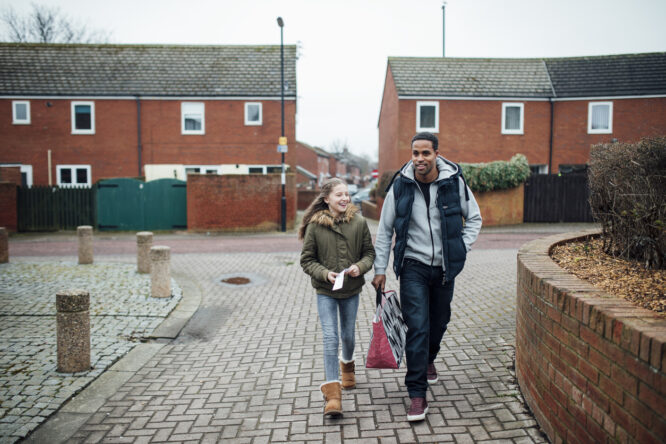
Bairn means child or baby, and it’s one of those Geordie words with direct links to Old Norse—the same word appears in Scandinavian languages, which tells you something about the region’s history. You’ll hear it used completely naturally in everyday conversation: “the bairn’s still asleep,” “she’s got three bairns,” “the bairns are out.”
It’s warm and entirely unselfconscious, and Geordies use it the way the rest of the country says “kid.” A Londoner hearing it for the first time generally needs a moment.
“Mortal”
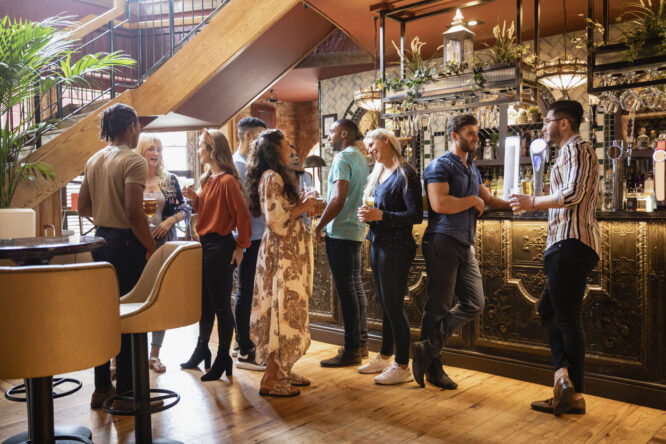
Mortal in standard English suggests something involving death or severe consequences. In Geordie, it just means drunk. Specifically, it means quite thoroughly drunk, the kind of drunk you are on a Friday night in the Toon when you’ve had a few too many. “We were absolutely mortal last night” means the night went well by certain measures.
It’s one of the more jarring words for outsiders because the gap between its standard meaning and its Geordie usage is fairly dramatic, and there’s no real context clue to help you bridge it.
“Hyem”

Hyem means home. “Am gannin hyem” means “I’m going home.” It sounds nothing like the word it represents to anyone who hasn’t heard it before, and the spelling doesn’t help. Like a lot of Geordie words, it has Old Norse origins; the equivalent exists in several Scandinavian languages, and it’s one of the more commonly used words in day-to-day Geordie conversation.
You’ll also hear “yem” used in the same way, which is a slightly more informal version. Either way, a Londoner hearing either for the first time is going to need it repeated.
“Gan / gannin”

Gan means go, and gannin means going. “Am gannin to the shops” means “I’m going to the shops.” “Gan on then” means “go on then.” It turns up in combination with other Geordie words constantly—”gannin hyem,” “gannin canny,” “gannin oot the neet”—and is one of those words you simply have to learn before Geordie sentences start making structural sense. Once you’ve got it, a lot of other things start to click into place.
“Belta”

Belta is an exclamation of genuine delight or approval, usually delivered with some energy. Something that is belta is excellent, brilliant, the best possible version of itself. “That was proper belta” is high praise. It’s often combined with “proper” for extra emphasis, which is itself used in Geordie the way “really” or “very” would be used elsewhere. A belta night out is a great night out. A belta goal is a brilliant goal. Hearing it out of context, with no knowledge of the dialect, gives you very little to go on.
“Hadaway”

Hadaway essentially means “away with you” and is used to express disbelief or to dismiss something someone has said. “Hadaway, that’s never true” means “come off it, I don’t believe you.” It can also be used more playfully to tell someone to leave you alone, or to laugh off a compliment you’re not quite ready to accept.
Hadaway and howay are sometimes confused with each other by people new to the dialect, despite meaning quite different things. The tone tells you most of what you need to know, but even with tone it can take a few repetitions before it clicks.
“Marra”

Marra means mate or close friend. If a Geordie calls you marra, you’ve been warmly received. It’s used in the same way “mate” gets used in the South, but with a specific warmth to it that goes slightly beyond casual. “Alreet marra” is a friendly greeting between people who know each other well.
The word has roots in the mining communities of the North East, where it referred to the person you shared a shift with underground, which gives it a history that “mate” doesn’t quite have. Londoners tend to find it charming once they’ve worked out what it means.
“Clamming”

Clamming means hungry, or more specifically, really hungry—the kind of hungry where you’re starting to feel it urgently. “Am absolutely clamming” means you need food soon. It’s a vivid word and its meaning is fairly easy to grasp once you’ve heard it in context, but without that context, it sounds like it could mean almost anything.
It gets used a lot in the natural rhythm of Geordie conversation and will come up regularly if you spend any time in Newcastle around mealtimes, which given the quality of the food scene there, you probably should.
“Pet”

Pet is a term of endearment used widely across the North East and particularly by older Geordies. It’s the equivalent of “love” in parts of Yorkshire, or “duck” in the Midlands. Basically, it’s a warm, inclusive form of address used with friends, strangers in shops, children, colleagues, and anyone else you happen to be talking to.
“Alreet, pet?” is a greeting. “Cheers, pet” is a thank you. It’s used by women and men both, and it tends to catch Londoners off guard the first time they hear it because in the South addressing a stranger as “pet” would be unusual enough to warrant a second glance.
“Radgie”
Radgie means someone who is throwing a tantrum, acting aggressively, or generally behaving in an uncontrolled and over-the-top way. “He’s gannin proper radgie” means he’s losing his temper or kicking off about something. It can describe a moment of behaviour rather than a person—you can have a radgie, or you can be being radgie—and it has a slightly comic quality to it that softens the description slightly.
As a noun, it’s also used to describe a person generally known for erratic or aggressive behaviour, though usually with a degree of affection depending on who’s saying it.
“Champion”

In standard English, champion is a noun. In Geordie, it’s an adjective meaning excellent, great or really good. “Eeeh, that’s champion” is a genuine expression of satisfaction. “I’m champion, thanks” means you’re doing very well. It tends to get used by older Geordies more than younger ones but is by no means dying out, and hearing it used naturally in response to a simple “how are you?” still surprises most people from outside the region who are expecting something closer to “fine, thanks.”
“Toon”

Toon means town, but more specifically it means Newcastle city centre and, most importantly, Newcastle United Football Club. The two things are practically inseparable. “Going into the Toon” means heading into the city. “The Toon” on its own almost always means the football club in Geordie conversation. “A night out in the Toon” is a night out in Newcastle.
It’s straightforward once you know it, but it comes up constantly enough that not knowing it puts you at a consistent disadvantage in conversation with anyone from the area.