Spotting a little yellowish patch on your eyelid in the mirror is the sort of thing most of us write off as a harmless blemish, and often, that’s true.
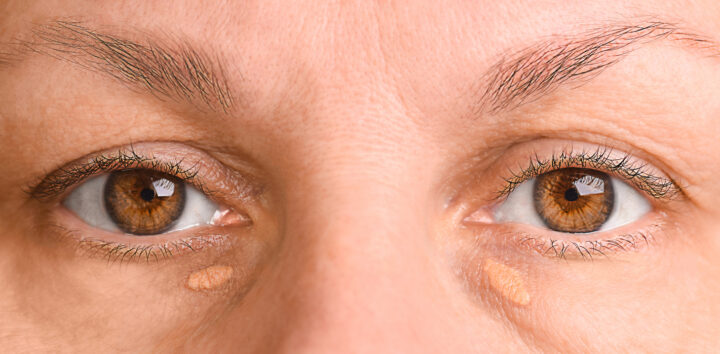
You might think about covering it up with a dab of concealer or asking about getting it frozen off, but booking an actual GP appointment for it probably wouldn’t even cross your mind. However, it turns out those soft, pale bumps, known medically as xanthelasma, can be far more than just surface-level skin changes.
Fresh clinical findings show they’re directly tied to a noticeably higher chance of suffering a heart attack or stroke down the road, even if your routine blood tests look relatively normal and you feel completely fine. The body has a weird way of dropping early clues right on your face, and paying attention to a small change around your eyes today could give you a massive head start on protecting your ticker.
The warning sign is a pale patch that forms around the eyes.

Xanthelasma shows up as soft, pale or yellowish patches on or around the eyelids. They form when immune cells become filled with cholesterol and other fats, gradually building up just under the skin. Most people who notice them go to a dermatologist purely for cosmetic reasons, since the patches themselves don’t hurt and don’t affect eyesight.
The condition is often, though not always, linked to higher cholesterol levels in the blood. Because fatty build-up also plays a central role in narrowing the arteries, scientists have long wondered whether these visible patches might be hinting at something happening deeper inside the body, out of sight.
Furred up arteries cause most heart attacks and strokes.

The underlying process behind most heart attacks and strokes is atherosclerosis, where fatty deposits slowly build up inside the artery walls and restrict blood flow. It tends to develop quietly over years, without any obvious symptoms, until it suddenly causes a major event. That makes early warning signs incredibly valuable, since by the time symptoms appear, the damage has often already been building for a long time.
Doctors already know a handful of risk factors to keep an eye on, from blood pressure to cholesterol levels, but a visible marker that can be spotted during a routine eye or skin check would be a useful addition. That’s exactly what this new research set out to test.
Two large groups were compared over several years.

The study looked at close to 18,000 people diagnosed with xanthelasma, comparing them against a similar number of people with presbyopia, an age related change in eyesight that also requires a proper eye examination. Using that second group as a comparison helped confirm none of them had xanthelasma themselves, while still accounting for the fact that everyone had recently had their eyes checked.
Health records for both groups were then tracked over time, looking specifically at how many people went on to experience a heart attack, stroke, or transient ischaemic attack, sometimes called a mini-stroke. Tracking such large numbers over multiple years gave the researchers a much clearer picture than smaller studies have managed in the past.
The eyelid patches lined up with a much higher risk.

Within the first year, people with xanthelasma were roughly three times more likely to have a heart attack than those in the comparison group, and around three times more likely to have a stroke too. Mini-strokes followed a similar pattern. The overall numbers were still fairly small in percentage terms, but the gap between the two groups was consistent and hard to ignore.
That gap narrowed a little as time went on, yet even after five and ten years, people with xanthelasma were still facing a noticeably higher risk than those without it. The patches weren’t just a short-term signal either, they pointed towards risk that stuck around for a decade or more.
High cholesterol alone doesn’t explain the pattern.

One of the more unexpected findings was that the raised risk showed up whether or not someone with xanthelasma actually had high cholesterol on standard blood tests. If cholesterol were the whole story, you’d expect the risk to track closely with those blood results, but it didn’t behave that way here.
That suggests something else is going on alongside cholesterol, whether that’s inflammation, other metabolic changes, or factors researchers haven’t fully identified yet. It also means relying purely on a cholesterol reading might miss people who are still at meaningfully higher risk, which is part of why a visible marker like this could end up being so useful in practice.
Spotting it early could open the door to prevention.

Because xanthelasma is easy to see during a routine appointment, whether that’s with a GP, optician or dermatologist, it offers a simple opportunity to flag someone for a closer look at their heart health. That might mean a cholesterol check, a blood pressure review, or a broader conversation about lifestyle changes well before any symptoms of heart disease turn up.
None of this means the patches themselves cause heart problems, and plenty of people with xanthelasma will never go on to have a heart attack or stroke. However, as a warning sign to be taken seriously rather than dismissing as purely cosmetic, it gives doctors an early opening to act rather than waiting for a crisis to force the issue.
What to do if you notice one

If you or someone close to you has ever been told they have xanthelasma, raise it at your next GP appointment rather than treating it as just a skin concern. A simple cholesterol test and blood pressure check could offer some reassurance, or catch something to address early, long before it becomes a bigger problem.
Prevention tends to work best when it starts early, and a visible clue like this gives people a head start. Rather than waiting for other symptoms to show up, a quick chat with a doctor about a patch you might have otherwise ignored could end up making a real difference down the line.