We’re all guilty of consuming media that only brings us down, but how much is too much?
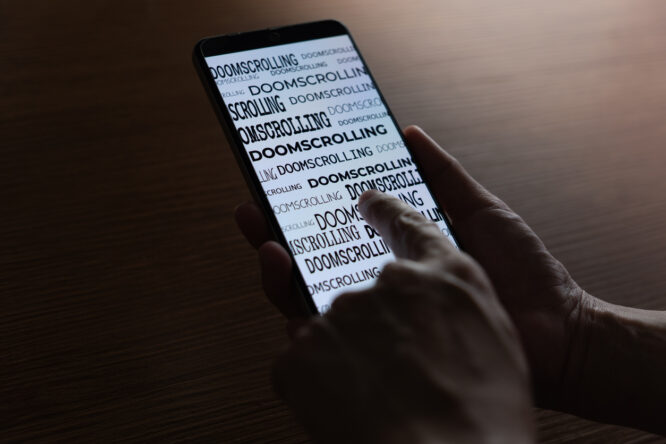
People often joke about doomscrolling like it is just another harmless habit, but new research from Virgin Media suggests the average Brit could spend nearly five years of their life doing it without even realising.
The study looked at the phone habits of more than 6,000 people across a year and found a huge amount of scrolling now happens almost automatically. Researchers said more than a third of smartphone use was “unintentional,” meaning people were opening apps, flicking through feeds, or checking their phones mostly out of habit rather than because they actually needed something.
Many people are no longer using their phones deliberately.

One of the biggest things highlighted in the research was how often people now pick up their phones without even thinking about it first. A lot of scrolling no longer starts with a purpose. Someone might unlock their phone to check the time or reply to one message, only to suddenly find themselves watching videos or moving between apps half an hour later.
Researchers found this kind of automatic scrolling now adds up to around one hour and 26 minutes every single day for the average person. Spread across an entire lifetime, that could total more than 41,000 hours spent mostly scrolling through content people did not even originally plan to look at.
Doomscrolling is no longer just associated with teenagers.

A lot of people still picture doomscrolling as something mostly linked to teenagers or Gen Z, but the research suggests the habit now stretches across almost every age group. Younger adults still spend the most time unintentionally scrolling, but older age groups were not far behind.
People aged 45 to 54 were also found to spend a surprisingly large amount of time using their phones without really meaning to. The findings suggest doomscrolling has become less of a “young person problem” and more of a modern habit many people have slowly slipped into over time.
Phones are starting to replace hobbies that need focus.

One reason doomscrolling becomes difficult to break is because phones offer easy entertainment without much effort or concentration. Activities like drawing, reading, writing, crafting, or learning something new usually need mental energy and patience, while endless scrolling gives the brain constant quick rewards with very little effort.
As time goes on, this can slowly eat away at hobbies people once enjoyed. A lot of people recognise they are spending too much time on their phones, but still find themselves reaching for them during quiet moments because it has become part of their routine without them even noticing.
Many people say they feel worse after using their phones too long.

The study also found a strong link between heavy doomscrolling and feeling emotionally drained afterwards. More than half of people who described themselves as heavy unintentional phone users said they often felt worse after spending too long on their devices.
That feeling is something many people will probably recognise. Someone might open an app for a quick five-minute break, only to end up spending much longer reading stressful news, comparing themselves to others online, or absorbing huge amounts of information that leaves them mentally overloaded.
Modern phone habits now stretch across the entire day.

Researchers found phone use has more than doubled over the last decade, with the average British adult now spending more than three hours a day on their phone. For many people, phones are no longer something checked occasionally. They have become part of almost every gap in the day.
The study found large numbers of adults now check their phones at least once every half hour from morning until night. That constant pattern of checking means many people rarely experience proper breaks from notifications, updates, videos, messages, and online conversations.
Experts say the problem goes beyond individual willpower.

One of the more interesting parts of the research was the argument that doomscrolling is not simply about people lacking self-control. Experts pointed out that modern apps and platforms are heavily designed to keep attention locked onto screens for as long as possible.
Infinite scrolling, personalised algorithms, autoplay videos, notifications, and endless content feeds all encourage people to stay engaged longer than they intended. That means many people are not just battling bad habits. They are also dealing with technology specifically built to hold attention as effectively as possible.
Small changes can sometimes make a bigger difference than strict rules.

A lot of people try extreme fixes like deleting every app or blocking their phones entirely, but experts say smaller changes are often more realistic long term. Simple things like turning notifications off, charging phones outside the bedroom, setting screen-free times during the evening, or leaving phones in another room while working can all help reduce automatic scrolling.
The goal is not necessarily to stop using phones completely because that is unrealistic for most people now. Instead, the bigger challenge is becoming more aware of when phone use is intentional and when it has simply turned into habit.
The bigger worry is how normal doomscrolling has become.

Perhaps the most striking part of the research is how ordinary all of this now feels. Many people no longer even notice themselves opening apps repeatedly throughout the day because constant scrolling has become such a normal part of modern life.
That is why researchers believe the conversation around doomscrolling is becoming more important. The issue is not really whether people use phones. It is whether so much time online is now happening automatically, without people even realising how much of their attention is quietly disappearing into endless scrolling.