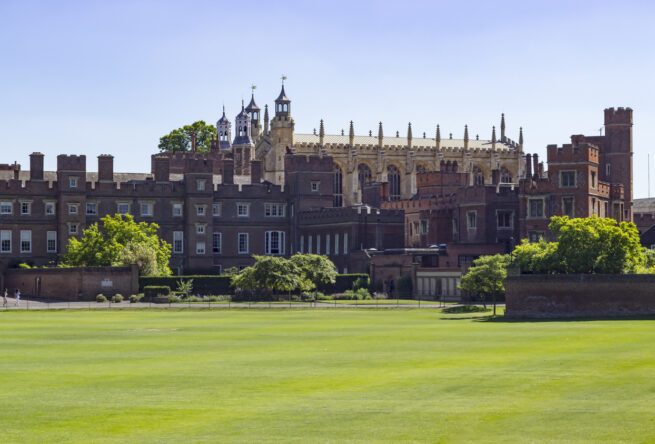
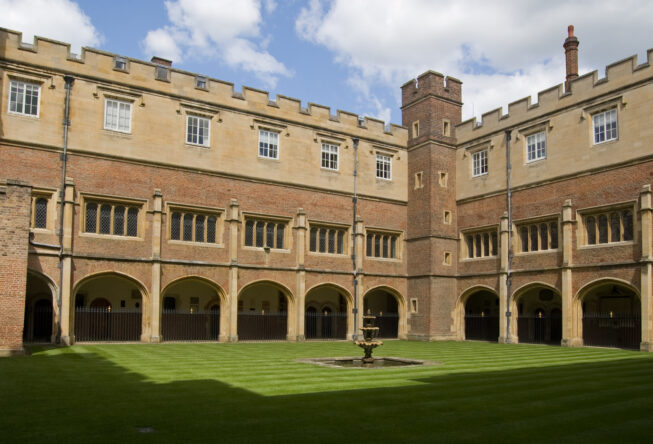
Prince George is expected to follow in his father and uncle’s footsteps by attending Eton College, making him the latest in a long royal line to pass through its gates.
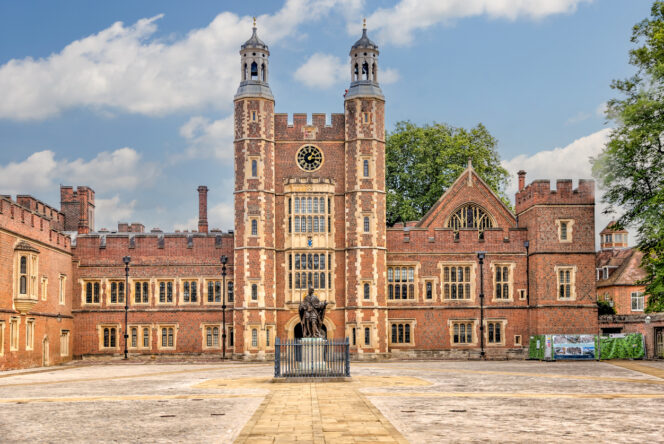
Founded in 1440, the school has shaped prime ministers, military heroes, novelists, actors, and adventurers across nearly six centuries, and its influence on British public life remains unlike any other institution in the country. By 2019, twenty British prime ministers had been educated there, and the list of notable alumni goes well beyond politics.
The royal connection to Eton runs deep.
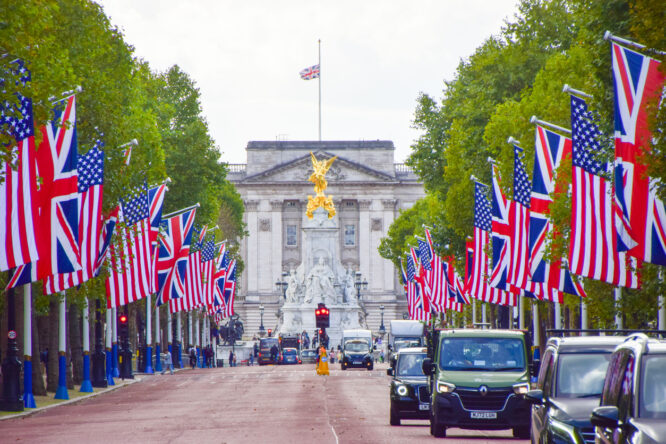
Prince William attended Eton in the late 1990s, becoming the first future monarch to do so, and performed well both academically and on the sports field before going on to St Andrews University. His brother Prince Harry followed from 1998 to 2003, serving as House Captain of Games and developing the kind of leadership and camaraderie that would later carry him through two tours in Afghanistan and the founding of the Invictus Games, an international sporting event for wounded veterans. If George attends as expected, he’ll be the third consecutive generation of the same family to walk through those gates.
That kind of continuity is part of what makes Eton unusual. It isn’t simply a school with a famous alumni list, it’s an institution that has actively shaped the character of British public life across generations, and the royal family’s relationship with it is one of the clearest examples of that.
Two of Britain’s most recent prime ministers went there.
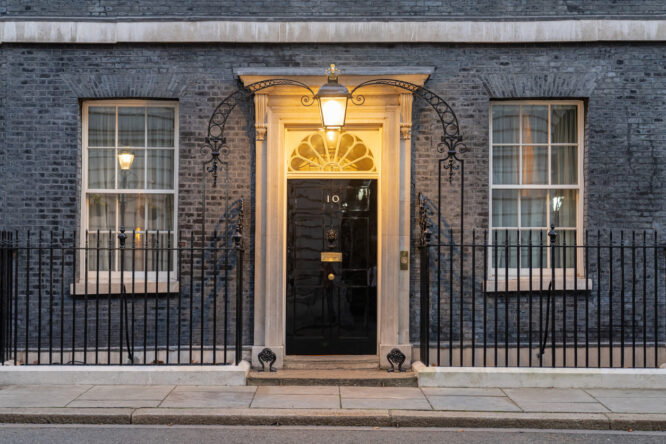
Boris Johnson attended Eton in the late 1970s and early 1980s as a King’s Scholar, where he became known for his debating skills and lively personality before going on to Oxford and eventually to 10 Downing Street. He led the country from 2019 to 2022 and is most closely associated with steering the UK through the Brexit process. David Cameron preceded him as an Old Etonian prime minister, leading the country from 2010 to 2016 and overseeing both the 2012 London Olympics and the 2016 EU referendum that would eventually define Johnson’s premiership.
The frequency with which Eton alumni have ended up running the country has made the school a recurring point of conversation about privilege and access in British politics. Whether that’s seen as a testament to the quality of the education or a reflection of entrenched social advantage tends to depend on who you ask, but the fact of it is difficult to argue with.
The school’s political legacy goes back centuries.
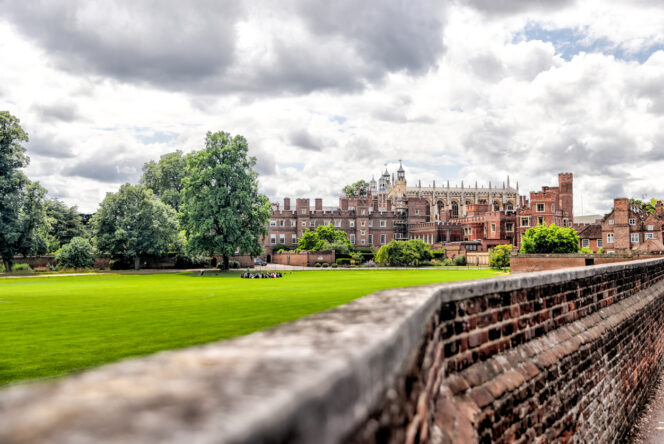
Long before Boris Johnson or David Cameron, the Duke of Wellington was educated at Eton in the 18th century before going on to defeat Napoleon at the Battle of Waterloo in 1815, one of the most significant military victories in British history. He later served as prime minister twice, in 1828 to 1830 and again briefly in 1834. The famous claim that the Battle of Waterloo was won on the playing fields of Eton has been attributed to Wellington himself, though historians debate the exact origin, and it speaks to the school’s long-held belief in character formation through physical endeavour alongside academic rigour.
Wellington’s legacy sits at the more dramatic end of what an Eton education has produced, but it established a template that the school has been associated with ever since. The idea that leadership, resilience, and composure under pressure are things that can be built through education and environment rather than simply inherited is arguably Eton’s founding philosophy.
George Orwell and Ian Fleming both passed through the same classrooms.
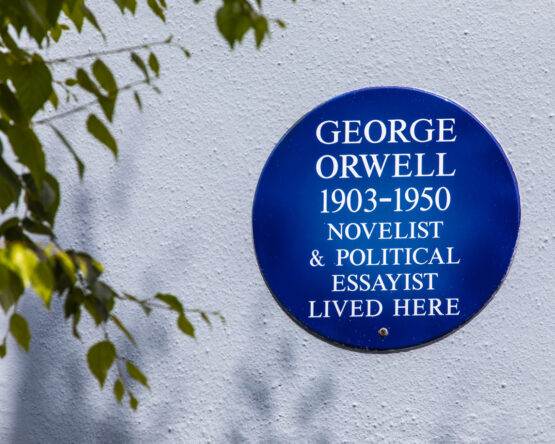
George Orwell, born Eric Blair, attended Eton on a scholarship from 1917 to 1921 and was taught French by Aldous Huxley during his time there. He didn’t go on to university afterwards, but his years at the school gave him an intimate view of the class structures and power dynamics that would later become central to his writing. Animal Farm and 1984 remain two of the most widely read novels of the twentieth century, and both carry the fingerprints of a man who understood institutions from the inside.
Ian Fleming attended in the 1920s, leaving before completing his studies, and went on to work in naval intelligence during the Second World War before publishing Casino Royale in 1953 and introducing James Bond to the world. It’s worth noting that in both the novels and the films, Bond himself is an Eton alumnus, which gives the school an unusual distinction of having educated both the author and his most famous fictional creation.
Eddie Redmayne and Tom Hiddleston were both there in the late nineties.
Eddie Redmayne attended Eton at the same time as Prince William and discovered his passion for theatre through school productions, including playing Viola in Twelfth Night. He went on to study History of Art at Cambridge before his acting career took off, eventually winning an Academy Award for his portrayal of Stephen Hawking in The Theory of Everything. He has since starred in The Danish Girl and the Fantastic Beasts series, making him one of the most decorated British actors of his generation.
Tom Hiddleston attended on a scholarship, graduating in 1999, before studying Classics at Cambridge and moving into acting. He became known globally for playing Loki in the Marvel Cinematic Universe, and has also received widespread critical praise for his stage work and his performance in the BBC series The Night Manager. The fact that two actors of that calibre were at the school at roughly the same time, alongside a future king, gives some sense of the unusual concentration of people Eton tends to produce.
Bear Grylls took a rather different path after leaving.
Bear Grylls, whose real name is Edward Grylls, attended Eton in the early 1990s and by most accounts was drawn more to adventure than academia even then, reportedly exploring the school’s roofs and drainage systems after hours. After leaving, he joined the British Army Reserves with the SAS, and at 23 became one of the youngest people to summit Mount Everest. He later became the host of Man vs. Wild, known in the UK as Born Survivor, and has since become Chief Scout of the UK Scout Association.
His story sits slightly apart from the politicians and writers on this list but makes the same point in a different way. Eton has produced people who went on to lead countries, write defining works of literature, win Oscars, and scale the world’s highest mountain. Whatever it is the school does, the results across wildly different fields are difficult to dismiss.