The wellness industry loves to tell us there’s a thousand ways to feel better.

From cold plunges to ten-step skincare routines, most of them sound exhausting just to think about. But one of the most powerful mood-changers (and lifters!) around is something you’ve already got at home, and it costs next to nothing to make work. It’s scent. Choosing what your house smells like, sometimes called “scentscaping,” can genuinely change how you feel.
Smell has such a quick effect on your mood for one particular reason.

Out of all your senses, smell has the most direct line to your brain. While sight and sound go through several processing stages before they reach the parts that handle emotion, scent more or less takes a shortcut. It travels straight to the bits of the brain involved in memory and feeling, which is why a whiff of something can instantly take you back 20 years to your nan’s kitchen or your first holiday abroad.
Researchers reckon a huge chunk of what we feel emotionally is shaped by smell, often without us realising. That means the scent of your home is doing a lot more behind the scenes than just making the place pleasant.
What scentscaping actually means

Scentscaping is just a fancy name for thoughtfully choosing what your home smells like, room by room and mood by mood. The idea is that instead of grabbing whatever candle was on offer at the supermarket, you pick scents that match what you actually want to feel in each space.
A cosy, warm scent for the room you wind down in. Something fresh and energising for the kitchen where you start the day. Something romantic in the bedroom, calming in the bathroom and uplifting in the hallway. It’s no harder than rearranging the furniture, but the effect can be just as strong.
Certain scents can lift you up when you’re flat.
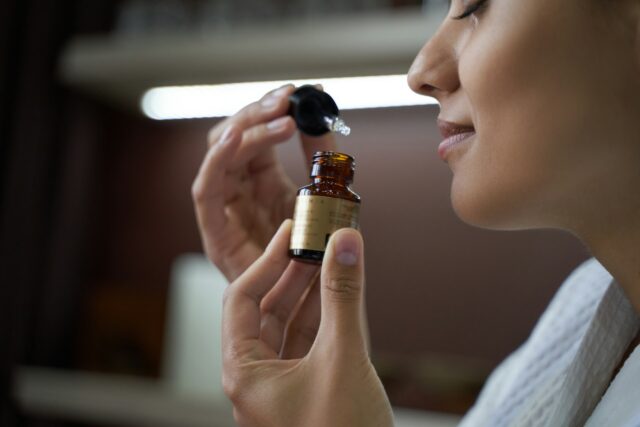
If you’re feeling a bit low or sluggish, citrus is the secret weapon to reach for. Smells like orange, lemon, grapefruit, and bergamot are linked with brighter, more positive moods, and they tend to make rooms feel lighter almost instantly. Florals like rose, jasmine, and freesia bring a softer kind of cheer, while green notes such as mint and basil can add a clean, perky lift to the air.
A combination of citrus on top of something floral is one of the most reliable mood boosters going, especially first thing in the morning. It’s the scent version of opening the curtains and letting the sunshine in.
Other scents can help you wind down at the end of the day.

For winding down, the rules flip. Calming scents tend to be warmer, deeper and a bit spicier. Lavender is the classic for a reason, with plenty of research behind its ability to ease stress and help you sleep. Chamomile, vetiver, sandalwood, and patchouli all sit in the same gentle family, and warm spices like star anise, nutmeg, and clove add a comforting quality without feeling stuffy.
A room with these scents in the air feels noticeably softer, almost like the lighting has been dimmed. They’re brilliant for evenings on the sofa or in the bathroom before bed, helping your body get the message that it’s time to switch off.
There are also scents to make you feel sharp and focused.
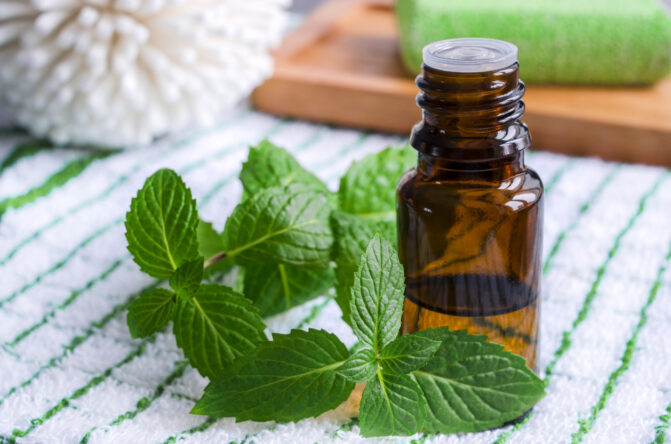
If you work from home, or you just need to power through a load of admin, certain scents really help you stay on it. Peppermint, eucalyptus, and rosemary all have a clean, brisk quality that wakes your brain up without being overpowering. Pine and cedar bring a similar sharpness alongside a calm, woodsy edge that stops you feeling jittery.
A few of these in the air can take the edge off that mid-afternoon slump and help you finish what you started. Pop one in your home office or wherever you do your thinking, and you might find concentration comes a little easier.
There are even scents for cosy nights and romantic moments.

There’s a reason almost every scented candle in the world includes vanilla and amber. Warm, slightly sweet scents like these are deeply comforting and tend to feel inviting and romantic. Add in florals like jasmine, violet or rose, and you’ve got an atmosphere that feels both relaxed and a bit special.
Musks and woods like sandalwood or amberwood round things off with a lingering warmth that holds in the air for hours. Whether it’s date night or just a cosy night in by yourself, these are the kinds of scents that make a room feel like a proper sanctuary.
If you need for when life feels a bit overwhelming, those exist too.

When the news is grim and life feels like a lot, scent can be a genuinely useful little anchor. Optimistic-feeling smells tend to mix citrus with something soft and warm, like vanilla or amber. That combination gives you a bright lift up front and a comforting hug to settle into.
Something like orange and vanilla, or lemon with a hint of jasmine, can lighten the mood without feeling artificial or sickly sweet. Even a quick spritz of something in the morning can set the tone for the day, and that small act of choosing how your space smells is its own little reset.
How to use scent properly without going overboard

The biggest mistake people make with home scent is overdoing it. A heavy hand can leave a room smelling cloying, and your nose gets used to it so quickly that you’ll keep adding more without realising. A light spritz of a room spray, a single candle in a small room, or one reed diffuser is usually plenty.
Keep different scents to different rooms so they don’t clash, and avoid layering too many in one space. If you’ve got pets, double-check that the scents you’re using are safe for them, since some essential oils don’t agree with cats and dogs.
There are many different ways to scent your home.
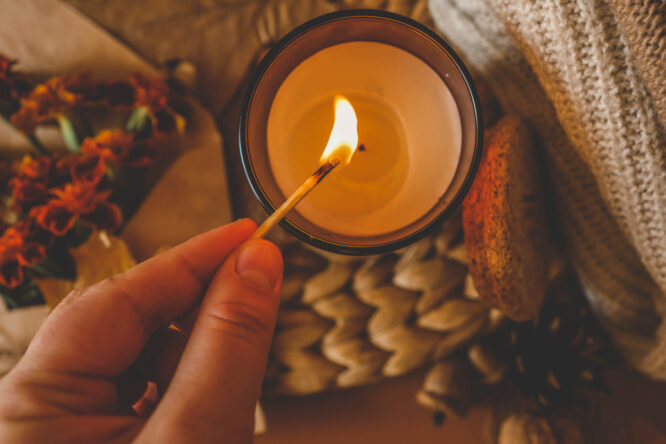
You don’t have to spend a fortune to start scentscaping. Room sprays are quick and easy, and they let you change the mood in seconds without committing to a whole candle. Reed diffusers give off a low, steady background scent that’s perfect for hallways, bathrooms, and bedrooms.
Candles bring scent plus the warm flicker of flame, which is its own little mood booster. Essential oil diffusers are great if you want flexibility, since you can mix oils to suit how you feel. Even simmering a pan of water with cinnamon, orange peel and cloves makes a house smell incredible for almost nothing.
Matching scents to your daily routine can be an enjoyable experience.

One of the easiest ways to get the most out of scent is to tie it to your daily routine. Start the day with something fresh and citrusy in the kitchen as the kettle goes on. Switch to something cleaner and herbaceous when you sit down to work. As the evening rolls in, bring out the warmer, calmer scents to help your brain switch gear.
By bedtime, lean on lavender or sandalwood to send the signal that it’s time to rest. Over a few weeks, your brain genuinely starts to link these scents to those parts of your day, and the cues start working almost automatically.
Trust your own nose above everything.
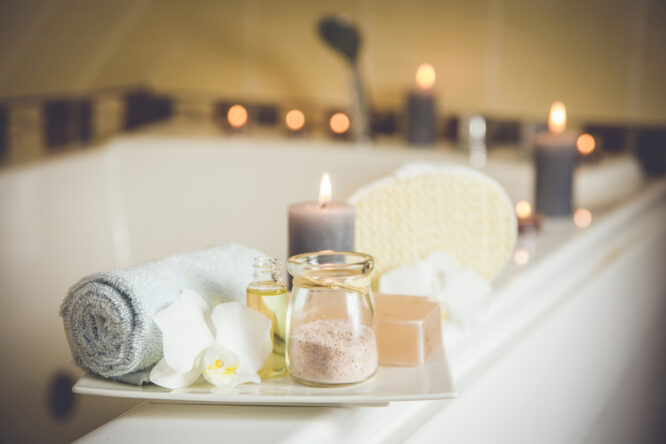
The most important thing in all of this is that scent is properly personal. The same lavender that knocks one person out cold leaves someone else feeling agitated. A vanilla that one person finds cosy feels sickly to another. So while general guidelines are useful, your own nose is the real expert here.
Spend a bit of time noticing how different scents make you feel, and lean into whatever genuinely works. Bottle yourself a little routine of favourites, and you’ve got one of the simplest, cheapest mood tools around, sitting quietly on your shelf and ready whenever you need it.