If you’re in your mid-sixties and were looking forward to getting your free bus pass, there’s some news that’s going to affect your plans.
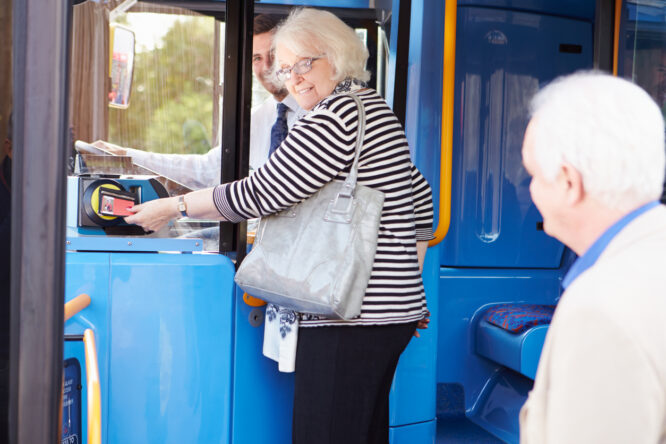
The age you need to be to claim one has gone up in England, and it’s tied directly to the state pension age rising from 66 to 67. That change is happening gradually between May 2026 and March 2028, but it’s already impacting people right now.
For anyone turning 66 after April 2026, the free bus pass won’t arrive automatically at that birthday anymore. You’ll need to wait longer, and how much longer depends on exactly when you were born. It’s worth knowing where you stand, especially if you rely on buses to get around.
The age change is frustrating, but not unexpected.

The free bus pass in England has always been linked to the state pension age rather than a fixed birthday. So, when the government decided to gradually raise the state pension age from 66 to 67, the bus pass eligibility moved with it. The reasoning behind raising the pension age comes down to the fact that people are living longer than they used to, which means pension payments go on for longer and cost more. The government says raising the age keeps things financially sustainable long term.
That explanation doesn’t make it less frustrating for people who were expecting their pass at 66, but it does explain why this is happening now rather than being something that’s come out of nowhere. The timetable for the rise was published in advance, so the changes are being phased in gradually rather than all at once.
Who will be affected, and when does the change come into force?

If you turned 66 before April 2026, you’re fine. You were able to claim your free bus pass under the old rules, and nothing changes for you. The people affected are those who celebrated their 66th birthday from April 2026 onwards. For someone reaching 66 in July 2026, for example, they’ll need to wait until they’re 66 years and four months old before they can claim.
People born between 6 March 1961 and 5 April 1977 will eventually need to be 67 before they qualify for both their state pension and their bus pass. If you’re in that age range and planning ahead, it’s worth checking the government’s timetable to find your specific date because the exact age you’ll need to reach before claiming depends on your date of birth rather than a single fixed rule for everyone.
What does the free bus pass actually give you?

The free bus pass lets you travel on local buses across England without paying a fare. You can use it on any local service, which for a lot of older people means getting to the shops, visiting the doctor, seeing family, and staying connected to the area they live in without needing a car or spending money on fares. For people on fixed incomes, that’s a considerable saving, and not something to take lightly.
The government has acknowledged this, saying the pass is vital to many older people and provides access to essential services. That’s true, which is also why the age change has caused frustration. For some people, the gap between 66 and 67 is a full year of paying for journeys they were expecting to make for free.
The rest of the UK has different rules.

It’s worth knowing that England’s rules are different from the rest of the UK. In Scotland, Wales, and Northern Ireland, the free bus pass is available from the age of 60 rather than being tied to the state pension age. There have been calls for England to follow suit and lower the age to 60 as well, but those calls haven’t been successful so far and the current government has continued with the state pension age link instead.
That gap between 60 in Scotland and Wales versus 67 and rising in England is a fairly big difference in terms of how long people wait for free travel. Whether that changes in future is a political question rather than a settled one, but for now, England’s eligibility age remains the highest in the UK.
The pension age is set to keep rising beyond 67.

This isn’t the last change. The state pension age is currently moving to 67 between 2026 and 2028, but from 2044 it’s expected to rise again to 68. That means people who are currently in their forties will likely need to wait until 68 for both their pension and their bus pass, assuming the link between the two stays in place. Whether that timeline moves again before 2044 is something worth keeping an eye on, as governments do sometimes revise these timetables.
The full new state pension currently pays £230.25 a week, and most people’s retirement income is made up of a mix of that, any workplace pension they’ve built up, savings, and other sources. The pension age rise affects the bus pass because the two have been kept deliberately in step with each other, so any further pension age changes will feed through to bus pass eligibility in the same way.
What to do if you’re approaching the age of eligibility

The best thing to do is check your specific eligibility date, rather than assuming it’s your 66th or 67th birthday. The government has published a detailed timetable showing exactly when different birthdates become eligible, and it’s more gradual than a simple jump from one age to another. Someone born a few months apart from a friend could have a different eligibility date, so it’s personal rather than a blanket rule.
You apply for the pass through your local council once you reach the qualifying age, and it’s straightforward to do online or by post. There’s no income test or means test involved, it’s purely age-based. If you’re getting close to eligibility, it’s also worth checking whether your area offers any additional travel discounts for older residents in the meantime, as some councils have their own schemes that run alongside the national pass.