Travelling is meant to be a pleasant experience, but lately, it’s anything but.
However, things are hopefully about to change for the better. If you’ve ever turned up at an airport to find your flight cancelled, sat on a plane going nowhere for hours, or paid extra just to bring a bag onto the plane, new EU rules coming in 2027 are going to affect you directly. After years of difficult negotiations between EU countries and the European Parliament, a major overhaul of air passenger rights has been approved that changes everything from what’s included in your basic ticket price to how much compensation you can claim when things go wrong.
The deal was backed by a large majority of EU member states after what negotiators described as fraught, years-long talks, with only Spain and Latvia voting against it and Austria and Finland choosing to abstain. It still needs to be signed off by European Parliament negotiators before a final vote by all MEPs in July, after which the new rules are expected to come into force in the second half of 2027.
Consumer groups broadly welcomed it as a meaningful step forward for passengers. Airlines have been considerably less enthusiastic, with the industry body Airlines for Europe calling it bad law that fails to address the real problems of delays and cancellations and that infringes existing EU consumer protection rules in the process. Here’s what you need to know about the proposed rule changes.
Trolley bags will have to be included in the basic ticket price.

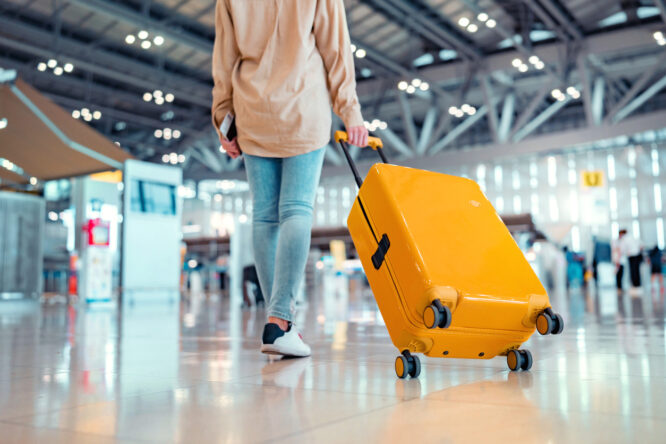
One of the most immediately noticeable changes for passengers is that airlines will be required to include a trolley bag in the basic airfare, rather than charging separately for it as many do now. Budget airlines in particular have built huge revenue streams around baggage fees, and a lot of passengers end up paying well above the headline ticket price once they’ve added a carry-on bag at the checkout stage. Under the new rules, that overhead locker bag has to come as standard in every ticket, which should make the actual cost of flying more transparent from the start even if the headline prices adjust upward to reflect it.
Passengers who don’t need to bring a trolley bag will be able to opt out and receive a discount on their ticket price, which gives the rule some flexibility for light travellers. There is, however, an important limitation built into the agreement. The rules leave it entirely up to individual airlines to set the size and weight of the included trolley bag, meaning carriers retain control over what the standard looks like in practice. Consumer groups had pushed for more prescriptive requirements on this point and didn’t fully get them, which means the benefit passengers actually receive could vary considerably depending on which airline they’re flying with.
Families and passengers with disabilities get stronger seating protections.

Alongside the baggage changes, the new rules introduce clear protections around seating that address a frustration many families travelling with young children will recognise immediately. Airlines will no longer be permitted to charge fees to seat parents or carers together with children under 14, meaning the practice of separating families at the booking stage unless they pay extra for seat selection will become illegal under EU law. The same protection extends to passengers with disabilities and whoever is accompanying them, who must also be seated together without an additional charge.
This change closes a gap that has caused genuine distress for travelling families and people with accessibility needs, and it’s one of the cleaner wins in the new legislation, with relatively little ambiguity about how it applies. Currently, the practice of charging for seat selection is widespread and particularly common among low-cost carriers, where it functions as another revenue stream on top of the basic fare. From 2027, at least that specific version of the charge disappears for the groups covered by the rule, even if seat selection fees for other passengers remain in place.
The core compensation framework for delays and cancellations stays intact.
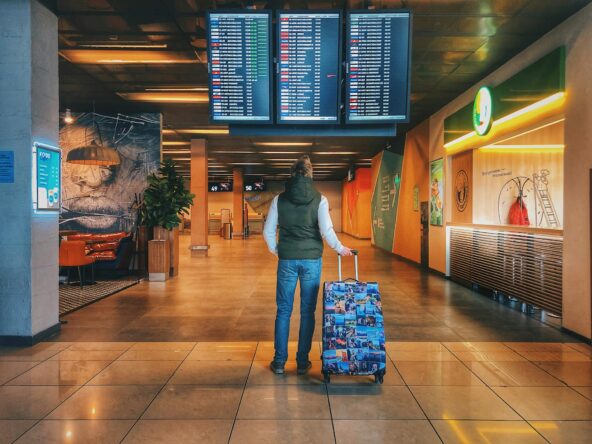
One of the most closely watched aspects of the negotiations was whether the existing compensation system for disrupted flights would survive the reform, and for the most part, it has. If your flight is cancelled or delayed by at least three hours, you keep the right to claim financial compensation ranging from €250 to €600 depending on the distance of the flight, on top of a full refund in the event of a cancellation. That three-hour threshold, which has been a cornerstone of EU passenger rights for years and has been tested repeatedly in court, was preserved in the final deal after considerable pressure from consumer advocates who wanted it kept in place.
For longer flights covering more than 3,500 kilometres, the new rules add a clearer tiered structure. Passengers on these routes are entitled to €300 for delays between three and four hours, rising to the full €600 for delays beyond four hours or for cancellations. Previously the rules on longer routes were less precisely defined, so the clarification is a practical improvement even if the underlying amounts remain the same. The overall message from the deal on compensation is continuity rather than expansion, which consumer groups accepted as a reasonable outcome given the resistance from airlines and many EU governments throughout the negotiations.
Getting that compensation is still harder than it should be.

Where the deal falls noticeably short of what consumer advocates wanted is in making it easier for passengers to actually claim what they’re owed. Currently, airlines are only required to inform passengers of their rights when a disruption happens, with no obligation to actively walk them through the process of making a claim. Awareness of these rights remains low among travellers, and airlines have had little incentive to change that, given that uninformed passengers are less likely to pursue claims.
The compromise that was reached requires airlines to send passengers clear instructions on how to submit a compensation request when a disruption occurs. That’s a step forward from the current position, but it doesn’t go as far as Parliament had pushed for. MEPs had argued for airlines to be required to include a direct link to the compensation claim form, or ideally a pre-filled form, in any communication sent to affected passengers. Both ideas were rejected by EU countries during negotiations. The practical effect is that passengers will be better informed than before but still not given the most direct possible route to making a claim, and airlines avoided the higher claims volume they were most concerned about.
The definition of when airlines don’t have to pay has been tightened up.

The concept of extraordinary circumstances, which covers situations where airlines are not required to pay compensation because the disruption was genuinely outside their control, has been revised and made more precise in the new rules. The agreed definition covers events that are not a normal part of running an airline and are beyond the carrier’s actual control. Extreme weather is the most straightforward example. If a flight is cancelled because of a storm or other severe conditions, the airline only has to refund the ticket and is not liable for the additional compensation payments that would apply in other circumstances.
What makes the new definition so noteworthy is as much what was left out of it as what went in. Parliament’s negotiators successfully blocked an attempt to include unexpected flight safety shortcomings on aircraft equipment within the extraordinary circumstances category. Airlines had pushed for this inclusion, but Parliament argued the wording was far too broad and could effectively allow carriers to avoid paying compensation for most technical faults by labelling them unexpected. Existing case law has consistently found that technical problems fall within the airline’s normal operational responsibility, and the negotiators were not willing to let the new legislation quietly undermine that established principle.
Claim agencies will still be able to fight for passengers who don’t want to go it alone.
One of the most contested areas of the negotiations concerned who can actually receive compensation payments, and it’s an issue that matters more than it might initially appear. An earlier version of the proposed rules would have restricted compensation payments to the passenger themselves, cutting out the claim agency industry entirely. These are companies that handle compensation claims on behalf of passengers, typically taking a percentage of any successful payout in return for managing the entire process, including legal action if the airline refuses to pay.
Parliament pushed back firmly on this restriction and succeeded in keeping claim agencies within the framework, meaning they can continue to receive payments from airlines on behalf of the passengers they represent. For a large number of people, these agencies represent the most realistic path to getting money back from an airline. Many passengers don’t know the process, don’t have the time to pursue it, or have already tried and been ignored. The agencies sometimes go to court to enforce rights that airlines would otherwise quietly ignore, and keeping them operational was seen by consumer advocates as one of the more important outcomes in an overall deal that required considerable compromise on all sides.