Some comments are meant to be nice, but the second you hear them, something feels really off.

They come with a smile, maybe even a hint of admiration, but also a bit of judgement wrapped in the phrasing. For people in the LGBTQ+ community, these kinds of “compliments” aren’t new, and they’re not harmless, either. They reveal the speaker’s assumptions, stereotypes, or need to measure someone against what they think is acceptable. Here are some of the most common ones queer people still hear, and why they’re not as flattering as they sound.
1. “You don’t look gay!”

This is still said far too often, usually with surprise, as if someone expected a costume. It suggests there’s a single “look” that gay people are supposed to have, and anything outside that is some sort of shock. It’s not a compliment. It’s a way of saying, “You pass my version of normal,” which is rooted in narrow thinking. People aren’t meant to look like your idea of a stereotype, you know.
2. “You’re gay? But you’re so masculine/feminine!”

It’s meant as praise, but what it really says is that you don’t “fit the mould,” and that’s apparently worthy of special mention. It reinforces the idea that people should act a certain way based on their sexuality. In reality, people come in every combination of gender expression, personality, and identity. Being gay doesn’t dictate how someone should move, speak, or dress, and acting otherwise isn’t some remarkable surprise.
3. “I’d never have guessed!”

This might seem innocent, but it still leans on outdated expectations. It treats queerness as something that’s supposed to be immediately visible or obvious, like an accessory you forgot to put on. It implies that being queer has a look, a sound, a vibe, and if someone doesn’t match it, they’re somehow surprising. The truth is, there’s nothing strange about someone’s identity not showing up in ways other people expect.
4. “You’re one of the good ones.”
Backhanded in the worst way. This kind of line positions you as an exception to a problem that didn’t need to exist in the first place. It separates you from a group that the speaker clearly has issues with. It’s a way of saying, “You’re palatable to me,” as if that’s the highest compliment. But it’s not flattering to be accepted only on the condition that you don’t act too much like the group you belong to.
5. “You’re not like other gay people I’ve met.”
This one always comes wrapped in a compliment, but it says more about the speaker’s limited experience than anything else. It reveals how many stereotypes they’ve internalised, and how low the bar is. When someone says this, they’re usually just expressing surprise that you don’t confirm all their assumptions. It’s got nothing to do with you, and everything to do with what they’ve chosen to believe about other people.
6. “You’re so brave for being yourself.”
Depending on tone and context, this can go either way. But often, it’s laced with a kind of pity, like the speaker can’t imagine living life authentically without it being some grand act of courage. Living as yourself shouldn’t be seen as a bold move. It should be normal. When people single it out as extraordinary, they risk highlighting how unsafe or abnormal they assume your identity must be.
7. “You’d be straight if it wasn’t for…”
Sometimes people try to “explain” queerness through trauma or personal history, implying it’s a result of something gone wrong. It’s insulting, reductive, and completely off base. It ignores biology, identity, and choice, and replaces them with guesswork. People’s identities aren’t puzzles to be solved or corrected. They just are. And they don’t need justifying.
8. “I totally forget you’re gay sometimes.”

This is supposed to mean you “blend in,” which says a lot about what the speaker thinks being gay should look or sound like. It assumes that queerness should always be visible, performative, or obvious. It’s not flattering to be told your identity is forgettable or invisible. People shouldn’t have to act a certain way to be recognised for who they are, or to make anyone else comfortable.
9. “You don’t make a big deal about it, thankfully.”

What’s often praised here is silence. The speaker is usually relieved you’re not “too loud” about your identity, as if that’s a virtue. But it suggests that visibility is a problem and that being low-key is the right way to exist. People shouldn’t be rewarded for shrinking themselves. Whether someone is open, expressive, quiet, or loud about who they are, it’s not for anyone else to judge what’s “acceptable.”
10. “I wish I had a gay best friend.”

It sounds friendly, but it treats someone’s identity like an accessory or lifestyle perk. It reduces people to roles: sassy confidant, shopping partner, or emotional support character in someone else’s story. No one exists to fill a trope. People are more than their sexuality, and treating it like a novelty or trend misses the entire point of real, human connection.
11. “You’re so normal!”

This is usually said with surprise, like the person expected something wild, extreme, or eccentric. It’s a soft way of saying, “You don’t make me uncomfortable like I thought you might.” But the word “normal” shouldn’t be a benchmark for acceptance. It puts pressure on LGBTQ+ people to act a certain way to be seen as safe or worthy, which is exactly the kind of thinking that needs to go.
12. “You’d never know unless you told me.”

Again, this leans on the idea that queerness is meant to be read visually or behaviourally. If someone “passes,” that’s somehow a compliment, but it’s not—it’s just more box-checking. People shouldn’t need to fit your assumptions to be valid. You don’t get points for not noticing someone’s identity. You get them for respecting it, whether it’s obvious to you or not.
13. “You don’t let it define you.”
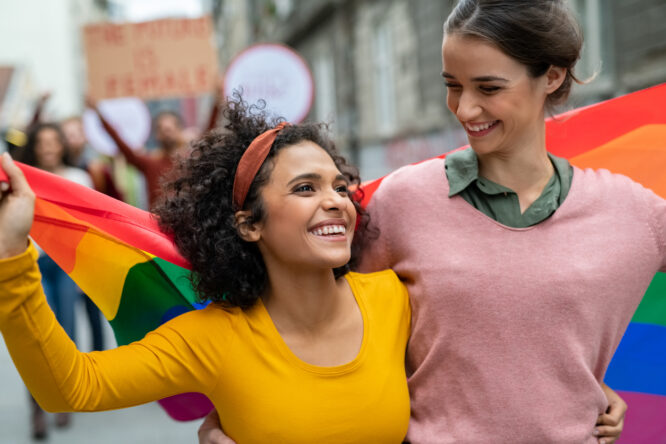
This is often said with good intentions, but it downplays how important identity can be. It implies that the best queer people are the ones who stay low-profile about it. For a lot of people, being queer is deeply personal and worth celebrating. Not letting it “define you” shouldn’t mean erasing it or hiding it. It just means it’s part of a full, complex identity, like anyone else.
14. “I don’t even think of you as gay anymore.”
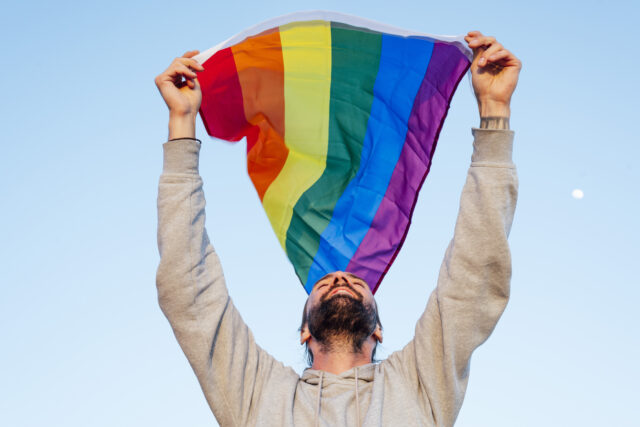
This is meant to be endearing, but it strips away a part of someone’s reality. You might think you’re focusing on the person, not the label, but you’re actually erasing something that matters to them. Being queer isn’t something people want forgotten. It’s something they want understood, respected, and welcomed without needing to disappear in the process.
15. “You’re not like the ones who shove it in your face.”

This one’s loaded. It’s often used to separate someone from the larger community, as if being private or “chill” makes you more acceptable. But all it really does is reward people for being less visible. It puts queer expression on a scale of tolerability in which quiet and private is okay, loud and proud is too much. The truth is, people have the right to exist however they want, without being told which version is more palatable.