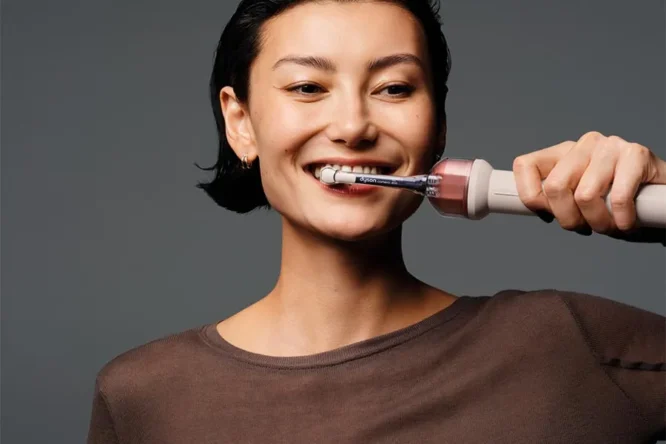
Staying fuelled on long runs is important, but it may be doing a bit of harm in addition to the good.

Most runners think carefully about what they eat, how they train, and how they recover, but there’s one thing that consistently gets overlooked and dentists say it’s causing real damage. Running, particularly long-distance running, creates conditions in the mouth that are genuinely bad for teeth, and the gels and drinks most athletes rely on to get through their miles are a big part of the problem.
Running creates the perfect conditions for tooth decay.

When you run, your mouth naturally dries out. Saliva is what normally helps wash away sugar and acid from the surfaces of your teeth, so when it’s reduced, anything you eat or drink during a run sits on the enamel for much longer than it would at rest. Heavy breathing makes this worse, pulling more moisture out of the mouth and creating what some runners describe as a desert-dry feeling by the later miles. That dryness alone is a problem, but it becomes much worse when you factor in what most distance runners are consuming while they run.
Gels, chews, and sports drinks are the standard fuelling tools for anyone running longer distances, and they’re almost universally high in sugar and acid. The sugar is sticky, the mouth is dry, and the combination means that sugar is essentially being pressed against the teeth and left there with very little to wash it away. Dentists who work with athletes describe this as close to ideal conditions for enamel erosion and cavity development, and the data backs that up.
Elite athletes aren’t immune to this, either.

A study of athletes competing at the London 2012 Olympics found high levels of poor oral health across the board, with 76% showing signs of gingivitis and 55% with tooth decay. These are people at the absolute peak of physical fitness whose dental health was still being compromised, which suggests the problem isn’t about general health or lifestyle, but specifically about the conditions that endurance sport creates in the mouth. If it’s happening at Olympic level, it’s certainly happening among everyday runners who may be less aware of the risk.
The issue tends to go unnoticed for a while because it builds gradually. Runners who don’t eat much sugar in their normal diet and look after their teeth generally assume they’re doing fine, and it often takes a dentist flagging unexpected erosion or decay to connect the dots back to training habits. By that point, some damage has usually already been done, which is why knowing about the risk early is actually useful rather than just worrying for the sake of it.
Sports drinks add another layer of damage on top of the sugar problem.

Most sports drinks are acidic as well as sugary, which means they’re attacking enamel in two ways at once. Acid softens the surface of the tooth and makes it more vulnerable to erosion, and when the mouth is already dry and saliva can’t do its buffering work properly, that acidic environment lingers. Sipping a sports drink repeatedly over the course of a long run exposes the teeth to acid over and over again, with very little recovery time in between.
That doesn’t mean sports drinks or gels need to be abandoned entirely, particularly for anyone running distances where fuelling is genuinely necessary. However, understanding what they’re doing to the mouth makes it easier to manage the impact with a few straightforward adjustments, rather than just hoping for the best.
Staying hydrated during your run helps more than you might think.

Drinking water regularly throughout a run is the most immediate thing you can do to protect your teeth while you’re out there. Water helps wash sugar and acid off the teeth in the absence of saliva and keeps the mouth from reaching the extreme dryness that makes the problem worse. Taking a sip of water after each gel or chew rather than just when you feel thirsty makes a meaningful difference to how long those substances sit in contact with the enamel.
Hydration is consistently flagged by dental professionals as the first and most important step for runners concerned about their oral health, and it’s useful that it’s also something most runners are already trying to do for performance reasons. Framing it as something that protects your teeth as well as your running makes it easier to stay on top of, rather than treating it as an additional task.
What you use at home matters just as much as what you do on the run.

Good daily oral hygiene becomes more important rather than less if you’re regularly putting your teeth through the conditions that distance running creates. Brushing twice a day with fluoride toothpaste and using a fluoride mouthwash helps strengthen enamel and gives the teeth more resilience against the repeated acid and sugar exposure that comes with regular training. For runners who are already showing signs of erosion, dentists can prescribe higher-strength fluoride toothpaste that’s not available over the counter and that provides better protection.
The timing of brushing is also important. Brushing immediately after consuming something acidic can actually cause more damage because the enamel is temporarily softened, so waiting 30 minutes after a run before brushing gives the mouth time to recover and the saliva to start doing its job again. It makes the brushing itself more beneficial rather than accidentally counterproductive.
Some runners are taking it a step further and brushing mid-run.

At the 2026 Tokyo marathon, one runner credited a disposable toothbrush at mile 20 as the secret to getting through the wall and finishing strongly. While brushing during a race might sound extreme, the logic behind it makes sense. Clearing sugar and acid from the teeth mid-run removes the fuel source for decay and also, anecdotally at least, seems to give runners a genuine mental and physical lift at a point in a long race where both are in short supply.
Disposable toothbrushes that don’t require water or toothpaste are small enough to carry and are increasingly common among ultra-runners and marathon participants who take their recovery seriously. It’s not a necessary step for everyone, but for anyone running very long distances and fuelling heavily with gels throughout, it’s a practical option worth knowing about rather than something that only serious athletes need to consider.
Cutting back on gels where you can reduces the overall risk.

For runners who don’t need to fuel as heavily, reducing the number of gels or sugary chews consumed during a run naturally reduces the exposure that causes the most damage. Whole food alternatives like bananas, dates, or rice-based snacks are used by some distance runners as lower-acid options that still provide the carbohydrates needed for performance without the same dental downside. They’re not always practical mid-race, but work well in training runs where the pace is more controlled.
The bigger picture here is that dental health is a legitimate part of an athlete’s overall wellbeing, rather than something separate from training and recovery. Ignoring it tends to result in problems that are expensive and time-consuming to fix, while a few straightforward habits during and after running can keep those problems from developing in the first place. It’s the kind of low-effort adjustment that pays off quietly over years of training.