Realising you’re not straight isn’t always a lightning bolt moment; for a lot of people, it’s a slow, confusing unravelling of everything they thought they knew about themselves.

It can take years to notice the patterns, the subtle crushes you brushed off, the unease you felt trying to fit into something that never quite matched. Sometimes the signs were there all along, just buried under expectations, fear, or the belief that everyone feels the same way you do.
Coming to terms with your sexuality later in life doesn’t mean you’ve been in denial all along, though that’s possible. Really, it’s about growing up in a world that often made certain truths hard to name. Many people spend years trying to make themselves fit into the story they were told they should live. Realisation comes slowly because it asks you to rewrite that story, piece by piece, and that kind of honesty takes time.
When it finally clicks, you finally see yourself clearly, but here’s why that can take so long.
You convinced yourself that everyone felt that way.

The assumption was that everyone found people of the same gender attractive, but just didn’t act on it. Those feelings seemed normal and universal, so there was never any reason to question them or think they meant anything specific.
That’s because there was no frame of reference for what being straight actually felt like. Every crush or flutter got explained away as something everyone experienced, which kept the real pattern hidden in plain sight the whole time.
You were too busy performing compulsive heterosexuality.

Dating people, having relationships, maybe even feeling happy about it. Following the script felt like the right thing to do, so there wasn’t space to question whether it was actually wanted or just expected.
It helps to look back and see how much energy went into performing rather than feeling. Someone can be good at something and still be faking it, and sometimes the performance is so convincing that even the person doing it believes it for years.
You don’t really fit the stereotype.

The images or behaviours associated with being gay or bi didn’t match, so it seemed impossible. There was a certain way people thought it had to look, and since that wasn’t the case, the possibility never even came up.
This keeps people stuck for years because there’s waiting to fit a narrow idea instead of just paying attention to who someone’s actually drawn to. Stereotypes are rubbish at capturing real people, but brilliant at keeping someone confused about themselves.
You grew up somewhere it wasn’t safe to know.

The environment made being anything other than straight dangerous, shameful, or invisible. The brain protected someone by keeping that realisation locked away until there was somewhere safer, even if that took decades.
That’s because survival sometimes means not knowing things about yourself. It’s not denial, it’s just the mind doing what it had to do to keep someone safe, and that process can’t be rushed, no matter how obvious it seems now.
You always reframed your feelings as something else.

Admiration, wanting to be them, jealousy. There were a hundred explanations for thinking about someone constantly, none of which involved attraction because that felt impossible to consider.
It helps to notice how much mental gymnastics went into avoiding the simple answer. Years can pass convincing yourself it’s admiration when really it’s just a crush, and that gap between feeling and admitting keeps someone stuck.
You were part of a religion or culture that insisted it wasn’t an option.

The teaching was clear that being anything other than straight was wrong, sinful, or something that didn’t exist in certain families or communities. That message was strong enough that feelings couldn’t break through it for years.
This makes it nearly impossible to see yourself clearly when everything around you says you can’t be that. There might have been knowing on some level, but the cost of admitting it felt too high, so the line was never crossed.
You assumed attraction had to feel a certain way.

Real attraction was supposed to be overwhelming or obvious. When actual feelings were quieter or different, it was easy to dismiss them as not counting or not being real attraction at all.
That’s because media and culture sell a very narrow version of what desire looks like. Attraction can be calm and steady and just as real as fireworks, but if someone’s waiting for the Hollywood version, it’s going to be missed.
Being ace or aro complicated everything.

Not experiencing attraction the way other people described it, or experiencing it rarely, meant figuring out the gender part was buried under figuring out if there was any attraction at all. One layer of confusion on top of another made everything harder to untangle.
It helps to know that orientation isn’t one simple thing for everyone. Working out multiple pieces at once takes longer, not because someone’s slow or in denial, just because there’s more to figure out.
You experienced internalised homophobia that went unrecognised.
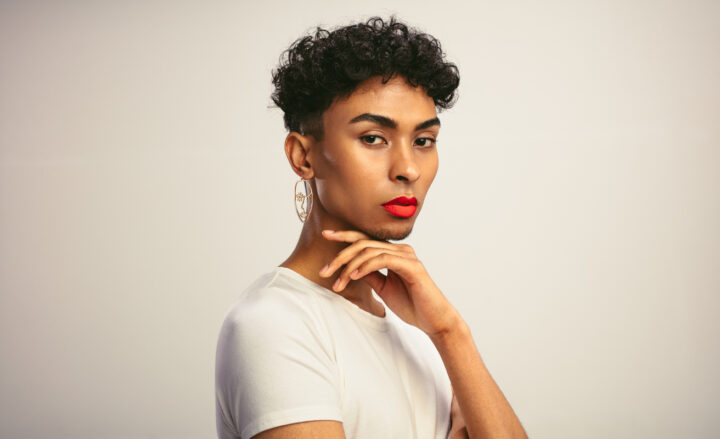
Messages that being queer was bad, wrong, or lesser got absorbed and sat quietly in the background, creating judgement before there was even awareness of what was being judged. Clarity was impossible when part of someone didn’t want to be it.
This keeps people in the dark longer because there’s a fight happening internally. Being fine with other people being queer but not extending that acceptance inward is how internalised shame works and why it’s so hard to shake.
You thought it was just a phase.

Curiosity, experimentation, something that would pass. Every time those feelings came up, the explanation was that it was temporary, which meant never having to actually sit with what it might mean long term.
That’s because calling it a phase gives an out from dealing with it. Years can pass in a phase, always waiting for it to end, and that waiting prevents accepting that this might just be who someone is, not something being passed through.
You didn’t have the language for it.
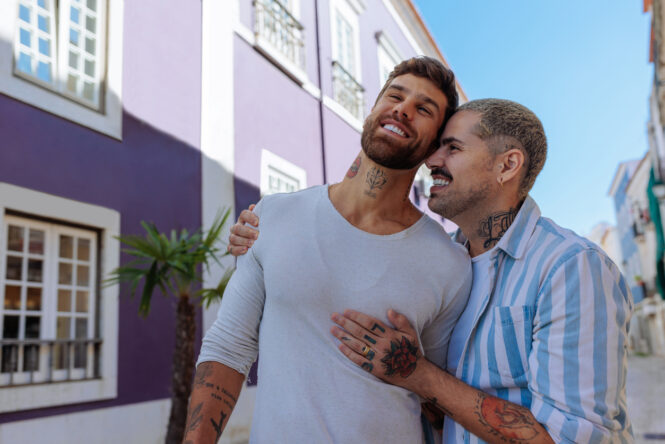
Words like bisexual, pansexual, or fluid either weren’t known or weren’t understood as something that could apply personally. Without the language to name what was being felt, it just stayed this vague, confusing thing that couldn’t be pinned down.
It helps to find the words that fit because suddenly, everything clicks into place. Understanding yourself becomes much easier once there’s a way to describe it, and people can feel lost trying to make sense of it without the right vocabulary.
You were legitimately distracted by other life stuff.

Work, family, mental health, or just surviving took all of your time and energy for a long time. Figuring out sexuality wasn’t at the top of the list. It’s not about avoiding it, there just wasn’t the space or energy to sit with it properly.
Obviously, self-discovery requires time and headspace, and not everyone has that when young. Coming to it later in life isn’t about denial, it’s about finally having the room to breathe and think about who someone actually is.
You had one foot in and one foot out for years.

You lived in a space of limbo in which you experienced a kind of knowing, but also kind of not. Moments of clarity would come and then get shoved back down, living in this in-between space where there wasn’t readiness to claim it but couldn’t fully deny it either.
This limbo can last for ages because committing to it feels huge and scary. There’s waiting for absolute certainty before saying it out loud, but certainty doesn’t always come before acceptance, sometimes it comes after.
You were waiting for permission that never came.
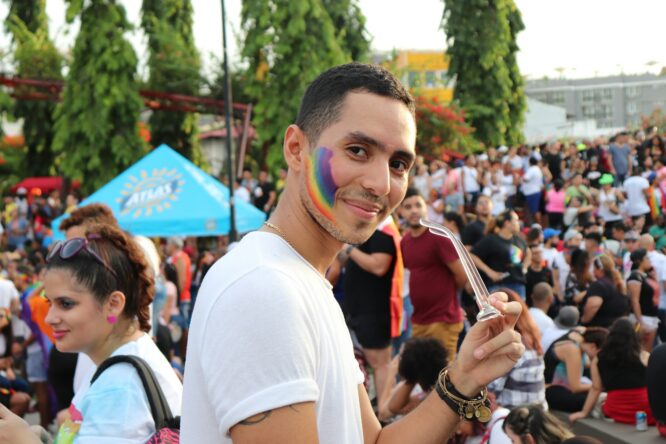
Needing someone to say it was okay, or needing the perfect moment, or needing to be sure beyond any doubt. Waiting for a sign or permission to claim this part of yourself, but nobody can give that except yourself.
That’s why some people take so long: because there’s waiting for external validation for something that has to come from inside. It helps to realise nobody’s permission is needed to know who someone is, and the waiting is just another way of avoiding the truth that’s already known.