If you’ve been trying to eat a bit better lately, you’ve probably noticed these two keep showing up everywhere.

Greek yogurt and cottage cheese are all over health content right now, both getting credit for being high in protein, filling, and useful if weight loss is something you’re working towards. However, people always want to know which one actually wins. The honest answer is that it’s closer than you’d think, and which one suits you better probably comes down to how you like to eat.
Protein is the thing that matters most here.

When you eat something high in protein, it takes longer to digest than carbohydrates do, which means you stay fuller for longer, and you’re less likely to go rummaging for something else an hour later. That’s the main reason both of these foods get talked about so much in the context of weight loss. It’s not magic, it’s just that keeping hunger manageable makes it easier to eat less overall without feeling like you’re suffering through it.
Both Greek yogurt and cottage cheese deliver that in a meaningful way. You’re looking at roughly 23 grams of protein per cup of Greek yogurt and around 28 grams from cottage cheese. The calories are almost identical, too, hovering around 163 to 165 per cup for the low-fat versions. So on paper, they’re remarkably similar, which is why the choice often comes down to the smaller differences between them.
What makes Greek yogurt stand out

Greek yogurt gets its thick texture from being strained, which removes excess liquid and concentrates the protein content. That part most people know. What’s less talked about is that it also contains live cultures, the good bacteria that support your gut. A healthy gut does more than just help with digestion. It plays a role in managing appetite, blood sugar, and inflammation, all of which connect back to how your body handles weight over time.
Research has found that people who eat yogurt with active cultures regularly can see improvements in body composition and how hunger hormones behave. That’s a meaningful extra on top of the protein benefits. Greek yogurt also tends to be considerably lower in sodium than cottage cheese, which matters if you’re watching your blood pressure or just trying to keep overall salt intake sensible.
Where cottage cheese has the edge

Cottage cheese has had a real moment on social media recently, and it’s earned it. The type of protein it’s mostly made up of is called casein, which digests slowly over several hours rather than quickly. That steady release of protein keeps you feeling satisfied for longer, which is particularly useful on days when meals are spaced far apart.
The casein thing also makes it a surprisingly good option before bed. Eating a small portion around half an hour before sleep can support muscle recovery overnight, which matters more than people realise when you’re trying to lose weight. Preserving lean muscle while you’re in a calorie deficit keeps your metabolism working properly, so think about that rather than just focusing on the number going down on the scales.
Cottage cheese is easier to use than people think

A lot of people write it off because they tried it once on its own and found the texture off-putting. That’s fair, it’s not the most exciting thing to eat by itself. But it blends into things really easily, and once it’s blended it’s basically undetectable. People are adding it to smoothies, mixing it into pancake batter, using it in pasta sauces, and spreading it on toast with toppings. It disappears into almost anything and just quietly adds protein without changing much else.
It works well in savoury dishes too. Stirred into dips, mixed through scrambled eggs, dolloped onto things that need a bit of creaminess. Once you stop thinking of it as something you eat on its own and start treating it as an ingredient, it becomes truly useful.
Greek yogurt is just as versatile in its own way
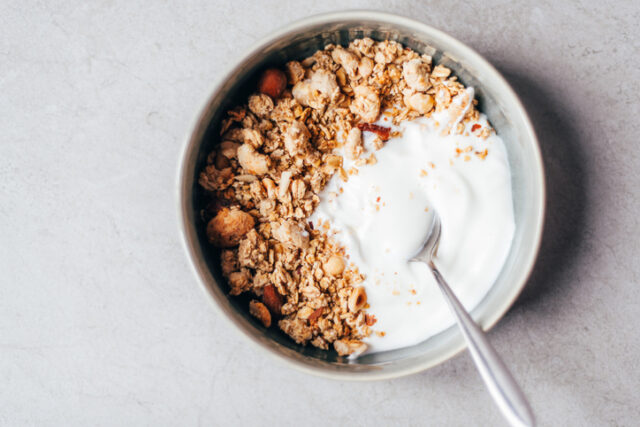
Greek yogurt has a smoother texture and a slightly tangy flavour that works in both sweet and savoury contexts. It’s an obvious fit for fruit, granola, and yogurt bowls, but it also works as a straight swap for sour cream in most situations, which is a helpful trick to know. Stirring it into sauces at the end of cooking, using it as a base for dressings, mixing it with garlic and herbs as a quick dip, it all works.
The other thing is that full-fat Greek yogurt is more satisfying than the low-fat version for a lot of people, and the calorie difference isn’t enormous. If you find the low-fat version leaves you hungry again quickly, switching to the full-fat one and just having a slightly smaller portion is often a better call than eating the low-fat version and then snacking on something else 20 minutes later.
The sodium gap is noteworthy.

This is the one area where the two foods diverge in a meaningful way. Cottage cheese contains around 900 milligrams of sodium per cup, which is quite high. Greek yogurt is considerably lower. If you’re eating cottage cheese regularly as a main protein source, that sodium content adds up across the day. For anyone managing blood pressure or trying to reduce salt intake generally, keep that in mind.
It doesn’t make cottage cheese a bad choice, it’s just a consideration. Eating a smaller portion, rinsing it briefly if that’s the version you’re buying, or balancing out sodium elsewhere in the day are all sensible approaches. Some brands also make lower-sodium versions, so look at labels if this is something you’re tracking.
Which one is actually better for losing weight?

There’s not a clear winner, and anyone telling you otherwise is probably oversimplifying. Both are high in protein, both are filling, both fit well into a diet where you’re trying to manage overall calories without feeling permanently hungry. The best one is simply the one you’ll actually eat consistently because food that sits in the fridge and gets thrown out at the end of the week isn’t helping anyone.
If gut health is something you’re actively thinking about, Greek yogurt gets a slight edge for the probiotics. If you’re focused on muscle preservation, particularly if you’re doing any kind of strength training alongside trying to lose weight, cottage cheese’s higher protein content and slow-digesting casein make it worth including. Honestly, though, eating both across the week and enjoying them in different ways is probably the most realistic and useful approach.
What should you look for when you’re buying?

For Greek yogurt, check that it actually contains live cultures rather than just being a thick yogurt made by other means. The packaging should say it contains live and active cultures. Go for plain rather than flavoured wherever you can, since flavoured versions often have a surprising amount of added sugar that quietly undoes some of the benefit.
For cottage cheese, look at the sodium content across different brands because it varies more than you’d expect. Some supermarket own-brand versions are much saltier than others. Full-fat versus low-fat is less of a concern here than it is with yogurt, since the texture difference is minimal and the calorie gap isn’t huge. Small curd or large curd is purely down to preference.
If you’re eating for weight loss, that changes the conversation.

Both of these foods are useful, but they’re still just one part of a day’s eating. The reason protein gets talked about so much is that most people don’t eat enough of it, especially at breakfast and in snacks, and that leads to hunger and cravings that make eating less overall much harder than it needs to be. Adding a good protein source to every meal and snack is a straightforward change that tends to make a real difference to how manageable the whole thing feels.
Neither Greek yogurt nor cottage cheese requires you to overhaul anything. You swap one thing for another, you notice you’re a bit less hungry, you don’t reach for biscuits at three in the afternoon quite as often. That’s how it tends to work in practice. Small, sustainable changes rather than anything dramatic are what actually stick.