When you start valuing yourself, the way you move through relationships changes completely.

Some people step up, others fall away, and your whole dynamic with love, family, and friends change. While some of the changes might be a bit jarring or hard to deal with, they’re a necessary part of your journey towards building a solid sense of self-worth. Here’s what actually happens once you stop selling yourself short.
1. You stop putting up with casual disrespect.

Little digs, off-hand comments, or being treated like an afterthought used to slip by, but not anymore. Once you value yourself, you notice those moments and realise they are not just “harmless,” they’re patterns you no longer accept.
Some people adjust quickly when they see you mean it, while others get defensive. Either way, you’re a whole lot clearer on what you will and won’t tolerate, and that sets a new standard in every relationship.
2. You attract people who get it.

When you stop chasing approval and start showing self-respect, the kind of people you draw in changes. Users and takers lose interest because you no longer feed their habits, while healthier people gravitate toward your new energy.
The change is subtle but powerful. People who value honesty and equality see it in you, and the connections you make feel more balanced from the very beginning.
3. Saying no finally feels natural.

Before, every “no” felt heavy with guilt. Now it comes out easier because you understand it’s not selfish to protect your time and energy. Boundaries stop feeling like walls and start feeling like respect.
Relationships change when you mean it. People learn quickly that you’re not someone to push around, and the ones who respect you stay while the rest drift away.
4. You stop giving until you’re empty.

Over-giving used to feel like the only way to earn love. When you finally see your own worth, that pattern breaks. You stop pouring out energy just to keep others comfortable at your expense. That balance creates healthier bonds. Giving is still there, but it flows naturally, not out of fear. The people who love you notice the difference, and it makes the relationship stronger.
5. Arguments don’t scare you anymore.

Disagreement used to feel like danger, like it meant someone would leave. Now, you know conflict is part of closeness, not proof that you’re defective or unworthy. You stop avoiding hard conversations because you trust yourself to handle them.
Ironically, relationships improve. Speaking up clears the air faster, and instead of resentment bubbling under the surface, there’s a lot more honesty, even when it’s messy.
6. Manipulators can’t get in your head, no matter how hard they try.

When you don’t value yourself, guilt trips and pressure work easily. Once you do, it’s way harder for people to twist your perspective. You spot the red flags quicker and feel less pulled into their games.
This makes space for healthier people. Manipulators either back off or reveal themselves clearly, and you get to choose not to engage instead of being pulled into cycles you never wanted.
7. You let appreciation land.

Compliments used to bounce off you. Praise felt awkward, like maybe people didn’t actually mean it, and they were just being nice. Valuing yourself changes that. You start believing good things people say and let yourself feel proud without brushing it aside.
This strengthens bonds. People feel closer to you because their kindness doesn’t hit a wall, and you feel lighter because you’re no longer rejecting the love being offered.
8. Your standards rise exponentially.

You do not need to make announcements about it. You just stop accepting the bare minimum. The friendships and relationships that once felt “good enough” now look empty compared to what you know you deserve. That naturally filters your circle. Those who want to stay rise to meet you, and those who don’t slowly fade, which leaves more space for genuine connection.
9. You give love without fear.

When your worth no longer depends on someone else’s response, you stop holding back. You love openly because rejection doesn’t mean there’s something wrong with you or that you don’t deserve love. You know their reaction is about them, not proof you’re lacking in any way.
Needless to say, that makes your love richer. It feels freer and less tangled in fear, and people sense the difference. Real connection grows stronger when it isn’t tied to hidden conditions.
10. You stop clinging to relationships.

Needing constant validation used to make you hold on too tightly. Now, you can stand on your own. Relationships become a choice, not a lifeline, which makes them healthier from both sides. Having that independence takes the pressure off. When people stay, it is because they want to, not because they feel needed for your survival. That creates a deeper sense of freedom and trust.
11. You expect effort in return.

One-sided relationships stop appealing to you. When you finally value yourself, you stop carrying all the weight, whether it is emotional support, planning, or showing up. You start noticing when the effort isn’t mutual.
This changes the balance. The people who care start giving more, and those who only ever took start slipping out of your life. What’s left feels fairer and more rewarding.
12. Trust feels less fragile.
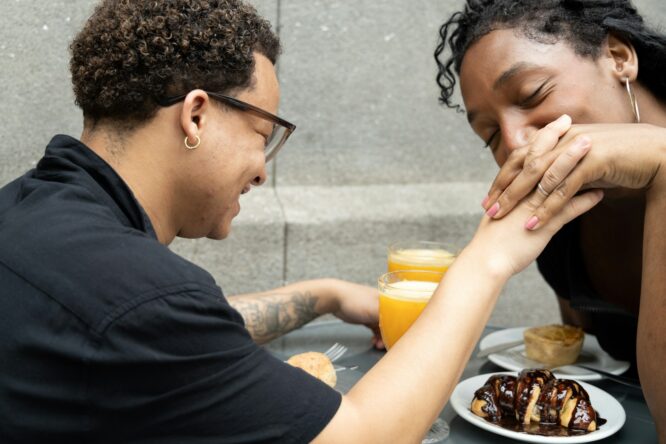
When your self-worth is low, trust feels dangerous. Every let-down feels like confirmation that you are unloveable. Once you value yourself, that changes. Trust is still a risk, but you know you’ll survive disappointment if it comes.
This makes you braver in relationships. You can open up more easily because even if someone lets you down, it doesn’t destroy your sense of worth.
13. Everyday connection feels lighter.

When insecurity runs the show, every text, silence, or look feels loaded. Valuing yourself removes that weight. You stop overanalysing and simply enjoy time with people without the constant background fear of being “not enough.”
That lightness brings joy back. Conversations flow more easily, laughter comes naturally, and the pressure to prove yourself fades. Relationships stop feeling like tests and start feeling like connection again.
14. Some people fall away.

Not everyone celebrates your growth. People who liked you doubting yourself may resist or distance themselves. It’s painful, for sure, but it’s also revealing. Clearly, those relationships were built on imbalance, not genuine respect.
The space left behind isn’t empty for long. It becomes room for healthier, more equal connections that match the self-value you now carry.
15. You finally feel love as it should be.

At the core, valuing yourself reshapes love. It’s no longer about chasing scraps or proving your place. It becomes about sharing, balance, and respect because you no longer accept anything less. This is where real connection flourishes. Love feels calmer, more secure, and more joyful because it is built on worth that comes from both sides, not just from you constantly trying to earn it.