The debate over whether it’s better to lace up for a sprint or head out for a brisk stroll has been going on for years.

You’ll find plenty of people who swear by the intensity of a morning run, while others argue that a steady walk is much kinder to the body. It’s easy to get caught up in the stats and the calorie counts, but the “best” choice usually depends on what you’re actually trying to achieve for your fitness.
Both options offer huge benefits for the heart and mind, yet they’re not exactly interchangeable when it’s time to hit the pavement. Looking at how each one affects your joints and your long-term health helps clear up the confusion about which one deserves a spot in your routine.
There are some basic differences between the two.

Walking and running use the same muscles, count as proper cardio, and need nothing more than a decent pair of trainers and somewhere to go. The difference between them comes down to intensity. Running pushes your heart and lungs harder over a shorter period. Walking does similar work, just more gently and over a longer stretch of time.
That single difference is what splits all the research, all the advice, and pretty much every argument about which one is better. The general guidance from the NHS, for reference, is at least 150 minutes of moderate-intensity exercise per week, or 75 minutes of vigorous-intensity exercise. A brisk walk counts as moderate. A steady run counts as vigorous. So you can hit the baseline either way, and most people end up doing some mixture of both without really thinking about it.
The calorie burn and weight loss question come up a lot.

If you’re trying to burn the most calories in the least time, running wins. It burns roughly twice as many calories per minute as walking, so a 30-minute run will burn around double what a 30-minute walk does. Studies have also found that runners tend to lose slightly more weight than walkers over the same period, partly because running suppresses appetite a little more, and partly because it’s easier to hit a calorie deficit when each session burns more.
Of course, the catch is that exercise alone, whether walking or running, isn’t the most effective way to lose weight. Research is consistently clear that diet does far more of the heavy lifting. If weight loss is the goal, what you eat will move the needle more than whether you walk or run, so pick the one you’ll actually stick with rather than the one you think will burn more.
Walking is sneakily beneficial for the heart.

Here’s the bit that surprises people. Calorie for calorie, walking actually beats running for heart health. A six-year study of over 33,000 runners and 15,000 walkers found that when both groups burned the same amount of energy, walking reduced the risk of heart disease by 9.3%, while running reduced it by 4.5%. Walking also lowered the risk of high blood pressure by 7.2% compared to 4.2% for running, and the risk of high cholesterol by 7% compared to 4.3%.
Both reduced the risk of diabetes by around 12%. The takeaway isn’t that walking is magically better than running, it’s that walking longer gets you genuinely impressive heart benefits, just at a different pace. If you’ve got time on your hands and enjoy walking, you’re not missing out by skipping the running shoes.
Running gives you something that walking can’t quite match.

Running has its own real advantages, particularly when it comes to your VO2 max, which is basically a measure of how efficiently your body uses oxygen. People with higher VO2 max scores tend to live longer and stay sharper into old age, and running improves this much faster than walking does. The impact of running also helps build bone density, which becomes properly important after 50 to protect against osteoporosis, especially in women.
Running tends to deliver a quicker mental boost too. Even 10 minutes of moderate-intensity running has been shown to lift mood noticeably, and the so-called “runner’s high” is a real chemical thing rather than wishful thinking. For people who need to burn off stress rather than think it through, running tends to do the job faster.
There’s an injury risk that nobody really talks about.
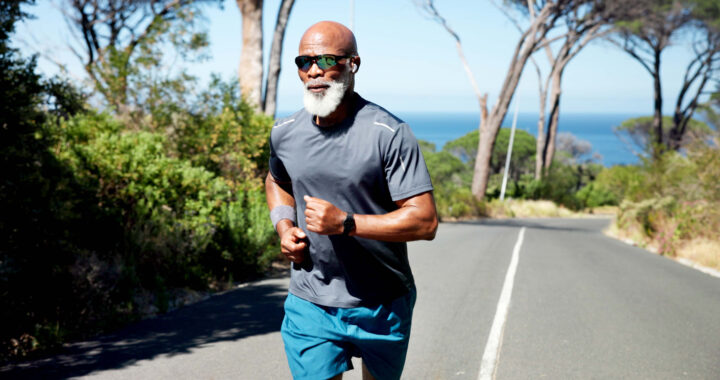
Running’s biggest weakness is the injury rate. Around half of all regular runners get hurt each year badly enough to stop running, with shin splints, knee pain, dodgy hips, plantar fasciitis, and stress fractures being the usual suspects. Most of these happen to people who increase their mileage too quickly or skip recovery days. Walking, on the other hand, has one of the lowest injury rates of any form of exercise.
A study of over 14,000 active people found that walkers had among the lowest injury rates of any group. If you’ve got joint trouble, are over 50, are carrying extra weight, or are coming back from illness or injury, walking gives you most of the same benefits without the risk of putting yourself out of action for weeks. The other thing worth knowing is that walking doesn’t really require recovery days, which means you can do it daily, while running tends to need rest days built in.
Both have plenty of mental health and brain benefits.

Both walking and running reduce anxiety and depression, both improve memory and thinking, and both have been linked to a lower risk of dementia and Alzheimer’s later in life. The differences between them on the mental side are mostly about how it feels. Walking tends to be calmer and more meditative, which is why people often say their best ideas hit them mid-walk. There’s something about the slower pace and the ability to take in your surroundings that helps the brain process things in a way that staring at a screen never quite does.
Running gives a sharper, faster mood boost, more of an immediate release of stress, and tends to suit people who want to burn off pent-up energy. Both also have the bonus of getting you outside, which is genuinely important on its own. Daylight, fresh air, and a change of scenery do real work on your mood and your sleep, separate from the actual exercise.
Don’t forget the blood sugar trick that most people miss.

One of walking’s best little tricks is what it does after meals. A 15-minute walk straight after eating significantly reduces the blood sugar spike that follows a meal, which over time protects against type 2 diabetes and helps with the mid-afternoon energy crashes most people are familiar with.
Running has a similar effect, but most people aren’t realistically going to lace up trainers and do a hard run straight after dinner. A stroll round the block is something you can actually fit in. For anyone managing prediabetes, type 2 diabetes, or just trying to stop the post-lunch slump, this is genuinely one of the most practical bits of advice in the whole exercise world, and it works without changing anything else you’re already doing.
Which one suits which person is up for discussion.

Walking is the obvious pick if you’re just starting out, if you’re older, if you’ve got joint issues, if you’re carrying extra weight, if you’re recovering from injury or illness, or if you simply don’t enjoy running. It also fits more easily into everyday life because you don’t need to shower afterwards or carve out a specific time slot. You can walk while making phone calls, walk to the shops instead of driving, or walk during your lunch break.
Running tends to suit people who already have some baseline fitness, who want quicker results, who are short on time, or who genuinely enjoy the buzz of it. Plenty of people end up doing both, walking most days and running a couple of times a week, which gives you the best of each. There’s no rule that says you have to commit to one.
Making either one work harder should be the priority.

Intensity matters as much as the activity itself. A slow amble round the shops barely counts as exercise. A brisk walk where you’re slightly out of breath and could just about hold a conversation but couldn’t sing, that’s the sweet spot for getting real benefits. Adding hills, picking up the pace, or doing intervals where you alternate between brisk and slower walking all bump up the gains considerably.
Walking on an incline, either outside or on a treadmill, has actually been shown in some studies to deliver benefits surprisingly close to running. The same logic applies to running. A steady jog is fine, but adding hills, sprints, or longer distances multiplies what you get out of the same time spent. Whichever you pick, push slightly beyond comfortable, and you’ll get far more for your time than coasting along at a pace your body’s used to.
Then there’s the bit nobody likes to admit.

The honest truth is that the best exercise for you is the one you’ll actually do consistently. The most thorough running plan in the world is useless if you give up after three weeks. The fanciest gym trainers don’t help if they sit by the door. Health benefits come from doing something most days for years, not from picking the theoretically optimal exercise and forcing yourself through it.
If you genuinely enjoy walking and would hate to run, walk. If running gives you something walking doesn’t, run. The research is generous enough that either choice, done regularly, will give you most of what you need. The best exercise is the one you’ll actually do, and the worst answer is overthinking it and doing neither. Put your trainers on, get outside, and pick whichever one gets you moving today.