Most people in the UK assume that as long as they’re not sat on a double yellow line or blocking someone’s driveway, they’re pretty much in the clear.
We’ve all spent ten minutes circling the block looking for a spot, only to finally pull up and hope for the best, but the Highway Code is actually packed with weirdly specific rules that can land you a fine when you least expect it. It’s not just a case of checking the signs on the pavement; there are laws about which way your car is facing after dark and exactly how close you can leave your vehicle to a junction without it being a legal nuisance.
You can go years driving without a single ticket, and then suddenly find a yellow packet on your windscreen because of a rule you haven’t thought about since your theory test in 2004. Here are some of the laws you may not have known exist across the UK—knowledge is power, as they say!
You can’t park facing the wrong way at night.
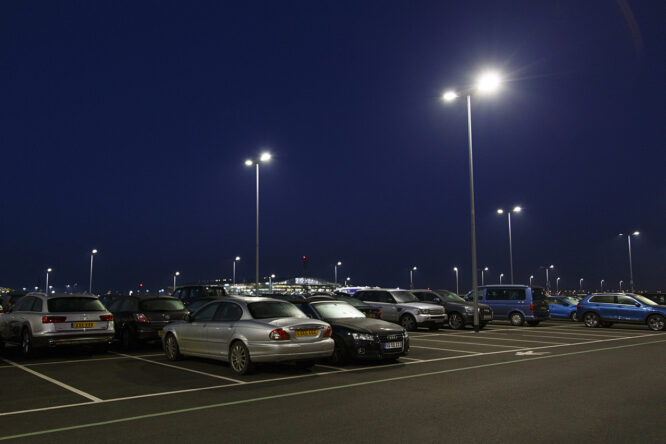
This is one of the most widely broken rules on UK roads, and very few people know it’s even a thing. Rule 248 of the Highway Code states that you must not park on a road at night facing against the direction of traffic flow unless you’re in a recognised parking space. The reason is straightforward: when a car is parked facing oncoming traffic, drivers approaching from behind can’t see the rear reflectors, making the vehicle effectively invisible in the dark.
Breaking this rule isn’t treated the same way as a standard parking ticket, either. It’s enforced by police rather than local councils, which means it carries potential fines of up to £1,000 for cars and up to £2,500 for larger vehicles like vans. Experts have pointed out that many drivers assume they’re fine as long as they’re not on yellow lines, but this rule is about safety rather than restrictions, and the penalties reflect that.
You must use parking lights on roads above 30 mph.

Another rule from the Highway Code that the majority of drivers have never thought about. If you park on any road or lay-by where the speed limit exceeds 30 mph, you’re legally required to leave your parking lights on. This applies day and night. The idea is that parked vehicles on faster roads need to be visible to passing traffic, and sidelights provide that visibility.
Many modern cars allow you to activate parking lights by clicking the indicator stalk left or right as you leave the vehicle, though some have a dedicated button, so it’s worth checking your handbook if you’re not sure how yours works. On roads with a 30 mph limit or lower, smaller vehicles don’t need lights provided they’re parked close to the kerb, facing with the flow of traffic, and at least ten metres from a junction.
You can’t park within 10 metres of a junction.
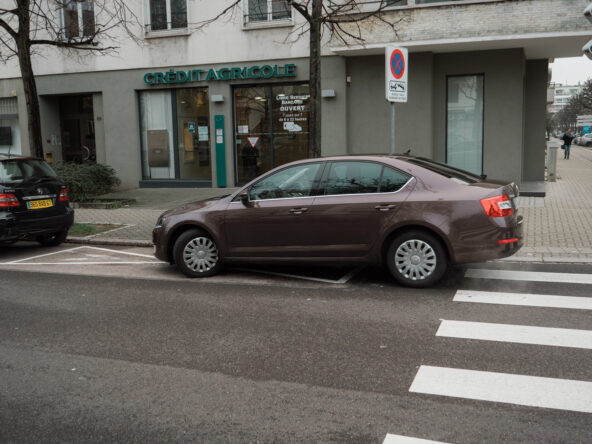
This applies everywhere in the UK and is far more commonly broken than it should be. The Highway Code is clear that you must not park within ten metres of a junction unless road markings specifically indicate otherwise. The rule exists because parked vehicles near junctions reduce visibility for drivers pulling out or crossing, which significantly increases accident risk.
The 10-metre rule applies regardless of whether there are yellow lines or any other road markings. A clear stretch of road close to a turning can look like a perfectly reasonable spot, but if it’s within that distance it’s still an offence. Councils and enforcement officers are entitled to issue Penalty Charge Notices for this, even if there’s no other signage present.
Pavement parking rules differ across the UK.
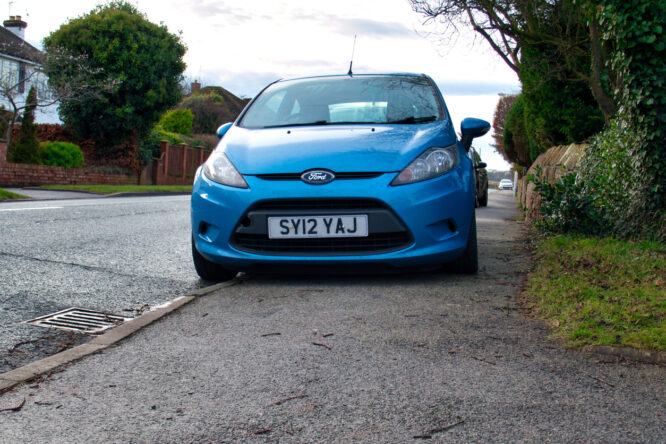
This is an area where a lot of confusion exists because the rules genuinely aren’t the same everywhere. In London, pavement parking has been banned since 1974 under the Greater London (General Powers) Act. In Scotland, a national ban came into force in December 2023, with councils now able to issue fines of £100 for pavement parking, double parking and parking across dropped kerbs. In England and Wales outside London, it’s more complicated. The Highway Code says drivers should not park on the pavement unless signs permit it, but the word “should” rather than “must” means it isn’t a blanket legal prohibition in the same way.
However, if your vehicle causes an obstruction, which most pavement parking does, you can still be issued a fixed penalty notice under existing obstruction laws. The government has been considering a national ban for England and Wales for some time, with the former Transport Secretary speaking in favour of one as recently as late 2024, so this area of the law may well tighten further.
Yellow line restrictions also apply to the pavement and verge.
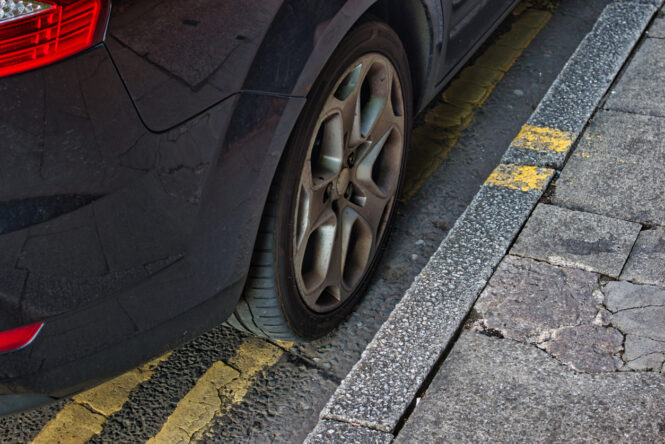
A lot of drivers think that yellow line restrictions only apply to the actual road surface. They don’t. Waiting restrictions indicated by yellow lines apply to the road, the pavement alongside it, and any verge. Basically, parking with two wheels on the pavement next to a single or double yellow line isn’t a workaround. In fact, it’s the same offence as parking directly on the line.
The same applies to motorcycles, which some riders assume are exempt from pavement restrictions. They’re not, and this misconception results in a significant number of fines each year.
Parking on a dropped kerb is an offence.
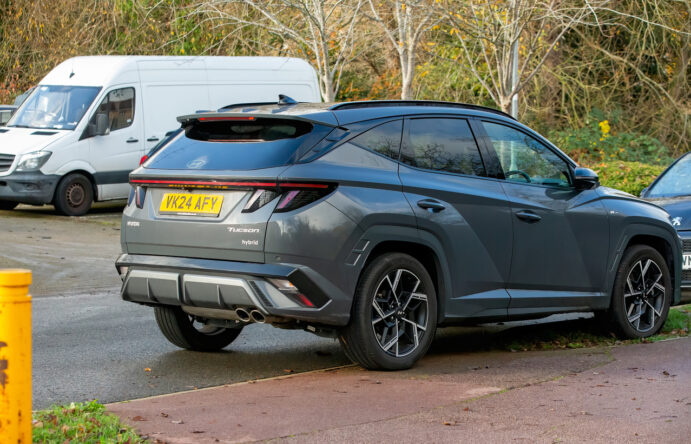
Dropped kerbs exist to allow vehicles to access driveways and to allow wheelchair users, people with pushchairs and cyclists to move between the road and pavement safely. Parking across one, even partially or briefly, is an offence. This applies to dropped kerbs outside other people’s homes, outside businesses, and at pedestrian access points.
In Scotland, the national parking ban introduced in 2023 specifically includes dropped kerbs as a prohibited location. In England and Wales, local councils that have taken on Civil Parking Enforcement powers can issue PCNs for blocking a dropped kerb. What surprises many drivers is that you don’t have to be blocking someone’s actual car in to receive a fine. Parking across the lowered kerb itself is the offence, regardless of whether there’s a vehicle in the drive.
Single yellow lines are more complicated than most people think.
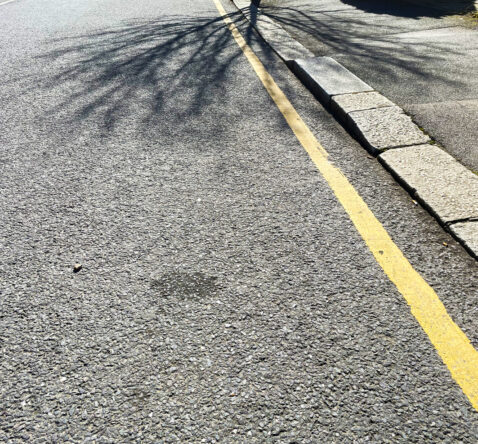
Most drivers know that a single yellow line means some kind of restriction, but the details are widely misunderstood. Single yellows indicate no parking or waiting during the hours shown on a nearby sign, but those hours vary significantly by location. If there’s no sign visible, it doesn’t automatically mean parking is unrestricted. The sign may be further along the street, or may have been damaged or obscured. The restrictions typically lift in evenings and at weekends, but not always, and assuming they do without checking a sign is the most common way people end up with an unexpected ticket.
There’s also a separate element that confuses people: those small yellow marks painted at right angles to the kerb. These are called kerb blips, and they indicate that loading and unloading is also restricted, separately from the parking restriction on the road itself. One set of blips means loading is restricted at certain times, two sets means it’s prohibited at all times.
Bank holidays don’t automatically suspend parking restrictions.
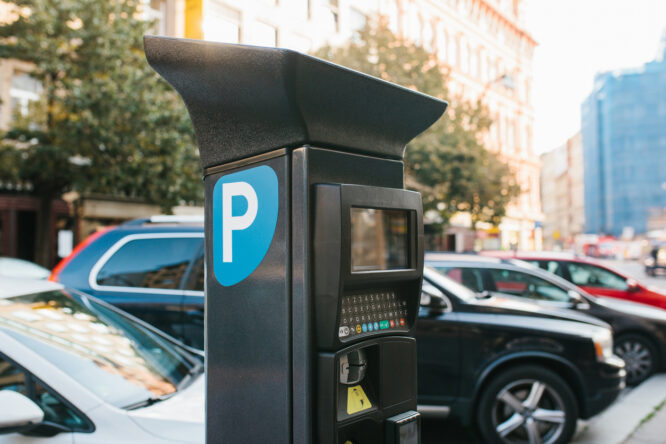
This is a surprisingly widespread assumption and a reliable source of parking fines around bank holidays. If a sign states that restrictions apply Monday to Saturday, 9am to 6pm, those restrictions still apply on a bank holiday that falls within those days and hours, unless the sign specifically says bank holidays are excluded. Some do, many don’t.
The logic that “it’s a bank holiday, so the usual traffic isn’t there” has no bearing on whether the legal restriction is in force. The AA is explicit on this point, and enforcement officers are well aware that bank holidays generate fines from drivers who’ve made this assumption.
You must turn your wheels correctly when parking on a hill.
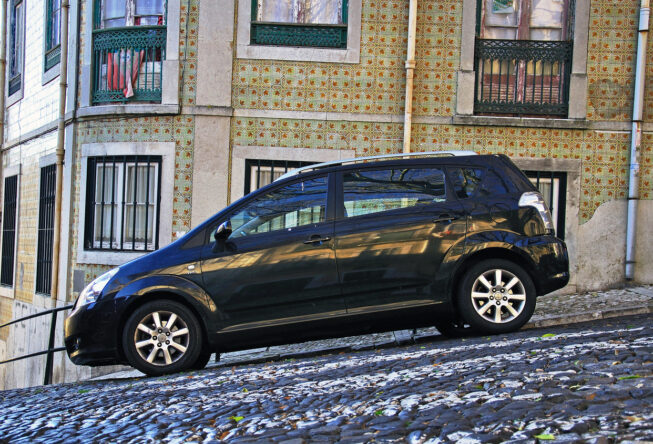
The Highway Code is specific about this, and very few drivers follow it. When parked facing uphill, you should turn your steering wheel away from the kerb. When facing downhill, turn it towards the kerb. The principle is that if the handbrake fails, the wheel position means the vehicle rolls into the kerb and stops rather than rolling out into traffic.
This is standard practice in many countries and is formally required in the UK Highway Code, yet it’s almost never enforced and rarely discussed after driving lessons. It doesn’t result in fines in most circumstances, but it’s a legal requirement under the code and the kind of thing that could become relevant if your vehicle rolls away and causes damage.
You can be fined for not parking close enough to the kerb.

If your vehicle is parked more than 50 centimetres from the kerb on a road where kerbside parking is otherwise permitted, you can receive an on-the-spot fine. The rule exists because vehicles parked too far from the kerb narrow the effective width of the road and create hazards for passing traffic, cyclists, and other parked vehicles.
Most people park reasonably close to the kerb without thinking about it, but on wider roads or in less structured situations it’s easier than you’d expect to leave a gap that technically puts you in breach of this rule. Parallel parking neatly and fully within any marked bays or as close to the kerb as the road allows is the straightforward solution.
Private car park fines work differently to council ones.
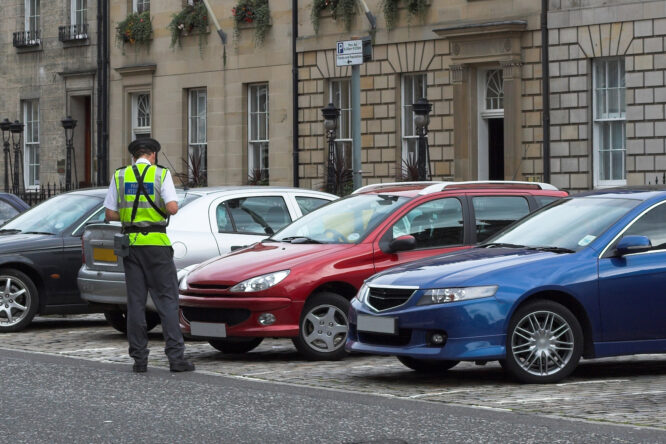
This distinction matters a lot and is widely misunderstood. If you overstay or park incorrectly in a car park operated by a private company—a supermarket, shopping centre or hospital, for example—you receive a Parking Charge Notice rather than a Penalty Charge Notice. These are fundamentally different documents. A Penalty Charge Notice is issued by a local authority and carries the full weight of civil parking enforcement. A Parking Charge Notice is issued by a private company and is essentially a contractual claim rather than a statutory fine.
This means the process for challenging it, the obligations on the issuer, and the consequences of not paying are all different. Private parking companies must be members of an approved trade association and follow a Code of Practice, and their notices can be appealed through POPLA, which is the independent appeals service for private parking. Fines from private operators that are ignored can still be pursued through the courts, but they don’t carry the same automatic enforcement weight as council-issued tickets.
Parking outside someone’s house is legal in most cases.

This causes more neighbourhood disputes than almost anything else in residential areas, but the legal position is fairly clear. It’s perfectly legal to park on a public road outside someone’s house, provided you’re not blocking a dropped kerb, not on yellow lines, not within 10 metres of a junction, and not in a residents’ permit zone without the appropriate permit.
Homeowners don’t have an automatic right to the parking space in front of their property. Where no parking controls exist, the road is public highway and anyone can use it. The exception is if a vehicle is parked in such a way that it blocks access to a driveway—that’s an enforceable offence. However, simply parking outside a neighbour’s house on an unrestricted road, even regularly, isn’t illegal, regardless of how strongly the resident feels about it.