Moving to America or even just visiting for a bit is usually a massive wake-up call for anyone from the UK, mostly because you realise how many of our basic daily habits just don’t travel well.

We’ve got these ingrained ways of doing things, from the way we build our houses to the stuff we expect to see on every high street, that we take for granted until they’re suddenly nowhere to be found. It’s those moments where you’re standing in a supermarket or trying to sort out a quick snack, and you realise that what we consider a total staple is basically an alien concept once you cross the Atlantic.
You don’t even notice how much you rely on these little things until you’re trying to explain them to a confused local, who has no idea why you’re making such a fuss. They may be background noise here, they’re so commonplace, but they’re just not a part of American life.
Booking a GP appointment feeling like trying to win a radio competition

In many parts of the UK, getting a same-day GP appointment means calling at exactly the right time, sitting in a queue, and hoping you get through before they’re gone. It’s a routine people have just learned to deal with. For Americans used to booking specific time slots in advance, the idea of this kind of daily scramble feels chaotic. Here, it’s just seen as part of the system, even if everyone complains about it.
Saying you’ll “just keep an eye on it” instead of fixing something straight away

There’s a very British habit of not rushing to deal with minor problems. Whether it’s a strange noise in the car or a leak that isn’t too bad yet, people often wait and see rather than act immediately. In the US, there’s more of a tendency to sort things quickly or get a professional in. The British approach leans more towards patience, or sometimes just putting things off.
Accepting that trains will be delayed and building your day around that

Train delays are frustrating, but they’re also expected. People factor them into plans, leave earlier than needed, or have backup options ready without thinking too much about it. In the US, public transport varies a lot, but the level of casual acceptance around delays in the UK can feel unusual. Here, it’s almost part of the routine rather than a surprise.
Paying for things with contactless without even thinking about it

In the UK, tapping your card or phone is second nature. It’s used for everything from big shops to small purchases, often without needing to enter a PIN. While contactless exists in the US, the UK adopted it more widely and earlier. That means Brits often move through payments faster, while Americans are more used to inserting cards or signing receipts.
Secretly judging someone for not knowing how a round works at the pub

The unwritten rule of buying rounds is taken seriously. If someone doesn’t follow it properly, people notice, even if they don’t say anything directly. That system doesn’t really exist in the same way in the US, where people are more likely to pay individually. The British version relies on trust and memory, which makes it feel simple until someone gets it wrong.
Treating the TV licence like a normal household bill

Most Brits grow up just accepting the TV licence as something you have to pay if you watch live TV or BBC content. It’s part of the background, like council tax or utilities. To Americans, the idea of paying a licence to watch TV feels strange. It’s not something they have an equivalent for, which makes it one of those systems that’s hard to explain simply.
Saying something is “not bad” when you actually mean it’s really good

British understatement is everywhere, but this one stands out. “Not bad” can mean anything from decent to genuinely excellent, depending on tone. Americans tend to be more direct with praise, so this kind of phrasing can be misunderstood. It sounds neutral, but it’s often meant as a compliment.
Knowing exactly how to stand on an escalator without being told

Stand on the right, walk on the left. It’s not always written, but people follow it, especially in places like London. In the US, escalator etiquette isn’t as strict. People stand wherever they like, which can feel frustrating if you’re used to the British system.
Getting a letter in the post that could’ve easily been an email

The UK still relies heavily on physical letters for official communication. Appointments, updates, and reminders often arrive days later than they need to. Americans are generally more used to digital communication for these things, so the UK’s reliance on post can feel outdated, even if it’s still widely accepted.
Accepting small living spaces as normal, especially in cities

British homes, particularly in older cities, tend to be smaller. Narrow hallways, compact rooms, and limited storage are just part of the deal. In the US, homes are often larger, so this difference stands out quickly. What feels standard in the UK can feel cramped by comparison.
Referring to distances in time rather than miles

Ask someone how far away something is, and you’ll often get an answer like twenty minutes rather than a number of miles. This reflects how people actually move around, especially with traffic and public transport in mind. In the US, distance is more often measured in miles first.
Being polite in a way that avoids saying what you actually mean

British communication often leans towards softening things. Instead of being direct, people hint, suggest, or phrase things carefully to avoid awkwardness. In the US, people are generally more straightforward, which can make British politeness feel unclear or indirect.
Treating the Sunday roast like a weekly anchor point
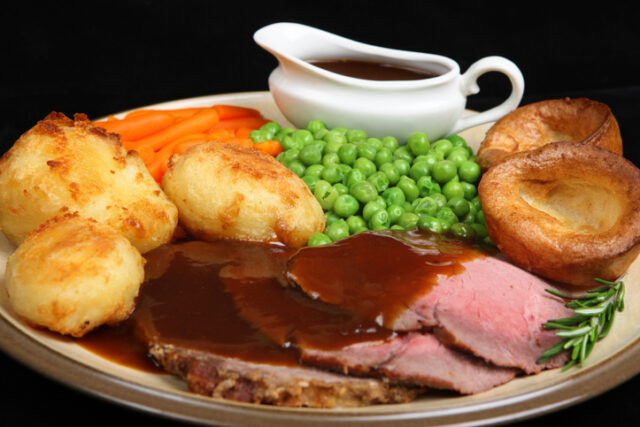
For many people, Sunday still revolves around a proper roast, whether at home or at a pub. It’s less about tradition for the sake of it and more about having a consistent moment in the week. There’s no exact equivalent in the US. Meals can be just as important, but they’re not always tied to a specific weekly routine in the same way.
Complaining about things constantly, but not actually expecting them to change

There’s a very British way of dealing with frustration where people vent about things like transport, weather, or prices, but don’t necessarily expect a solution. It’s less about fixing the issue and more about sharing the feeling. That approach can seem passive to Americans, who are often more focused on resolving problems directly.
Having a shared understanding of small social rules that no one explains

Whether it’s how to behave in a queue, how to order at a bar, or how to navigate small talk, there are lots of unwritten rules people just pick up over time. Those rules make everyday life run smoothly, but they can be confusing to outsiders. It’s one of those things you don’t notice until someone doesn’t follow them.