The UK has launched one of the most ambitious road safety plans it has ever set out, with targets that would represent a dramatic change in how dangerous British roads currently are.

The strategy has already drawn attention from international health organisations as a model worth paying close attention to, and the thinking behind it goes well beyond simply asking drivers to be more careful. The aim is to slash road fatalities by 65% over the next decade, focusing on everything from sharper technology to tighter rules for drivers. It’s a total overhaul of how our transport network operates, and if you use the roads to commute or just pop to the shops, this fresh plan is going to change your daily drive.
What the strategy is actually trying to achieve

The headline targets are significant by any measure. The strategy sets a goal of reducing road deaths and serious injuries by 65% by 2035, alongside a separate target of cutting fatalities among children under 16 by 70% over the same period. These aren’t vague aspirations either, they come with specific governance structures and ongoing monitoring built in to track whether real progress is being made rather than just promised.
A separate cycling and walking investment strategy followed in June 2026, aiming for 55% of short journeys in towns and cities to be safely walked or cycled by 2035. This sits alongside the main road safety plan as part of a broader effort to make every form of getting around the UK genuinely safer, backed by record investment and coordinated across multiple government departments rather than left to any single agency to manage.
The thinking behind the approach is clear.
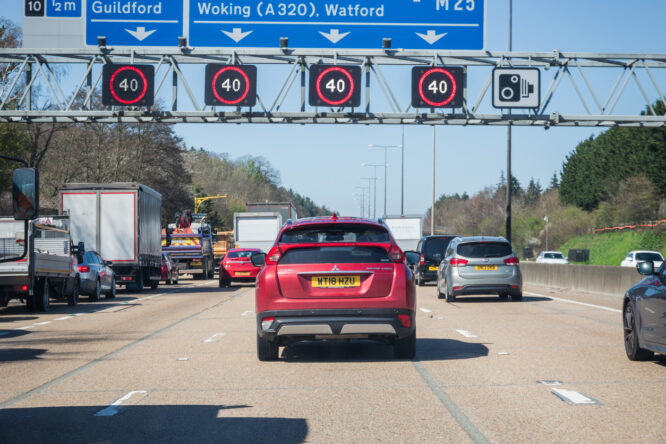
The strategy is built around something called the Safe Systems approach, which starts from a specific and important position: human error on roads is inevitable, but deaths and serious injuries are not. Rather than placing all the responsibility on how individual drivers or road users behave, the focus shifts to designing and managing roads in ways that reduce the consequences of mistakes when they inevitably happen.
This change in thinking is important because it moves the conversation away from simply blaming individuals and towards systemic changes that protect everyone, including those who make perfectly understandable errors in difficult or unexpected situations. It’s an approach backed by the World Health Organization and forms the basis of road safety strategies in several of the countries that have made the most progress on reducing deaths over recent decades.
Who’s overseeing delivery and how?

A new Road Safety Board has been created specifically to oversee the strategy, chaired by the Minister for Local Transport. The Board monitors progress against national targets and safety performance indicators, brings together representatives from across government and other key delivery partners, and is specifically tasked with identifying barriers to delivery before they become entrenched problems rather than discovering them after targets have been missed.
Sitting alongside this is a separate Implementation Board responsible for tracking specific commitments in the strategy on a more granular level, supported by Expert Advisory Panels drawing on knowledge from a wide range of road safety specialists. This layered oversight structure is one of the features the WHO has highlighted as particularly worth replicating, since it embeds accountability at multiple levels rather than relying on a single body to catch everything.
Data is being used differently for this initiative.

One of the more forward-thinking elements of the strategy is a commitment to linking police-recorded collision data with healthcare data, giving a much clearer picture of what actually happens after crashes occur and what the real injury outcomes look like over time. A new Data-led Road Safety Investigation Branch will bring this combined information together alongside connected vehicle data to identify safety risks before they become recurring patterns.
This kind of joined-up data approach allows for targeted interventions based on evidence rather than assumptions, and supports in-depth investigations into specific collision themes and emerging road safety issues as they develop. Currently, the gap between what police record at the scene of a collision and what hospitals record afterwards means a large amount of information about causes and outcomes gets lost. Closing that gap is expected to improve both policy decisions and the practical interventions that follow from them.
New vehicle safety technology is on the way.

The strategy commits to consulting on making 18 new vehicle safety technologies compulsory for vehicles sold in the UK, rather than leaving manufacturers to decide whether to include them as optional extras. These include autonomous emergency braking, which applies the brakes automatically when a collision is detected as imminent, intelligent speed assistance, and lane-keeping support systems.
The WHO has long recommended that governments set minimum vehicle safety standards rather than leaving these decisions to manufacturers, whose priorities don’t always align with the safety needs of the countries where their vehicles are sold. This commitment brings the UK more firmly in line with that guidance and reflects a growing international consensus that safety features which exist and work should not remain optional add-ons available only on higher-specification models.
It’s a small language change with a big meaning.
One detail in the strategy that caught wider attention is a commitment to replacing the word accident with collision across Parliament, road casualty statistics, and motorway signage. It might sound like a minor point of terminology, but the reasoning behind it is genuinely important. The word accident implies that crashes are random events, impossible to predict or prevent, while the word collision reflects the evidence that the vast majority of road deaths are preventable with the right systems in place.
Language shapes how problems are understood and prioritised at every level, from individual behaviour to government policy. Describing road deaths as accidents has historically made it easier to treat them as an unfortunate but unavoidable feature of modern life rather than as a failure of design, technology, or policy that can and should be addressed. Removing that word from official use is a small step with a meaningful signal attached to it.
Road safety at work is part of the plan too.

A National Work-Related Road Safety Charter is also being piloted as part of the strategy, aimed at encouraging businesses to take road safety seriously within their own operations and supply chains. This reflects a broader recognition that a large proportion of road deaths and serious injuries involve people driving for work purposes, whether that’s delivery drivers, sales representatives, or anyone else whose job regularly puts them behind the wheel.
Getting corporations to embed road safety practices across their operations is a different challenge from designing safer infrastructure or mandating vehicle technology, but it’s one that organisations like the WHO have been pushing for some time. A charter approach creates a framework that businesses can sign up to and be held accountable against, rather than relying entirely on individual employees to make safe decisions under pressure from schedules and targets.
The impact of these measures will be felt around the world.
A UN High-Level Meeting on improving global road safety is scheduled for July 2026, with the WHO calling on governments worldwide to close the gap between making commitments on road safety and actually delivering on them. The UN’s Sustainable Development Goals include a target of halving road fatalities and serious injuries globally by 2030, and progress towards that target has been uneven across different parts of the world.
The UK strategy has been highlighted by the WHO as an example of how ministerial accountability, coordinated data collection, and clear governance structures can work together to drive genuine progress rather than producing plans that look ambitious on paper but change little in practice. For countries still developing their own approaches, the combination of ambition, practical delivery mechanisms, and transparent reporting in the UK plan offers a genuinely useful model to build from, regardless of how different the local road conditions and challenges might be.