Most of us just throw a bag of spinach or a head of lettuce under a cold tap for 2 seconds and assume it’s good to go.

It feels like enough to wash away any visible dirt, but food safety experts warn that this quick rinse doesn’t do much to shift the bacteria hidden in the crevices. There is a proper knack to getting leafy greens clean without bruising them or turning your kitchen into a swamp. Doing it right not only lowers the risk of a nasty stomach bug, but it also helps your veg stay crisp in the fridge for a lot longer.
Why leafy greens are riskier than people realise
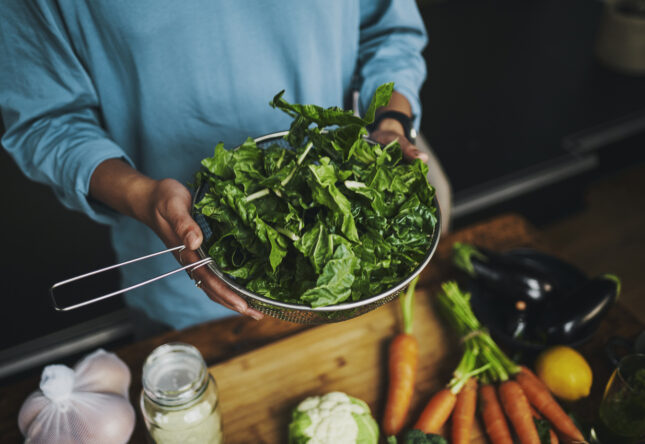
Leafy greens are actually one of the biggest sources of food poisoning in the UK and US, which surprises most people. Spinach, rocket, romaine, kale, and bagged mixed leaves are all linked to outbreaks of E. coli, salmonella, and listeria more often than you’d guess. The reason is that they’re usually eaten raw, which means there’s no cooking step to kill any bacteria that have hitched a ride.
They’ve also got loads of crevices, folds, and ridges that trap dirt, grit, and microbes, so any contamination from the field, the packing process, or the journey to your fridge can stay there until it ends up on your plate. The good news is that washing them properly genuinely makes a difference. The bad news is that most of us are washing them wrong.
Soaking in a bowl is the wrong start.
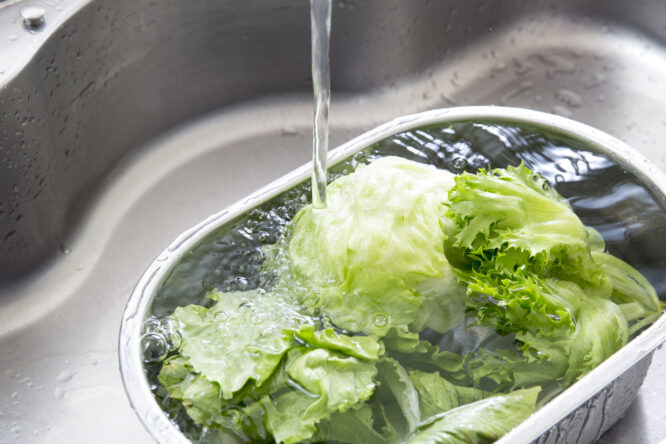
This is one of the bigger updates in recent food safety advice. Loads of people fill a bowl with water, dump the greens in, and let them soak for a few minutes thinking the dirt will float off. The problem is that bacteria stick to the leaves using a sticky biofilm that doesn’t just dissolve.
If one leaf has bacteria on it, soaking it in still water spreads those germs through the entire bowl, coating every other leaf in the process. The greens then also soak up extra moisture, which makes them spoil faster in the fridge. Soaking isn’t washing. It’s just giving bacteria a swimming pool to spread around in.
Running water is the actual answer.
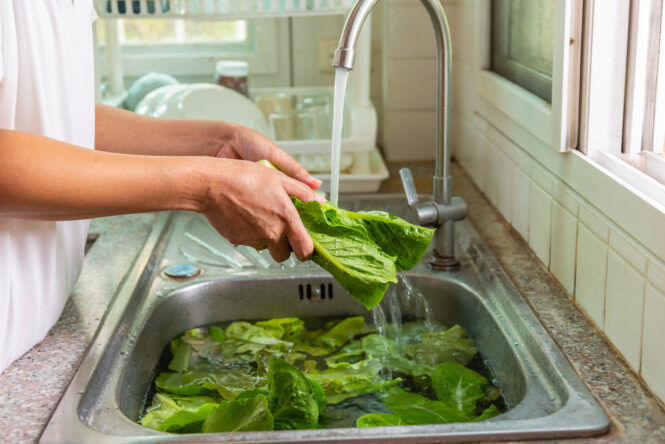
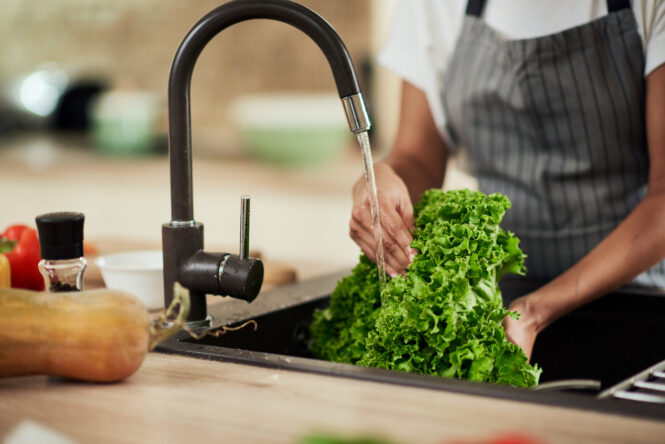
The proper way to wash leafy greens is under cold running tap water. The flow of the water is what does the real work, physically dislodging dirt, grit, and bacteria from the surface of the leaves. Hold each leaf, or a small handful, under the tap and gently rub the surface with your fingers while the water runs over it.
The friction matters as much as the water itself because bacteria cling tightly and need a bit of physical encouragement to come off. For tightly bunched greens like lettuce or cabbage, separate the leaves first so the water can reach every surface. For delicate leaves like baby spinach or rocket, be gentle so you don’t bruise them.
Wash your hands and the sink first.
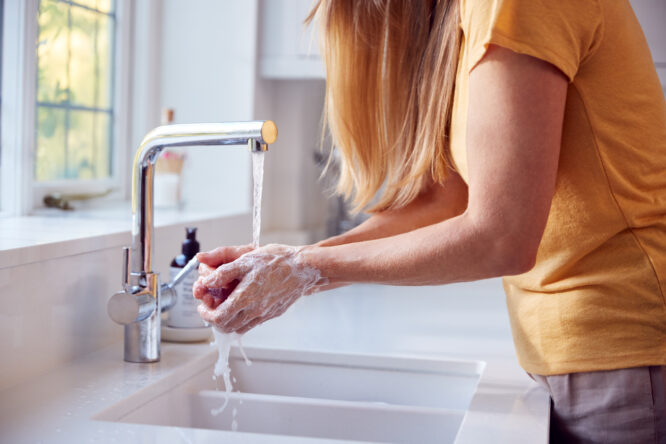
This one gets overlooked, but it’s properly important. Your kitchen sink is one of the dirtiest places in your house, often with traces of raw meat juices, dishwater residue, and food particles you can’t see. Washing greens in a contaminated sink is a really good way of adding bacteria rather than removing them.
Before you wash any produce, give the sink a proper clean with hot soapy water, dry it, and then start with the greens. Wash your hands first, too, for at least 20 seconds with soap. The greens themselves are about to go in your mouth without being cooked, so anything that touches them needs to be properly clean.
Skip the soap, vinegar, and fancy produce washes.
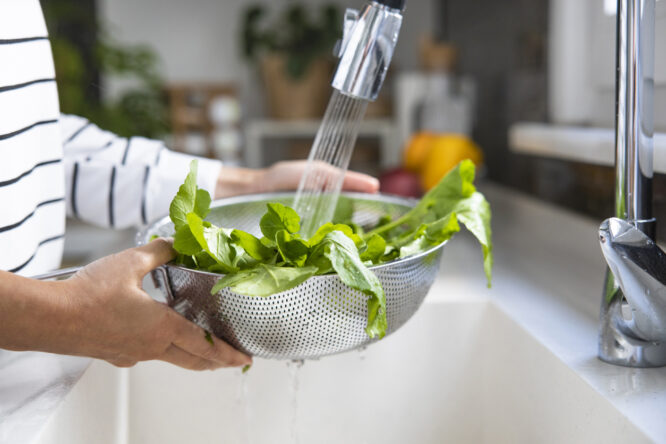
Plenty of people use washing-up liquid, white vinegar, baking soda, or shop-bought “produce wash” to clean their greens. None of these are recommended by food safety experts, and most of them don’t actually work better than plain water. Soap and detergent leave residues that aren’t meant to be eaten and can make you ill in their own right.
Commercial produce washes have been tested by researchers and found to be either no more effective than plain water, or actually less effective. Vinegar and baking soda have some mild antimicrobial properties, but the research suggests they don’t reliably kill enough bacteria to make a real difference. Plain cold water, used properly, is what experts recommend.
Bagged greens labelled “ready to eat” don’t need washing.
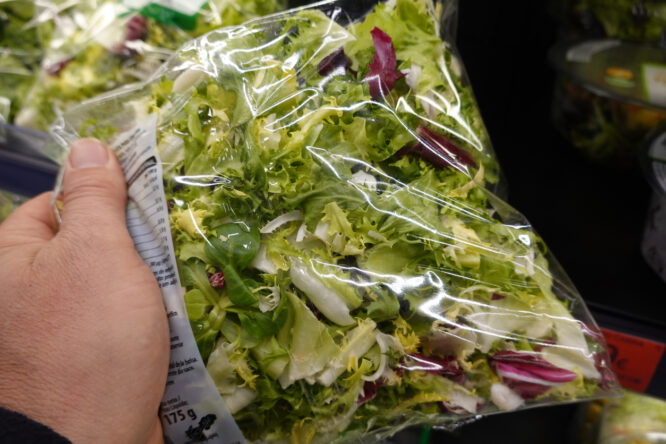
This is the bit that catches people out. Bagged salad labelled “pre-washed,” “ready to eat,” “washed,” or “triple washed” has been through an industrial process that uses food-grade sanitisers and equipment most home kitchens can’t match. Washing these greens again at home doesn’t make them safer, and food safety experts actually suggest it can make things worse because you’re introducing your dirty sink, hands, and tap water into the equation.
The exception is if the bag is damaged, the leaves look wilted or slimy, or there’s liquid pooling at the bottom, in which case the contents have probably started to spoil and should go in the bin rather than your bowl. Otherwise, tip them straight onto the plate.
Drying matters more than people think.
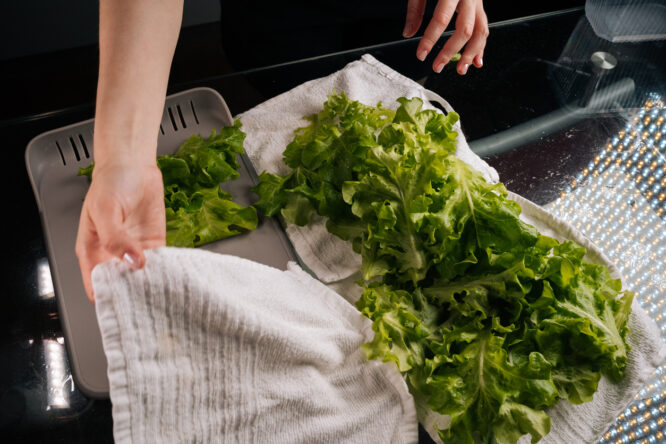
Once your greens are washed, drying them properly is genuinely important. Moisture is what bacteria need to grow, and a bowl of damp leaves left in the fridge for a few days is essentially a small bacterial farm. A salad spinner is the easiest way to dry greens because the spinning forces water out of the folds and crevices that a tea towel can’t reach.
If you don’t have one, lay the leaves on a clean tea towel or kitchen roll and pat them gently dry. Don’t store them while they’re still wet. The drier they are when they go in the fridge, the longer they’ll last and the safer they’ll be.
Wash just before you eat, not before you store.
This goes against what a lot of people think, but it’s the consistent advice from food safety experts. Don’t wash your greens as soon as you bring them home and then store them. Wash them just before you’re going to eat or cook them. The reason is that washing removes the protective coating on the leaves and adds moisture, both of which speed up how quickly they go off.
Greens that haven’t been washed yet keep significantly longer in the fridge. If you do want to wash a batch in advance, dry them really thoroughly and store them in a container lined with paper towel, which will absorb any leftover moisture.
Watch out for cross-contamination.
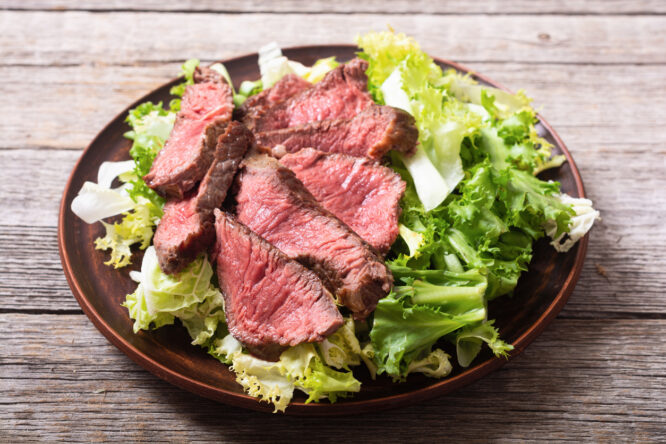
Even if you wash your greens perfectly, cross-contamination in the kitchen can undo all of it. Don’t prepare salad on the same chopping board you’ve just used for raw chicken or mince. Don’t store leafy greens on the same fridge shelf as raw meat, and if you do, keep the meat sealed and below the greens so any drips can’t reach them.
Use separate knives, or wash your knife thoroughly between cutting raw meat and washing your salad. The Food Standards Agency in the UK consistently flags this as one of the biggest causes of food poisoning at home, and it applies just as much to salad as it does to meat.
Storing greens properly afterwards
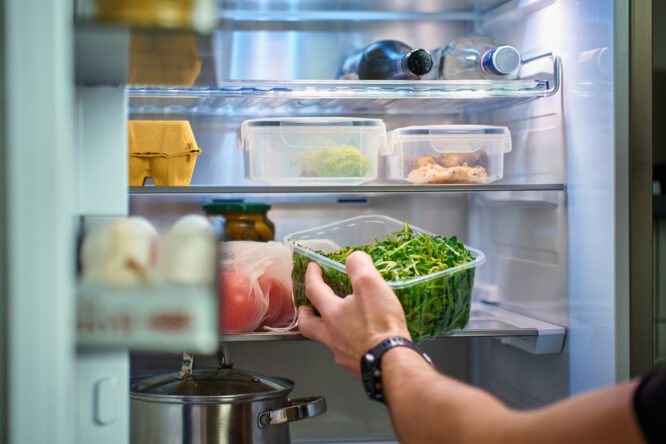
Once your greens are washed and dried, they need to go straight into the fridge. Perishable produce, including pre-cut and pre-washed greens, shouldn’t be left at room temperature for more than two hours. In hot weather, that drops to an hour.
Store them in a container or bag with a sheet of kitchen roll to absorb moisture, in the salad drawer rather than at the top of the fridge where the temperature varies more. Most leafy greens are at their best within a few days of buying, and any leaves that turn slimy, smell off, or develop dark patches should go in the bin rather than your salad bowl.