Loads of people with arthritis stop moving altogether because they’re scared of doing more damage to their joints.
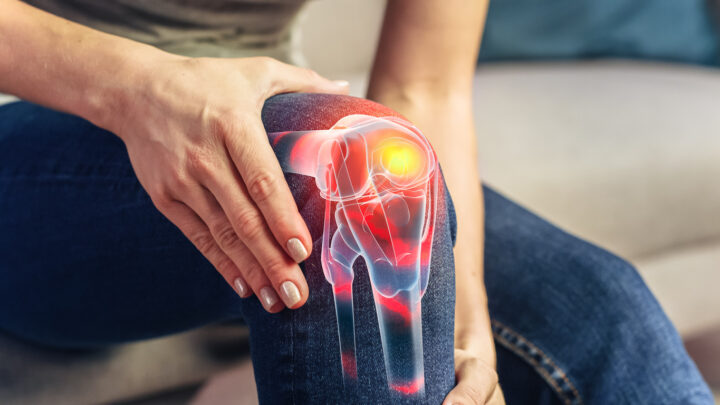
To be fair, that fear is understandable given how the condition’s been talked about for years. Doctors used to describe osteoarthritis as “wear and tear”, which makes it sound like your joints have simply worn out from overuse. That’s not really how it works, though. Genetics play a huge role in whether cartilage breaks down, and old injuries can also damage a joint’s surface. New research from Arthritis UK backs up something specialists have suspected for a while: that exercise is actually the best tool we have for easing pain and improving movement in arthritic joints.
Moving helps rather than harms.
There’s solid reasoning behind why activity benefits arthritic joints instead of wearing them down further. Movement pushes fluid through cartilage, the smooth surface covering the ends of your bones that lets them glide against each other without friction. Keeping that fluid moving helps the cartilage stay healthy rather than stiffening up.
On top of that, staying active builds strength around the joint, widens your range of movement, and gets blood flowing properly through the whole area. All these benefits stack on top of each other, which is why getting back into gentle exercise tends to be the single best thing you can do for painful hips and knees.
What to expect when you start

Getting arthritis patients to actually commit to exercise isn’t always easy, but it’s worth sticking with. Plenty of people go from thinking they’ll need a hip replacement to seeing real improvement in their symptoms without surgery at all. Expect some discomfort at first if you haven’t exercised in a while, particularly with movements that stretch your range of motion. A joint that hasn’t moved much tends to resist moving again, so pushing gently through that initial discomfort helps the knee or hip loosen up over time, easing day-to-day pain considerably.
Start slowly and keep your repetitions conservative to begin with. Even simple looking moves can work your stabilising muscles hard, and you might notice sore muscles for a day or two afterwards. Doing this routine at least three times a week tends to bring real results within about three months, at which point you can gradually return to whatever activity you love, whether that’s walking, swimming, cycling, or anything else. If your joint pain gets noticeably worse after a few weeks rather than better, it’s a good idea to check in with your GP or a musculoskeletal specialist.
Seated knee extension
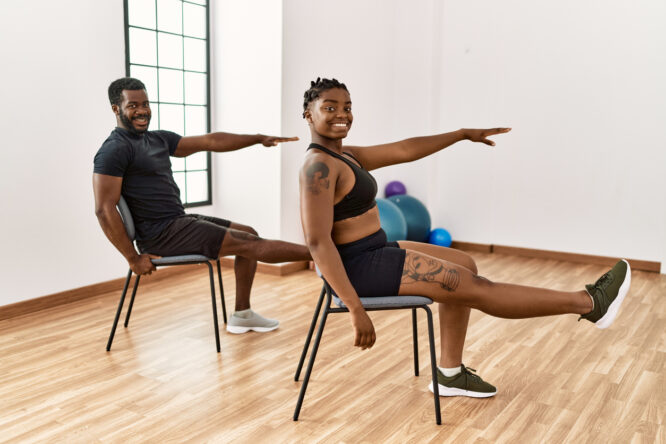
This move improves how far your knee can bend and straighten while strengthening the muscles at the front of your thigh. Sit on a chair with both feet flat on the floor and your back resting against the chair. Keeping one foot planted, straighten your other leg out in front of you and hold that position for around five seconds while squeezing your thigh muscle. Lower your foot back down and repeat on that side before switching legs. If you can’t fully straighten your leg, just go as far as feels comfortable, your range of motion should improve gradually with practice.
Sit to stand
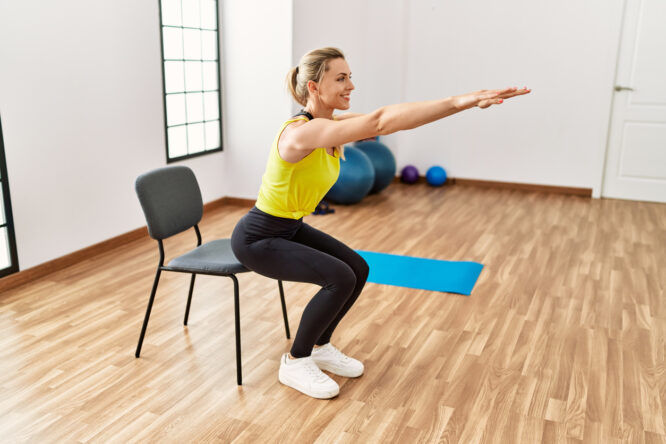
This one builds strength in your thighs and bottom while improving hip and knee movement. Sit in a chair with your arms resting on your lap or by your sides, then stand up without pushing off with your hands, keeping good posture and pushing your hips forward as you rise. If that feels too tough, try a supported version instead, standing with your hands on something sturdy and a chair positioned behind you for safety, then bending your knees to lower yourself as if sitting down, going as low as feels safe before standing back up.
Standing hip abduction
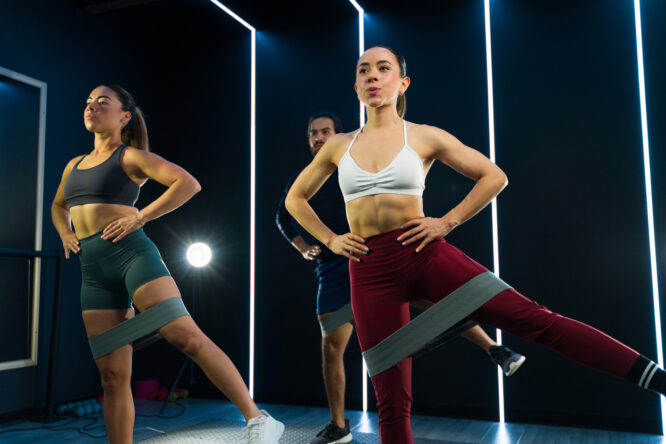
This exercise strengthens the muscles around your hip that help keep the joint stable. Stand with your hands resting on a chair for balance, then lift one leg out to the side as high as comfortably possible, keeping your toes pointing forward the whole time. Hold for about five seconds before lowering your leg back down, then switch sides. Lower the height of your lift if this feels difficult at first, and as your strength and flexibility improve, you’ll naturally be able to lift higher and hold for longer. Ankle weights can add extra challenge once you’re ready for it.
Standing knee raise
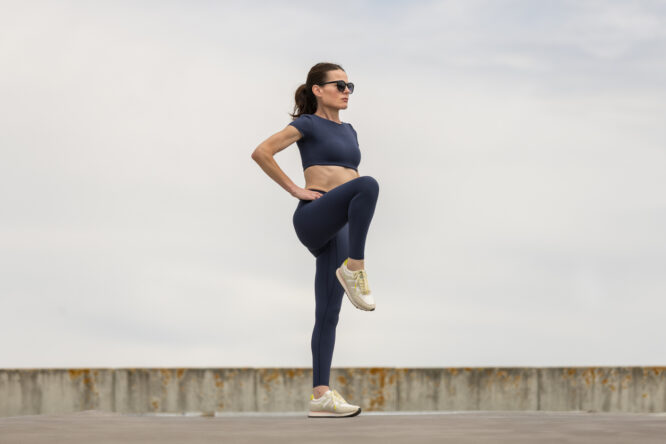
This move works the muscles at the top of your thigh and improves hip movement. Stand next to a chair with one hand resting on it for support, then raise one leg in front of you by bending at the knee, similar to a slow kicking motion, aiming to get your thigh roughly level with the floor. Only lift your knee as high as feels comfortable, there’s no need to push past what your body is ready for.
Lying leg raise
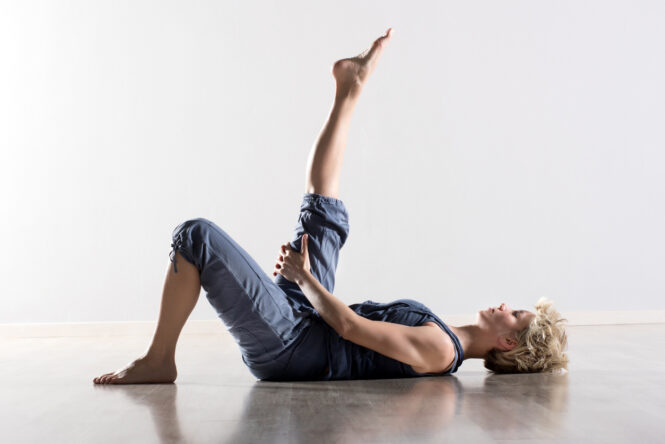
This exercise works your thigh and hip muscles while taking some pressure off the joint itself and improving overall control. Lie flat on the floor with both legs straight and your arms resting by your sides. Lift one leg off the ground, keeping it as straight as you can, while the other leg stays flat against the floor and your back remains pressed down. Hold the lifted leg in the air for about five seconds before slowly lowering it. If this feels too demanding, bend the knee of your resting leg so that foot sits flat on the floor, which takes some of the load off your thigh muscles and makes the lift easier.
Heel slides
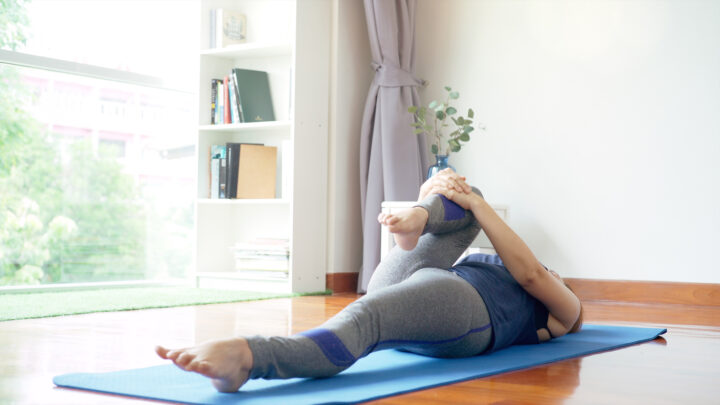
This one improves movement in both the knee and hip while working the muscles at the back of your thigh. Lie flat on the floor, bend one knee so that foot sits flat on the ground, then slide your foot as close to your bottom as you can manage and hold there for around five seconds. Slowly slide your foot back out to the starting position. A towel looped around your ankle can help you pull your leg into a bent position using your arms if your leg muscles alone aren’t managing it yet.
Step-up
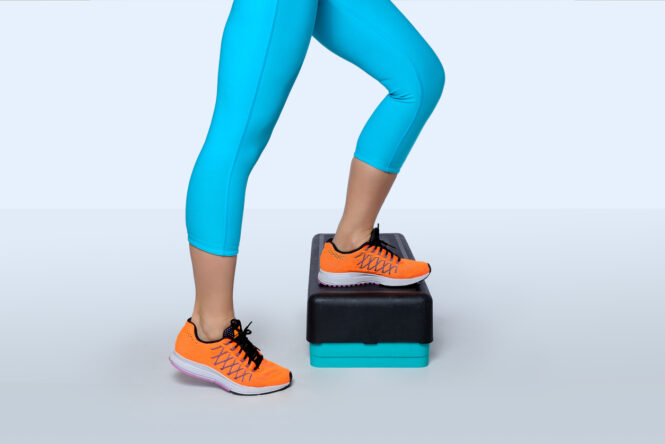
This exercise builds strength in your thighs and bottom while improving overall movement control. Stand facing a set of stairs or an aerobic step, place one foot on the step, then push through that foot to bring your other foot up onto the step too. Step back down slowly, one foot at a time. The smaller the step, the easier this move will feel, so start small and work up to a bigger step or even two at once as your confidence grows.
Three stretches to add in
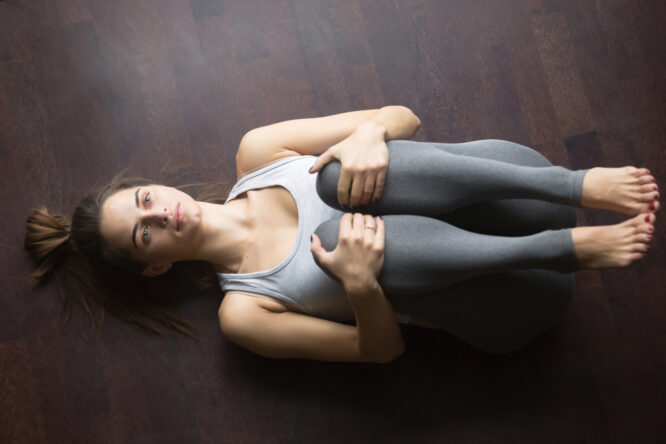
Alongside the exercises above, a few stretches help loosen things up further. For a knee extension stretch, sit on the floor with your back against a wall and legs straight out in front of you, bending one knee with that foot flat on the floor. Roll up a towel and place it under the ankle of your straight leg so it’s slightly raised, then tighten your thigh muscle and push your knee gently toward the floor, using your hands for a deeper stretch if you’d like one.
For a hip flexor stretch, lie flat on the floor and bring one knee up toward your chest, holding either the back of your thigh or the front of your knee to pull it in as close as comfortable, then repeat on the other side. Finally, for a hip rotation stretch, lie on your back with your knees bent and feet flat and together, then slowly let your knees fall out to either side, resting your hands on the inside of your knees and gently pressing down to deepen the stretch. Hold each stretch for at least 20 seconds, and build up the duration as your flexibility improves.