If you’ve been thinking about getting away but can’t face a long flight or a packed resort in 40-degree heat, you’re not alone.
New data from Trip.com shows that European travellers are changing how they holiday in ways that make a lot of sense given what summers are starting to feel like. Short breaks are booming, family trips are up, and a growing number of people are actively choosing cooler destinations over the traditional sun and sand formula.
Outbound flight bookings from Europe are seeing double-digit growth year-on-year, so people aren’t travelling less. They’re just travelling differently, and the patterns are worth knowing about if you’re still planning something for the second half of the year.
Short breaks are having a real moment right now.
The average trip duration booked between June and August this year is somewhere between three and four days, and short-haul flights make up the bulk of bookings. In Europe specifically, short-haul bookings are up 73% year-on-year, which is a huge jump. A lot of people are working out that a long weekend abroad only costs one or two days of actual annual leave if you time it right, and that’s a clever way to stretch your holiday allowance without burning through it all in one go.
It also removes some of the pressure that comes with a two-week holiday where you feel like you need to make every single day count. A few days somewhere interesting, a flight home Sunday evening, back at your desk Monday. Simple, affordable, and honestly often more enjoyable than you’d expect.
Travelling with the kids is more popular than travelling as a couple or alone.

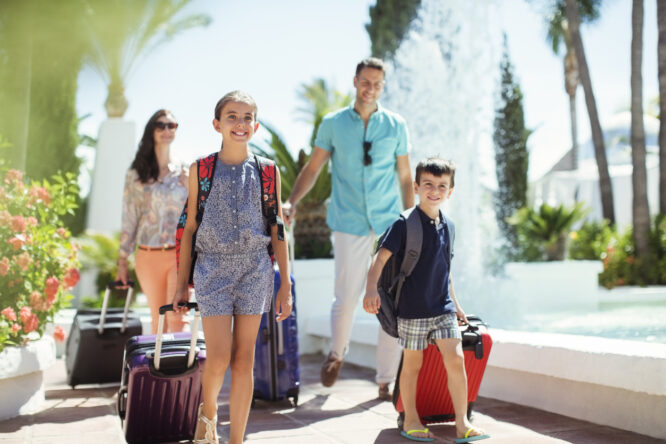
Trip.com’s research found that family travel is currently rated as the most appealing holiday experience, ranking higher than a trip with a partner, with friends, or solo. That’s particularly true in the UK and Germany, and among people in their mid-thirties to mid-forties, which makes sense given that’s typically when children are young and family holidays are both more logistically complicated and more meaningful.
Hotel bookings by families with children under 12 have increased noticeably this summer, and what families are looking for has become more specific too. It’s not just about finding somewhere with a pool. People are prioritising things like sensible flight times that don’t involve a 4am taxi, accommodation with family-friendly food options nearby, and activities that don’t require a massive amount of organisation once you arrive. The easier the trip is to manage, the more enjoyable it tends to be for everyone involved.
The coolcation trend is growing faster than almost anything else.
Searches for what the travel industry is calling coolcations have gone up 74% year-on-year since the start of 2026. That’s people actively searching for holidays in cooler places, using terms like “escape the heat” and “cool summer retreat” in numbers that weren’t there before. Given that large parts of Europe have been dealing with a prolonged heatwave this summer, it’s not hard to see why.
Coastal destinations are still popular, partly because they tend to be several degrees cooler than inland spots, but the bigger shift is people looking at places they might not have considered for a summer holiday before. Iceland, Norway, Slovenia, Switzerland, and Wales are all seeing many more searches this year than they did over the same period in 2025. These aren’t obvious sun-holiday destinations, but they offer something different, cooler air, dramatic scenery, and the ability to actually walk around without melting.
What this probably means if you’re still planning a trip
If you haven’t booked yet and you’re flexible on where you go, this data is actually useful. The traditional crowded hotspots are going to be hot and busy, while some of the less obvious destinations are getting more attention but are still nowhere near as saturated. A few days in Slovenia or a long weekend in Norway in August is going to feel very different from a week in a packed resort on the Costa del Sol right now.
And if the short break model appeals, it’s worth looking at whether you can use a day or two of leave strategically around a weekend to get more trips in, rather than saving everything for one big holiday. Lots of people who’ve switched to this approach find they actually see more places and come back feeling refreshed more often, rather than exhausted from trying to pack too much into a single fortnight.