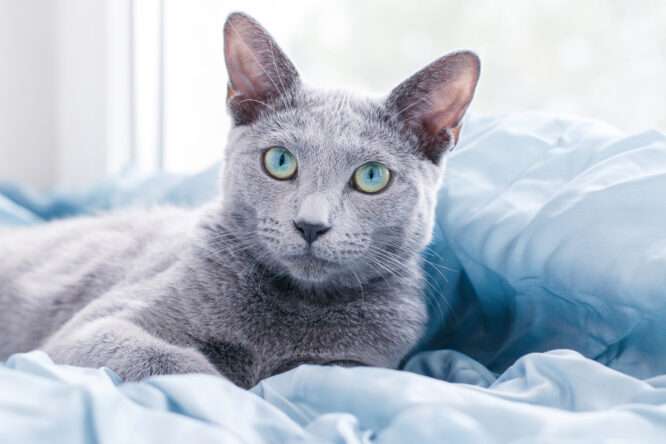
Cats are one of the most popular pets in the world.

In fact, according to Cats Protection, there are about 10.2 million of them owned in the UK alone. However, a study looking at decades of research has once again raised questions about whether owning a cat could be linked to a higher risk of schizophrenia-related conditions in some people.
The researchers stressed that this doesn’t mean cats directly cause schizophrenia, and it definitely doesn’t mean cat owners should panic or get rid of their pets. That being said, after reviewing 17 studies from different countries, the team said there does appear to be some kind of connection worth studying further.
The idea has been debated for decades.

Scientists first started seriously discussing this possible link back in the 1990s. Much of the attention focused on a parasite called Toxoplasma gondii, which can reproduce inside cats and spread through infected cat faeces.
Most people who come into contact with the parasite never even realise it because it often causes no symptoms at all. But researchers have long wondered whether, in some cases, it could affect the brain or nervous system in ways scientists still don’t fully understand.
The study reviewed research from 11 different countries.

The latest analysis looked at studies carried out over a 44-year period across countries including the UK and the United States. Researchers wanted to see whether there was any consistent pattern linking cat exposure and schizophrenia-related conditions.
After combining the findings, the team said people exposed to cats appeared to have roughly twice the odds of developing schizophrenia-related disorders compared with those who weren’t exposed. But the researchers also stressed there were important limitations with the data.
Scientists say a link doesn’t automatically mean cause and effect.

This is one of the most important parts of the story because it’s very easy for headlines like this to sound more dramatic than the science actually is. Researchers aren’t saying cats are directly causing mental illness. Instead, they’re saying there appears to be an association that needs more investigation.
Other hidden factors could also be involved, including genetics, environment, infections, childhood experiences, or other health conditions researchers haven’t fully accounted for yet.
The parasite itself is surprisingly common.
Toxoplasma gondii isn’t some rare or mysterious organism. Millions of people around the world are thought to carry it already, often without ever knowing that they’ve been infected. People can also come into contact with the parasite through undercooked meat or contaminated food and water, not just through cats. That’s another reason scientists say the relationship between cats and mental health is much more complicated than simple headlines sometimes suggest.
Some studies found different results from others.

One reason scientists are still cautious is because the research findings haven’t always matched up cleanly. Some studies found possible links between childhood cat exposure and later schizophrenia-related symptoms, while others found no connection at all.
In some cases, studies only found links during certain childhood age ranges. Others found stronger associations with cat bites rather than cat ownership itself. That inconsistency is one reason researchers say far more high-quality studies are still needed.
Researchers are also studying how inflammation affects the brain.

Part of the reason scientists keep investigating this area is that inflammation and infections are becoming a major focus in mental health research generally. Researchers increasingly believe the immune system may play a bigger role in brain health than once thought.
That doesn’t mean infections suddenly explain every mental health condition. But scientists are trying to better understand whether certain infections, inflammation patterns, or immune responses may slightly increase risk in vulnerable people over time.
Most cat owners will never experience schizophrenia.

One thing experts repeatedly emphasise is that schizophrenia remains relatively uncommon overall, even among people who own cats. Millions of people live with cats every day without developing serious mental health conditions. For that reason, researchers are being careful not to overstate the findings. The study is mainly highlighting a possible risk factor that deserves more research, rather than proving a direct danger from cats themselves.
The bigger message is really about how complicated mental health is.

Mental illnesses like schizophrenia are incredibly complex and almost certainly involve huge combinations of genetics, biology, environment, stress, life experiences, and physical health working together.
Studies like this are less about blaming one single thing and more about slowly building a clearer understanding of how the brain and body interact. Researchers say much more evidence is still needed before anybody can draw firm conclusions about exactly what role cats or infections may play.