Anyone who has ever stood in a Ryanair queue knows the dread that comes with a yellow luggage tag.

However, a new set of rules means your bag might be rejected before you even reach the stairs. It is no longer just about the weight or whether you can shove it into that metal cage at the gate; certain items are now being flagged as a flat-out safety risk for the belly of the plane. In fact, if you’re packing specific electronics or everyday essentials that the crew decides are a hazard, you’ll be forced to rip your bag open on the tarmac or leave it behind entirely.
It’s a high-stakes bit of fine print that could easily ruin your holiday before you’ve even cleared the runway. Before you head to the airport, you need to know exactly which common items have been blacklisted from the hold and why “checked-in” doesn’t mean “guaranteed” anymore.
Smart bags with built-in batteries can’t always go in the hold.

The main rule is simple but easy to miss. If your suitcase has a lithium battery that can’t be removed, you won’t be allowed to check it into the hold. That means that even if the bag itself looks normal, the battery inside it could stop you from boarding with it as planned. It’s the kind of detail that people only realise at the airport, which is where the problems start.
If the battery can be removed, you still can’t pack it in your suitcase.
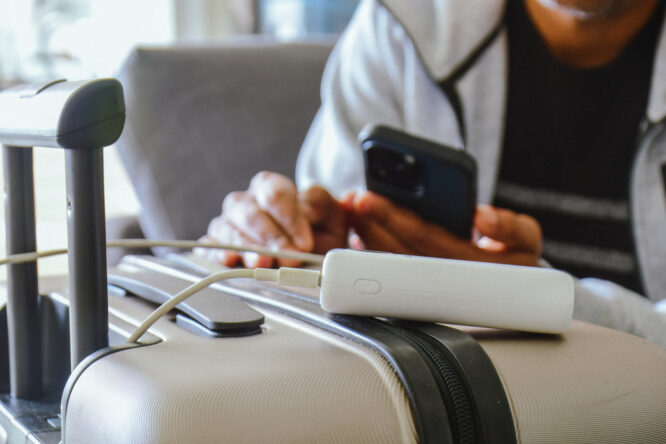
Even when the battery is removable, you can’t just take it out and leave it inside your checked luggage. It has to be carried with you in the cabin. On top of that, there are rules about where it goes. The battery must be kept in small baggage under the seat in front of you or on your person, not in the overhead locker. So it’s not just about removing it, it’s about how you carry it too.
There are strict limits on how powerful the battery can be.

Not all batteries are treated the same. If the battery is removable, it must not exceed 100 watt-hours. That’s the maximum allowed for most personal electronics on flights. If the battery isn’t removable, the limit is much lower at 2.7 watt-hours. Anything above that means the bag isn’t allowed on the plane at all, not even as carry-on, which can leave people stuck at check-in.
This isn’t just a Ryanair rule—it’s a wider safety issue.

While Ryanair is enforcing it clearly, these rules aren’t unique to one airline. They come from broader aviation safety guidelines around lithium batteries. The concern is that these batteries can overheat, short-circuit, or catch fire if damaged. In the aircraft hold, that’s harder to detect and deal with, which is why airlines want them kept in the cabin where they can be monitored.
Most people don’t realise their bag even counts as ‘smart luggage’.

A lot of modern suitcases now come with built-in charging ports or battery packs, which means people can fall into this without thinking about it. It’s not always obvious, either. Some bags look completely standard from the outside, so unless you’ve checked the specs, you might not even realise you’re carrying something that falls under these rules.
This can slow things down at the airport if you’re not prepared.

If you turn up with a bag that doesn’t meet the rules, you’ll likely be pulled aside to sort it out. That can mean removing batteries on the spot or even repacking your luggage. In some cases, it could mean not being able to take the bag at all. That’s where delays and stress come in, especially if you’re already close to boarding time.
The safest option is to check your bag before you travel.

What this really comes down to is knowing what you’re bringing. If your suitcase has a battery, it’s worth checking whether it’s removable and what its watt-hour rating is before you head to the airport. It’s a small step, but it avoids the kind of last-minute issues that can turn a straightforward journey into a much more stressful one.
This is another example of travel rules getting stricter.

Between new border systems, changing airline policies, and rising travel demand, flying is becoming more regulated in small but noticeable ways. None of these rules are particularly complicated on their own, but together they mean passengers have to be more aware of the details than they used to be.
It’s less about the bag, and more about what’s inside it.

At the centre of all this is the battery, not the luggage itself. The risk comes from how lithium batteries behave, not from the suitcase. That’s why the rules focus so heavily on watt-hour limits and where the battery is stored. Once you understand that, the restrictions make a lot more sense.
A small detail that can make a big difference to your trip.

For most people, this won’t be an issue, but for anyone using smart luggage, it’s something that can easily catch you out if you’re not aware of it. It’s one of those small travel details that doesn’t seem important until it suddenly is, which is why it’s worth checking before you leave rather than dealing with it at the airport.